SBA News

Craftsmen of Our Fate

As the nation of Barbados celebrates its 57th year of independence and progress as the world’s newest republic, many will reflect on the journey of the country as a sovereign state charged with managing its own affairs.

History will be kind to this Gem of the Caribbean for having made great strides in social development based on the United Nations Human Development Index. The country has done well in some areas including free nursery to tertiary education, which has contributed to a highly educated and educable work force; political stability and unfettered access to social services. Indeed, Barbados is the envy of other countries.

The same level of celebration is not ascribed to our economic performance. Research done by Professor Justin Robinson and cited in this column, indicates that since the late 1970s the country has not realised any significant cumulative economic growth compared to its regional neigbours and other small island developing states.

Nonetheless, Barbadians the world over are justifiably baptised in the feeling of pride and industry at this time of Independence.

An area not generally talked about during our Independence celebrations is the contribution of our entrepreneurs and small business owners. This community of economic actors is deserving of recognition as true nation builders. Micro, small and medium enterprises can be found operating in all areas of economic activity. They contribute to employment generation with the potential to reduce unemployment levels much easier than larger businesses.

Not only is the economic contribution easily quantified but the significant support to social development cannot be ignored. These businesses have been a source of enfranchisement for many in society lifting them from poverty and deprivation to improving their quality of life and social wellbeing. Arguably, a well-oiled MSME sector can help a country to reduce criminal elements in the society by providing lucrative sources of self-employment activity and social engineering.

Small business owners are truly craftsmen of their fate, having to fight in some instances against the odds of bureaucratic government systems, a labyrinth of licenses to be procured from various State agencies, the lack of easily accessible financing and an education system that does not cater to entrepreneurship development. Compounded by the above is a regulatory framework that is not enabling to doing business – business facilitation, despite the various policy prescriptions, continues to be a burden to the business owner. A burdensome tax regime which includes high taxes on fuel at the pump, an unjustified sewage tax on water, tax on online transactions in circumstances where e-trade is being promoted and expected increases in electricity rates. Penalties for seeking to be compliant with the corporate affairs regulator, annual fees for those professionals who want to legitimately do business on the island and a value-added tax regime where your income can be easily garnished to settle outstanding payables, but nothing done in those circumstances where you are owed VAT refunds.

Business owners who operate in this environment every day and are able to sustain their operations are indeed craftsmen for their fate.

Admittedly, Barbados is not seen as an entrepreneurial economy, not by the internationally accepted characteristics. The regulatory environment is onerous, there is not a culture of innovation, risk & rewards, the ecosystem does not support failure and easy access to financial and other services to develop and grow a business. Disruption is punished more so than celebrated. Yet for all this, there are those who dare to enter the market with a business idea and work unrelentingly to grow that business.

Some suggest the educational system, which is a carbon copy of old England, needs to be blamed, while others believe that policymakers over time have not seen the value of developing an entrepreneurial culture and through their policies have retarded growth. Whatever the reason, the last decade has shown that persons are more conscious of the need for a change and are more vocal on this issue. Bajans appear no longer tolerant of the influence of monopolies and oligopolies to the detriment of the masses and are quietly forming a resistance to the status quo. Persons are going through three and four iterations of their business idea, accepting that there is success after failure.

The rise of social media, influences from American television and exogenous shocks on the local economy, have contributed to persons more readily interested in starting businesses and entering the local market. If there was a time therefore to review the state of the regulatory and policy environment for business, it is now.

It is said that between 3 – 5% of the population will get involved in entrepreneurship. If this can be believed, having 15,000 formal small businesses and entrepreneurs in a population of 300k is laudable. This can be used in a strategic manner to increase employment levels, expand the export agenda, improve the quality of life of citizens and overall contribute to economic growth through the benefits of business activity.

At this time of Independence, a strategic review is needed on how entrepreneurship and small business development is treated. Cognisant of the potential for significant economic and social gains through a vibrant entrepreneurial economy, it is time to do more to enable this sector. Afterall these men and women are epitomised in the national anthem of Barbados as true craftsmen of their fates.

Reform NIS Reforms

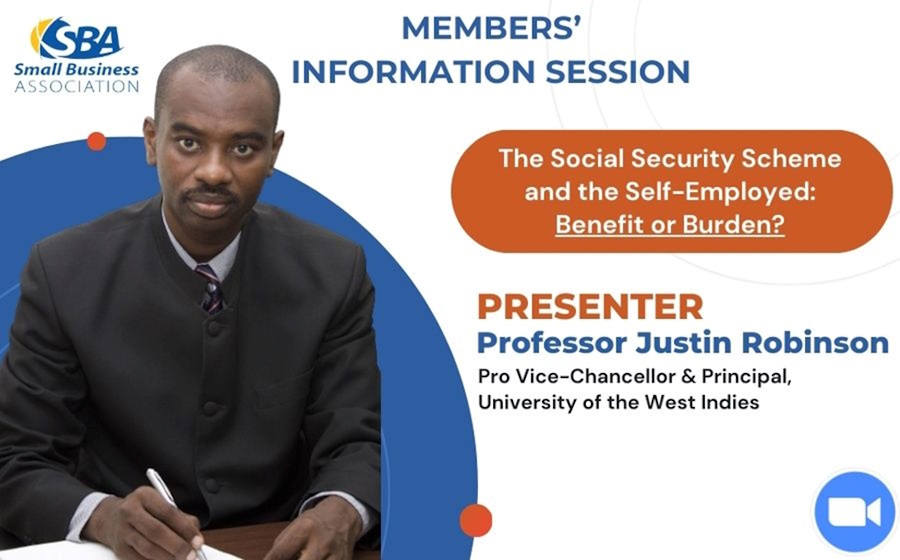
Members and partners of the Small Business Association of Barbados (SBA) attended a recent webinar with Professor Justin Robinson, a former chairman of the National Insurance Board, to review the Social Security system in Barbados. Under the theme “Social Security and the Self-Employed – Benefit or Burden, stakeholders engaged in robust discussion on the proposed amendments to the National Insurance Scheme (NIS), particularly those aspects purporting to benefit small business owners.  

The session brought to light a number of issues earlier ventilated by the SBA on the current NIS and underscored the fact that much work was still needed in reforming the system to make it fit for purpose, for the Barbadian landscape. At the end of the webinar, it was clear that the proposed NIS reforms needed further reforming.

All right-thinking persons agree that Social Security is meant to provide individuals with a source of income when their income is disrupted for a variety of reasons including illness, injury, pregnancy, business interruption, unemployment or retirement, among others.  The replacement income from a Social Security Scheme such as the NIS is especially important for self-employed persons who lack the supports that can come from being a traditional employee. This becomes relevant during exogenous shocks on the economy, where the Government is challenged to sustain vulnerable interest groups such as self-employed persons. The recent COVID-19 pandemic represents an all too familiar example of this, as the Government was stretched to support the population to avert further declines in unemployment and the fallout from social dislocation. 

As part of the proposed reforms to the NIS there is a move to expand the range of benefits offered to the self-employed including employment injury, and efforts to adjust the payment schedules to provide self-employed persons with a degree of flexibility in the timing of their NIS contributions and the avoidance of penalties.

Professor Robinson posited that these proposed changes addressed some of the major challenges faced by self-employed persons as they sought to utilise the NIS.  However, while participants noted and welcomed the improvements, many felt that they did not go far enough and expressed several concerns including:

  1. A lack of clarity on the proposals and how they would be implemented.
  2. The reforms focused on self-employed persons but did not adequately consider the needs of Small Businesses.
  3. The reforms did not address the needs of so-called “hybrid persons” who are shareholders in businesses as well as employees of said businesses.

Much has been said about 85% of self-employed persons not contributing to the social security scheme, however an absolute number representing the population of the “self-employed” is usually not mentioned in the narrative. It is important to the analysis to note what is this 85% of?

While we await the report of the recent census, the number of self-employed persons from the 2010 census can be corroborated with the 2016 survey on the small business sector, commissioned by the SBA and conducted by the Sir Arthur Lewis Institute of Social and Economic Studies, UWI. The analysis would indicate that the number of formal businesses operating in Barbados is bigger than the informal sector. This is unique to Barbados in many respects when compared to several countries in the Eastern Caribbean, where there is a much bigger informal sector. A review of their social security systems would give an appreciation for the type of contribution rates that exist, the method of payment collection used and the maximum age for the contributor.

Barbados is someone different with a large percentage of small businesses being formal. The SBA projects that between 30 – 40% of these businesses are incorporated companies. Some projections suggest as much as 50%. Herein lies the challenge that the NIS reforms have not addressed. How do we treat to those persons that the NIS defines to be self-employed but there are the sole-shareholder or owner of the business, who happens to work in the business. In essence the individual is also employed by the company.

It is unfortunate that consultation was not done with the sector on these reforms, as clearly demonstrated during the webinar when so many participants got the opportunity to weigh in on the proposals. Whereas every effort should be made to get the lawyers, doctors, other professionals and those in the informal sector to become compliant, a significant percentage of businesses is being disadvantaged by not addressing this “hybrid” contributor. After all, we have been encouraging firms to incorporate their businesses as a risk mitigation measure and to improve corporate governance. We do not now want to discriminate against them.

The sickness benefits and other provisions are welcome improvements, but some ambiguity still exists. The narrative should therefore be to focus on small businesses as a key demographic group of interest. As mentioned in this space in an earlier article, there is often a misconception between who is the self-employed and the small business – whereas the former can a small business, the latter is not always self-employed.

It is appreciated that due to key issues such as a growing elderly population, slow economic growth, high unemployment rates, and increasing health care costs, it’s incumbent that more persons are contributing to the pool of social security funds. We must therefore employ smart strategies to future-proof these schemes and
to ensure the social protection systems' long-term viability.

Promoting Public-Private Partnerships

Traditionally Public-Private Partnerships have been used in the delivery of infrastructure projects, however, there has been some recent movement in other areas including the provision of social services, education and financial services.

It has been posited by development practitioners that PPPs help to share risks and contribute to value creation for the partners involved. PPPs can potentially reduce public sector costs for providing services and unlock private sector capital to finance investment activity.

Caribbean countries currently face a perfect storm of a climate crisis, compounded by a solvency crisis, while still recovering from the recent heath crisis occasioned by the COVID-19 pandemic.

Countries like Barbados have limited fiscal capacity to finance the level of development needed to build resilience and position their economies to sustainable growth. PPPs can be a viable model for development.

The example of the climate crisis supports the business case for the use of more PPPs. Caribbean countries are amongst the most vulnerable to climate change. Natural disasters are more costly and more frequent in the Caribbean. For example, in 2017, the estimated cost of the hurricane season to Caribbean countries was US$93 billion, including Cuba (US$ 13 billion) and Puerto Rico (US$68 billion). Furthermore, ECLAC (Economic Commission for LAC) estimated that in 2017, damage and loss due to hurricanes in Antigua and Barbuda, the Bahamas, Dominica, and Saint Kitts & Nevis were in excess of US$1.5 billion. Total damage and loss costs to Dominica from Hurricane Maria alone (2017) were estimated at 226% of 2016 GDP.

The average annual damage and loss attributed to hurricanes in the Caribbean has been estimated to be upward of US$800 million and it is projected that this could rise to US$22 billion by 2050 (IDB). The damage to infrastructure, agriculture, and housing due to the eruption of the La Soufriere volcano in St Vincent and the Grenadines (2021) may result in economic losses of 30% of GDP (IMF).

These and other natural disasters are prevalent risks in the Caribbean; these risks have been the principal source of fiscal stress.

Other climate change-related extreme weather events, such as droughts, sea-level rise and flooding, have also fueled increased public debt in many Caribbean economies. Several countries in the region had an average debt to GDP ratio of just under 88 per cent in 2020 (increasing by 20 percentage points from 2019), with Barbados and a few others now carrying debt burdens in excess of 100% of GDP.

ECLAC reports that of the fifteen countries for which data is readily available, thirteen have a debt to GDP ratio above 60%. For countries where the debt/GDP ratio is above 60 per cent, government debt is often costly and becomes unaffordable, leading to policy uncertainty.

The challenge therefore is the inability of most governments wanting to reprofile or refinance their debt to do so. The low associated country credit ratings ultimately impact businesses’ borrowing costs that are domiciled in the region. Resilience-building activities are sacrificed on the altar of fiscal capacity.

Traditional areas for PPPs have been transport, electricity, water, roads, ports, etc. These are key economic inputs as they provide important services to businesses and households.

However, another area that governments should consider is a PPP framework that addresses the development of micro, small and medium enterprises – there is a social and economic case to be made.

Caribbean Development Bank (2016) research indicates that MSMEs constituted 70% - 85% of firms in the Caribbean; they contribute 60% - 70% of GDP and accounted for 50% of employment.

The ECLAC estimates that 34% of formal employment and 27% of GDP are generated in sectors strongly affected by crises like the global pandemic (June 2020, COVID-19 report). ECLAC estimates that 2.7 million formal businesses in Latin America and the Caribbean will close with a loss of 8.5 million jobs.

Although all businesses will be affected the report proffered that MSMEs will be hardest hit. They operate in the economic sectors most affected by demand shocks, such as accommodation, food services, cultural and creative sectors, wholesale & retail, etc. These businesses traditionally have low cash reserves and are often not resilient to economic shocks.

An example of a successful PPP to support MSMEs is the recent Central Bank/IADB partnership.

Following several studies that showed financing to be the major impediment to MSME growth, the IDB and Government of Barbados through the Central Bank developed a Credit Guarantee Scheme. Specifications of the project include:

⁃ USD$ 35 million capitalisation

⁃ Provision of partial guarantees to MSMEs, managed by the Central Bank and accessed through Intermediary Financial Institutions (all private sector financial institutions)
⁃ Guarantee loans up to USD$1 million, up to 80% of the loan amt., up to 10 yrs. tenor
⁃ 89 beneficiary companies - services, energy, tourism, agriculture, construction, retail, manufacturing
⁃ Five financial institutions - 3 were commercial banks

⁃ USD$24 million funds disbursed

⁃ Implementation of technology, working capital, expansion, purchase of equipment, etc.

This PPP is one example of a success model in circumstances where Governments need fiscal space to assist MSMEs.

Recent exogenous shocks have exposed the Caribbean’s endemic structural challenges and rigidities. Due to the macroeconomic imbalances, low and declining productivity & competitiveness, and environmental vulnerability that exist, new strategies will be needed to unlock greater private sector investment. PPPs can be one such solution to achieve the transformation and growth needed while improving infrastructure and the access to essential services by citizens and businesses alike.

Financing MSME Development

The Small Business Association of Barbados joins stakeholders in congratulating the Barbados Trust Fund Ltd on its fifth year of operations, being celebrated this month.

The Trust Fund is indeed a success story with a credible performance over its five years of existence that cannot be easily matched by others in the micro finance space. The state-owned company has disbursed some $20.6 million to over 4.5k businesses, generating over 6.5k jobs. Such results have not been surpassed by any other micro finance institution. The business case has therefore been made for this type of entity and long may it continue to support startups and early growth businesses.

It is against this backdrop that some analysis is needed on the financing of MSME development in this country. For though we celebrate the achievement of the Trust Fund to date, evidence shows that the demand for micro lending outstrips the supply. This is a perennial issue that the SBA has called to the attention of policymakers and financiers for the past two decades, unfortunately with limited success. If an investment of $20 million can create and sustain over 6.5k jobs, imagine what $100million can do!

The level of innovation and creativity that can be unlocked through easy access to affordable finance cannot be overstated. Much research has been done to substantiate the rapid growth achieved by economies that are able to facilitate entrepreneurship and self-employment activity. The converse is also true. Countries that have failed to adequately capitalise MSME development have struggled to sustain economic growth and produce new industries. More importantly, such jurisdictions perform poorly in the areas of business innovation, research & development and internationalisation.

Generally, there are two major forms of financing – debt or equity. A number of derivatives of these have been developed over time to enhance the value proposition of finance institutions, to cater to emerging markets and to provide the best yields for financiers.

Admittingly, there has not been much advancement locally with equity products, however every effort must be pursued by investors and institutions to continue in this vein of development. Greater education and opportunity will be needed to foster an investment culture on the island. Venture capital, angel investors and the capital market must be pursued unrelentingly, to address the build out of an equity space in the financial ecosystem.

Debt is still the low-hanging fruit and will be looked upon for some time as the primary source of financing. While this may be true, debt financing is not a one-size-fits-all for the sector.

Two variables ought to be considered in the narrative on debt – firms must access the right instrument for the business depending on its stage in the growth cycle, and the size of the financing pot needs to be increased to make accessibility more plausible for those seeking finance.

For some time, commercial banks have taken a beating for their perceived risk aversion to MSME lending. Whereas some banks have demonstrated a lack of ingenuity in supporting industrial development, the fact is that these institutions are not best suited for start-up financing due to the high levels of risk. The unfortunate reality is that too many budding entrepreneurs and emerging businesses approach commercial banks as their first choice of lender. This should be discouraged. The start-up and early growth firms need financing from entities like the Barbados Trust Fund Ltd, Fund Access, to name a few, where securitisation is simple and event nonexistent. Startups and early growth firms often lack a track record, significant collateral and a well-structured operation, areas that the commercial bank will consider in their underwriting. Another type of entity is required to take on this risk.

This highlights the second point of expanding the pool of funds available. Recognising that mainly government-capitalised agencies are able to extend the risk required on startup and early growth firms, significant capital is needed to cater to the increased demand for financing MSME development. An injection of $20 million annually will not cut it. At a minimum, the sector requires $75 - $100 million in seed financing per annum to unlock the innovation required and to create the entrepreneurial environment desired.

All entrepreneurial economies have these common denominators - the ability for startups and early growth firms to access affordable credit, a culture of risk and tolerance for failure, and the innovation & incubation of business ideas.

Some will quickly argue that the government is unable to sustain huge outlays of capital for on-lending to firms, particularly in an austerity programme. Though over $300 million was found for the tourism sector, the point will be conceded that this may not be feasible for a government to do on its own.

Over a decade ago the SBA developed a proposal and presented to several financial institutions to seed a fund, with a portion guaranteed by government to create a special purpose vehicle to finance MSME development. The business case made was that the equivalent of 0.5 - 1% of the NPL portfolio of these financial institutions to capitalise a programme to underwrite credit for small firms, will assist in creating viable firms that can overtime access bank credit and thus reduce overall non-performing loans. A fund capitalised to the tune of $100 million in two years was contemplated. The obvious assumptions underpinned the business case - the fund would be operated profitably, good governance and accountability would obtain, there would be demand from the MSME sector and adequate deal flow. Had such a project been given the opportunity to emerge Barbados may have seen an explosion in entrepreneurial activity, creativity and innovation, and an improved quality of life for citizens.

The business case still remains that to create an entrepreneurial economy in Barbados, the issue of financing MSME development must be addressed, conclusively.

Part 2 on the Role of Small Firms in the Development Agenda of SIDS

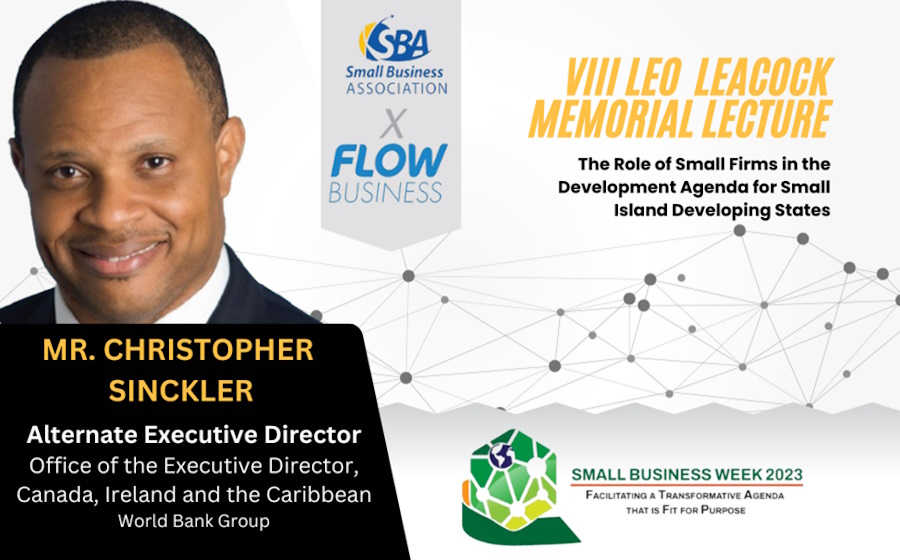
In last week’s edition of Business Basics, the first part of an extract of Christoher Sinckler’s presentation on the Role of Small Firms in the Development Agenda for Small Island Developing States (SIDS) was shared. The alternate executive director with the World Bank Group, provided much food for thought at the recent Leo Leacock lecture during Small Business Week 2023 on areas to strengthen the local small business ecosystem.

Three key points of note for which small business administrators agree should be at the forefront of the advocacy agenda for the sector in the ensuing year, are climate resilience building, democratisation of finance access, and business facilitation and inclusion.

This week will continue the discussion on the area of business facilitation.

A major part of the development agenda globally and nationally is to help countries sustain Gross Domestic Product (GDP) growth, increase global trade, create employment through decent work and reduce income inequality.

In Latin America and the Caribbean, many SIDS were impacted more negatively than their developing country counterparts relative to the pandemic effects. In addition to the steeper GDP declines, unemployment and income inequality seemed to have suffered the most.

In this regard, one area that all the major post- (and in some respects pre-) COVID analyses have highlighted that SIDS need to pay urgent attention to, is their respective frameworks for facilitating the conduct of business and investment. As the world continues to ramp up post-COVID business and investment threads across the entire global value chain, it will become even more competitive within and among countries globally and regionally. It means therefore that in countries such as ours where we know structural impediments such as smallness of markets, geographic remoteness, lack of sectoral diversification, openness to trade, foreign exchange constraints etc., limit our attractiveness to investors, foreign and domestic, removing obstacles to efficiency in business processing is critical.

 It affects costs and confidence. It is no secret that in SIDS this has been a major challenge for years. In the Caribbean especially it presents in two critical areas: trade facilitation, and the costs and ease of doing business. Often though when these discourses are happening the focus tends to be on attracting foreign investment - which is hugely important - but equally as important is how work in these spaces affects the development, growth and success of small businesses.

The reality is that many a small and medium-sized business die at the hands of poor facilitation, over or better put inappropriate levels of regulation, and antiquated public and private sector systems that prove to be more hindrance than help. These can be found across trade and customs, legal, tax policy, utilities provision and labour market rigidities, to name a few.

While bigger businesses might be able to better manage the costs and frustrations associated with many of these, the margin for error amongst their smaller counterparts is much narrower.

From the most recent investigations across SIDS and particularly in the Caribbean, in respect of trade facilitation, there seems to be some considerable level of progress being made. To be sure we know that the WTO, ITC, UNCTAD, World Bank and IMF have been lending financial, human and technical resources to assist domestic authorities in getting critical aspects of the WTO Agreement on Trade Facilitation implemented. Several governments have formed national working groups comprising key stakeholders from both public and private sectors to set out ambitious actions to enhance trade facilitation from ship to shop and ultimately consumers. Various SBAs have been playing a key role in this effort and it is to be hoped that such will continue because there is much at stake here for the continuing success of the small business sector, as you seek to reduce costs and create certainty of sourcing inputs for your operations.

We know the role that digitalisation plays in this regard. The fact is that there exists a real possibility that as digital systems and applications evolve at speed, the digital divide between SIDS and the rest of the world will get wider if urgent attention is not paid to reversing it. This is where the small business sector must continue to push authorities, not just in domestic jurisdictions, but internationally for agencies such as the World Bank to do more in prioritising digitalisation in SIDS and developing countries.

Digitalisation is costly and in some respects it can be complicated. So, every effort is needed to reduce both for our countries. The World Bank Group, with strong support from regional governments have been pushing other Directorships on the Board as well as senior Bank staff to ensure that digitalisation in developing countries is among one of the Bank's core programmes of focus. We have been making significant progress in this effort and confidently expect that such will be the case coming out of the current World Bank Reform Process. If that happens, billions of dollars of new support, much of it in the form of grants and very low-priced loans, will be available to developing countries to improve their systems.

The full lecture can be viewed at - https://youtu.be/jTPO-cQUfE8

The Role of Small Firms in the Development Agenda of SIDS – Part 1

During Small Business Week 2023, stakeholders had the pleasure of hearing Christoher Sinckler, alternate executive director with the World Bank Group, share his perspectives on the Role of Small Firms in the Development Agenda for Small Island Developing States (SIDS). His experience within the global financial and development system provided the backdrop for a sterling presentation on the outlook needed for SIDS in an environment of perennial exogenous shocks affecting these vulnerable economies. Still on the theme of transformation, the presentation concretised what the Small Business Association of Barbados and its partners identify as key areas to be addressed at the policy and programmatic levels for the development of micro, small and medium enterprises.

Business Basics will present an extract of Mr. Sinckler’s lecture in two parts, highlighting three areas of interest to strengthen the MSME ecosystem. These are climate resilience building, democratisation of finance access, and business facilitation and inclusion.

In most SIDS, including in some Caribbean states, there is a lack of clearly defined and integrated climate resilience plans within the private sector and especially among MSMEs. In some countries for example, it is estimated that as little as 19 percent of SMEs have active adaptation and resilience building plans, while governments have struggled to find the finance necessary to assist these firms to pull such plans together.

The serious fallout for plant, investment income, jobs and such like from direct impact climate events is well known. There are also the potentially disruptive effects of supply chain interruptions and cost effects when events occur in critical source markets. This is so for operators in both goods and services markets. It is therefore critical for sector leaders to work collaboratively with domestic authorities, regional organisations and international institutions to help small firms build awareness of and programme expansively for climate change events.

What is the defined plan agreed between critical stakeholders in the sector, with private and public financiers and investors should an event occur? We noticed for example that during the COVID- 19 pandemic, the major private financial institutions and several public sector entities introduced· temporary "pause clauses" on loans and some recurrent payment schedules for companies and individuals to help them through that tough period. This was good!

In the context of climate resilience building, how much of this effort is currently codified in policy and practice. How many MSMEs across the region can confidently say that they have clearly articulated and agreed "pause clauses" in their debt instruments with financial institutions or even government lenders for example. Beyond “goodwill”, there is a need for well-considered and negotiated clauses standardised at policy level and individualised at the operational level to suit the firm or company circumstance.

Special measures like these can mean the difference between a business surviving or going under completely, and unfortunately across many SIDS the latter has in fact been the case.

The second critical developmental area is the democratisation of finance access. Emerging literature is showing that despite whatever progress being made over the years in SIDS to get more women involved in business ownership and administration, women continue to find it unpalatably difficult to access financial resources to start, run and sustain business operations. In fact, a recent edition of its Quarterly, Caribbean Economics the Inter-American Development Bank in exploring the issue of financing for small firms noted that:

"Not surprisingly, two-thirds of Women-owned Firms (WoFs) report access to finance as a major or severe obstacle to their business. In most Caribbean countries, more than half of WoFs report that financial costs (i.e., interest rates and collateral) were either a major or a very severe obstacle for growth with approximately 39 percent of WoFs in the Caribbean (excluding the Organisation of Eastern Caribbean States) viewed required collateral as a major or severe obstacle to doing business”.

Indeed, should this situation be allowed to hold, it will seriously challenge Sustainable Development Goal 5 which speaks to Gender Equality. Most of the new businesses being created in SIDS including in our region, are being done by women. There is no lack of creativity, drive or innovation among women, but there continues to be a shocking number of obstacles to access of capital. Where such access does occur the costs of the capital are so high that it often leads to servicing failures. For example, in some jurisdictions too many women can only get funding or credit for their businesses if they present in conjunction with a male.

It's a serious development issue for SIDS generally because if women cannot access resources to create employment for themselves and other women, the feminisation of poverty will continue to adumbrate the rate of success at beating income and gender inequality. Small firms and businesses have been doing well in the region, in changing that narrative, and regional governments have been in the forefront of providing several venture capital opportunities to women and small businesses, but more must be done to help them along.

When we reflect on the number of small businesses in operation and the tremendous contribution which they make to development in our countries, and juxtapose that with the number of high quality and well capitalised non-bank financial cooperatives in SIDS, there seems to be a disconnect somewhere. What's the disconnect?

It is understood that regulatory and other challenges constrain cooperatives, especially credit unions, from being more expansive in their support for small businesses and business generally. However, it must also be front of mind that black owned financial cooperatives across the Caribbean and in other SIDS cannot for much longer be held back from the historical responsibility to support MSMEs which are predominantly black and local. How much longer can any of any our countries continue to rely on or expect foreign own and control banking institutions or indeed governments to meet the financing needs of small firms while our indigenous financial institutions are restricted or constrained in their attempts to do so.

Many financial cooperatives do want to help and are in fact finding ways to do so, but we also know that current legislation severely limits such efforts across several jurisdictions. It is a matter that requires deeper attention and collaboration between sector leadership, government, and regulators at all levels.

The full lecture can be viewed at - https://youtu.be/jTPO-cQUfE8

Get in Touch

Secretariat

Suite 101, Building 4
Harbour Industrial Estate
Bridgetown, Barbados

Phone

+1 (246) 228 0162

Email

theoffice@sba.bb

Follow Us

Image
Image
Image
Image