SBA News

Opportunities for Small Businesses to Adopt Generative AI

The recently held regional colloquium during Small Business Week focused heavily on the digital transformation occurring globally and its impact on business. Particular emphasis was on the emergence of Generative AI and its potential to change the way business is done in both the private and public sectors. The regional small business sector was challenged to overcome the fear and trepidation being faced and embrace the new business models that can emerge from this new technology. 

The adoption of Generative AI by small businesses is already gaining momentum in some countries as advancements in artificial intelligence make these technologies more accessible and cost-effective. Generative AI, which involves algorithms capable of creating new content including, text, images, and even product designs, is transforming the way businesses operate. With the rise of AI tools like ChatGPT, DALL-E, and other generative models, small businesses are leveraging this technology to enhance productivity, streamline operations, and improve customer engagement. Below is a summary of key trends and benefits of Generative AI.
 

  1. Adoption Trends of Generative AI

While large corporations have traditionally led the way in adopting advanced technologies, small businesses are increasingly embracing Generative AI to remain competitive. Key factors driving this adoption include:]

- Increased Accessibility and Affordability: The development of cloud-based AI solutions has made Generative AI more accessible to small businesses. Many platforms offer tiered pricing models or even free versions, enabling small firms to experiment with AI without significant upfront investment.

- Integration with Business Software: Popular business software platforms like Microsoft 365, Google Workspace, and CRM tools including Salesforce are integrating Generative AI features. This integration allows small businesses to use AI capabilities directly within their existing tools, simplifying adoption and reducing the need for specialised knowledge.

- Rise of AI Service Providers and Consultants: Small businesses that lack in-house AI expertise are turning to service providers and consultants who specialise in AI implementation. This trend helps bridge the gap in technical knowledge and facilitates the adoption of Generative AI in various business processes.

- Focus on Marketing and Customer Engagement: Many small businesses are adopting Generative AI for marketing and customer engagement purposes. AI tools can generate personalised content for emails, social media, and advertising, enabling small firms to scale their marketing efforts without hiring additional staff.

- Experimentation and Pilot Programmes: Small businesses often start with pilot programs to test the effectiveness of Generative AI. These pilots allow them to assess the value of AI for their specific needs before making more significant investments.


  1. Benefits of Generative AI for Small Businesses

The benefits of generative AI are multifaceted and impact various aspects of small business operations. Some of the key benefits include:

  1. Content Creation and Marketing Automation
  2. Enhanced Customer Support and Engagement
  3. Product Design and Innovation
  4. Improved Operational Efficiency
  5. Personalisation and Customer Insights
  6. Cost Reduction and Scalability


  1. Challenges and Considerations

While the benefits of Generative AI are substantial, small businesses must also consider some challenges:

- Data Privacy and Security: Small firms need to ensure that AI tools comply with data protection regulations and maintain customer trust by safeguarding sensitive information.

- Initial Implementation Costs: Although many Generative AI tools are affordable, initial setup costs for integration and training can still be a barrier for some small businesses.

- AI Literacy and Skill Gaps: Business owners and employees may require training to effectively use and understand AI tools, which can present a learning curve.

- Quality Control: AI-generated content and designs may need human review and refinement to ensure quality and alignment with business goals.


  1. Case Studies and Examples

There are some examples of success stories worthy of modeling.

- Content Marketing: A small online retail business used ChatGPT to generate product descriptions, blog posts, and social media content. This automation enabled the business to increase its content output by 300%, resulting in higher website traffic and customer engagement.

- Customer Support: A Caribbean-based MSME implemented an AI-powered chatbot on its e-commerce website. The chatbot handled 60% of customer inquiries autonomously, reducing response times and improving customer satisfaction.

- Design and Creativity: A local design studio used DALL-E to create initial concepts for client projects, significantly speeding up the brainstorming and design process.


  1. Future Outlook

The adoption of Generative AI by small businesses is expected to grow as technology continues to evolve. Advancements in natural language processing, image generation, and AI integration with business tools will further reduce barriers to entry. Small businesses that embrace Generative AI early are likely to gain a competitive advantage by enhancing efficiency, innovation, and customer satisfaction.

Overall, Generative AI presents a powerful opportunity for small businesses to innovate and thrive in a rapidly changing business environment. By carefully considering its implementation and aligning AI strategies with business goals, small businesses can unlock new growth potential and build a foundation for long-term success.

While generative AI offers numerous benefits for small businesses, including improved efficiency, enhanced customer engagement, and innovative solutions, it is not without its drawbacks. Small firms need to carefully consider the potential challenges and develop strategies to mitigate these risks before fully adopting AI technologies. By addressing issues such as data privacy, technical complexity, and over-reliance on AI, small firms can leverage Generative AI to drive growth and maintain a competitive edge while minimising potential downsides.
Takeaways from Small Business Week

The dust has settled…..the daily briefings are over. No need to review any more storyboards or events scripts. Another Small Business Week has been excellently executed and stakeholders, in Barbados and regionally, have enjoyed a production filled with stimulating, challenging and thought-provoking conversations.

From the church service where, Roman Catholic Bishop Scantlebury set the stage with an inspiring sermon to the last event featuring Minister, Senator Lisa Cummins and every activity in between, the Week’s events lived up to their expectations. 

Thanks to all those who made it possible - from the sponsors and contributors to the many speakers, industry partners and support teams - stakeholders from near and far coalesced to highlight and celebrate micro, small and medium enterprises and their contribution to national development. 

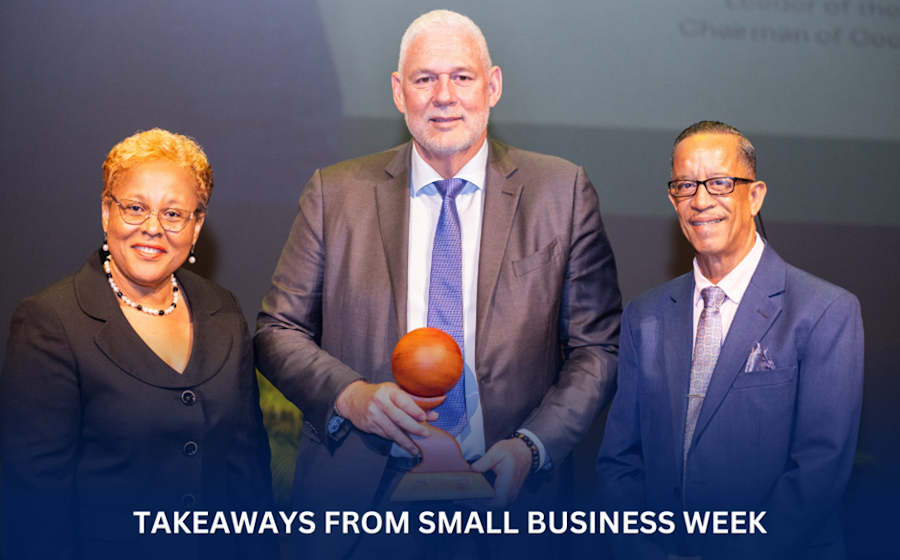
Special mention must be made of the stimulating Leo Leacock lecture given by the Hon Allen Chastanet of St Lucia and the regional colloquium where the CDB’s Turner-Jones, and UWI principal Prof Robinson, painted a canvass of the state of the sector, not only in Barbados but also regionally. 

Small Business Week 2024 celebrated its 21st edition of a week of activities and notably has come of age. With such events the next step is always to identify areas of further development and opportunities to advance actionable items. Key performance indicators provide a framework for measurement to ensure that progress is being moved in the pursuit of facilitating the growth of the MSME sector. Similar to previous years, two - three key deliverables will be identified to give stakeholders key activities for engagement and collaboration in the year ahead. 

Three key themes stood out from this year’s events which will form part of the policy and programming agenda for the ensuing months. These areas are:

  • Access to diverse finance solutions
  • Digital revolution and adaptation
  • Regulatory environment for business.

 Whereas much research has been done on the impediments to growth and access to finance remains the leading issue, the conversation around this topic suggests some diversification of the issue. The current state of play for the MSME sector is not just access to seed capital and debt financing but a need for equity financing to be unlocked for the sector. An urgent call has been made for the Junior Market to become a reality sooner rather than later and for venture capital, factoring and other types of products to be added to the suite of financial offerings for the sector. 

The digital revolution has been with us for some time. The COVID-19 pandemic was the catalyst for the adoption of technology across all areas of the population. Every aspect of life was converted to a digital operation, catapulting the adoption of technology as the new normal. Derivatives of this now include digital payments and mobile wallets, generative AI and robotic technology - all of which are at the doorsteps of business in the region. The sensitisation of MSMEs to these technologies and the capacity building to facilitate adoption is more acute than ever before. It is therefore incumbent that strategies be deployed to address this revolution for actors of business. 

Ultimately, the regulatory regime will determine the speed at which a number of developments will occur in the business community. Enabling legislation and a facilitatory policy space are required to drive business. A present assessment shows the regulatory regime is not enabling. Legislation is archaic and not fit for purpose, compliance is costly and a deterrent to business, and policies are needed to ensure business can be done seamlessly across borders and across social platforms in the case of social media. To date local firms are excluded from trade on well-known platforms like Google, Facebook, etc., due to a lack of global e-commence agreements between Barbados and key jurisdictions. 

There is therefore much work to be done in the ensuing year as we look forward to 2025. The takeaways will provide a blueprint for the work plan of the SBA and its partners and allow for the measurement of the KPIs established. We look forward to the report to be shared with stakeholders at the next week of activities.

A Discussion on Creativity, Capital and Culture

The signature event of Small Business Week 2024, the X Leo Leacock Memorial lecture, provided an opportunity for stakeholders to discuss the impediments to the growth of micro, small and medium enterprises and to hear from subject matter experts on tried solutions to addressing these issues.   

This year’s lecture was facilitated by the Hon Allen Chastanet, current Opposition Leader of St Lucia and a well-known businessman in the Caribbean. Having served as the prime minister of St Lucia during the period 2016 – 2021, Mr. Chastanet was able to draw from his wealth of experience as a policymaker in detailing the type of regulatory regime required to enable a vibrant and competitive MSME sector.

The lecture delved into small business development, entrepreneurship, and tourism as key drivers of economic growth, with examples drawn from Barbados and St. Lucia.

Some of the key themes discussed included:

  1. The role of Small Businesses

Small businesses were promoted as key drivers in preserving the region’s unique culture, especially in a world dominated by franchises like McDonald’s and Burger King. While a distinction was made between the small firm that caters only to the domestic market versus the business with an international outlook, MSMEs were the best enablers of monetising culture. 

The domestic small businesses, including grocery stores, hair salons and the like, may not directly contribute to foreign exchange, their efficiency however adds value to the tourism product. For example, high-quality local services—including technical support and maintenance for million-dollar villas—enhance the region's reputation.

  1. The Power of Starting Small

Mr. Chastanet highlighted examples of successful Caribbean entrepreneurs, such as the creator of the Tortuga Rum Cake, who began with a small venture in the Cayman Islands and grew into a global brand. This illustrates that even small Caribbean businesses can expand internationally if they think big and take calculated risks.

Starting small but thinking big can lead to diversified, resilient businesses. Caribbean nations had a role therefore in fostering an environment that allowed such businesses to thrive.

  1. A example of Clustering – the St. Lucian Banana Industry

The St. Lucian banana industry was discussed as a prime example of small business enfranchisement. The government of St Lucia created the infrastructure—irrigation systems, roads, research companies—to support 16,000 farmers, transforming them into small business owners. The industry thrived by exporting bananas to the United Kingdom, but later political changes and privatisation led to the industry’s decline.

Government must intervene but act as a facilitator.

  1. Tourism as a Vehicle for Small Business Growth

Tourism provides a unique opportunity for small businesses to grow. By creating a franchise system called "village tourism," small hotels, restaurants, and shops in St. Lucia received access to accounting software, marketing platforms, and training. This model helped small businesses compete by offering standardised services, while maintaining the authenticity of local culture.

Small businesses involved in tourism can serve as ambassadors for their countries, promoting local products and culture to foreign visitors. This strengthens the local economy.

  1. Innovation and Differentiation

The importance of innovation was stressed throughout the presentation, a reminder of Peter Drucker’s mantra that “business has two functions – marketing and innovation”. Small businesses need to differentiate themselves by offering unique products that reflect local culture. The Barbadian company, Chefette Restaurant, a Barbadian fast-food chain, was cited as an example of a successful local brand that could be exported.

Creativity was needed in product design, from limited-edition t-shirts featuring local art to handmade crafts and unique cocktails in bars. This level of innovation could elevate the perception of Caribbean products and attract higher spending from tourists.

  1. Branding and Exporting Local Products

The transcript touches on the need for Caribbean countries to brand and export local products more effectively. The success of brands like Mount Gay Rum and the St. Lucia Jazz Festival, represent example of building international recognition from local brands.

Exposing tourists to local products is key. By creating positive associations with these products during their vacations, tourists are more likely to purchase them back home, fostering nostalgia and sentimentality around Caribbean brands.

  1. E-commerce and Franchising

Mr. Chastanet advocated for Caribbean countries to adopt modern e-commerce strategies to sell their products globally. He mentioned the need for innovation in online platforms and creating competitions to foster young designers’ talents in areas like t-shirt designs and unique crafts.

He also described a vision where local vendors and artisans are supported to franchise their businesses, improving product display, marketing, and storytelling. This would help them to stand out in a crowded marketplace.

  1. Government's Role:

The role of the government in supporting small businesses cannot be overemphasized.  From providing the necessary infrastructure (shipping and packaging for agricultural products) to helping vendors market and sell their products internationally, government support is seen as crucial for success.

Caribbean governments must create policies and frameworks that enable small businesses to thrive and export, ultimately bringing millions of dollars in foreign exchange to the region.

Stakeholders must envision a Caribbean where small businesses play a central role in economic growth by tapping into global markets through tourism and export opportunities. By fostering innovation, government support, and modern e-commerce, the region’s unique culture and products can become a powerful force in the international marketplace. Through this approach, small businesses can create jobs, generate foreign exchange, and contribute to the long-term prosperity of Caribbean nations.

Benefits of a Week of Activities

The coordination of Small Business Week is well on its way. This 21st edition of a week of activities continues to promote entrepreneurship, provide networking opportunities, and highlight the contribution of small businesses to job creation and economic growth.

Some may query why organisations plan these weeks of activities. Research on the coordination of a Business Week or its derivative, in several jurisdictions, revealed a significant benefit to be had for the small business sector and the overall country, beyond a mere public relations exercise.

In the United States, National Small Business Week (NSBW) is celebrated annually. Organised by the Small Business Administration (SBA), the event acknowledges the contributions of small businesses, which create approximately two-thirds of new jobs each year. The week includes educational events, networking opportunities, and the honouring of outstanding small business owners.

According to Forbes.com, the week of activities has been ongoing for over 50 years and is co-hosted by the SBA and SCORE, a resource partner that offers mentoring to small businesses. The SBA Administrator, Isabella Casillas Guzman, emphasised that small businesses are vital for economic growth, innovation, and job creation. During the Biden-Harris Administration, there was a significant increase in business applications, indicating a robust entrepreneurial spirit. The NSBW includes awards for outstanding small business owners, such as the National Small Business Person of the Year and various categories recognising exporters and contractors.

Canada also celebrates Small Business Week, highlighting the importance of small firms to the Canadian economy, which employs about 70% of the private sector workforce. The week features various events, including workshops and seminars aimed at supporting entrepreneurs. The Canadian government emphasises the role of small businesses in fostering innovation and economic resilience, which is particularly vital in the face of global economic challenges.

The Business Development Bank of Canada is the entity that has been organising Canada’s Small Business Week for the past 45 years.  Each year, more than 10,000 entrepreneurs gather during the Week to learn, network, and celebrate Canadian small businesses. According to the Bank’s website, the 2024 edition aims to recognise the contributions of ambitious, talented, and resilient entrepreneurs. The week of activities features conferences, panel discussions, and opportunities to connect with support organisations and fellow small business owners.

Canada recognises the contribution of the small business sector to its growth and transformation. There are more than 1.2 million small and medium businesses in Canada, accounting for 98% of all businesses in the country. SMEs contribute over 50% of Canada's GDP and represent 63% of all employees (10.7 million people). They account for 88% of all private sector jobs.

In the Caribbean, small business celebrations vary by country but generally focus on similar themes of entrepreneurship and economic development. In Jamaica the government promotes Small Business Week to highlight the contributions of small enterprises to job creation and economic stability. Events during the week often include workshops, expos, and networking opportunities aimed at supporting small business growth.

The Small Business Development Company in Trinidad & Tobago organises events to celebrate small businesses, focusing on providing resources and support for entrepreneurs. These initiatives aim to enhance the competitiveness of small firms, which are crucial for economic diversification in the region.

The benefit of celebrating a small business week is multifaceted:

  1. Awareness and Support: These celebrations raise awareness about the challenges and successes of small businesses, encouraging community support and engagement.
  2. Networking Opportunities: They provide platforms for entrepreneurs to network, share experiences, and gain insights from industry leaders, fostering collaboration and innovation.
  3. Economic Growth: By promoting small businesses, these initiatives contribute to job creation and economic diversification, essential for sustainable economic growth, particularly in regions heavily reliant on tourism or specific industries.
  4. Policy Advocacy: Celebrating small businesses often leads to increased advocacy for policies that support entrepreneurship, such as access to financing, training programmes, and regulatory reforms.

Whereas the boost to the economy is easily measured, the motivational impact on small firms is equally rewarding.  

Countries like St. Maarten recognise Small Business Week by expressing gratitude to local entrepreneurs for their resilience, especially during challenging times like the recent COVID-19 pandemic. Such recognition not only boosts morale but also encourages other entrepreneurs to strive for excellence, fostering a competitive entrepreneurial spirit within the community.

The COVID-19 pandemic has accelerated digital adoption among Caribbean businesses. Celebrating Small Business Week can highlight successful digital transformation stories, encouraging other businesses to embrace technology for improved customer engagement and operational efficiency.

Shop Local Campaigns are often featured in Small Business Week celebrations encouraging locals to support small firms during this week. This not only boosts sales for small enterprises but also strengthens community ties as residents engage with local entrepreneurs.

Events during Small Business Week often provide a platform for discussing common challenges faced by small businesses, such as high energy costs and bureaucratic hurdles. By bringing these issues to light, stakeholders can advocate for policies that support small business growth.

The celebration of small business weeks in various countries serves to recognise and bolster the economic contributions of small enterprises, ultimately leading to stronger and more resilient economies. The national attention helps to encourage more entrants into the market and foster an environment of competition, At the same time, these events provide the opportunity for advocacy and capacity building.

Let us therefore celebrate our small firms during this year’s Small Business Week.

Small Business Week has come of age!

The Small Business Association of Barbados will organise the 21st iteration of Small Business Week this September from the 22nd – 28th.

Hosting this week of activities consistently for 21 years is no small feat and is testimony to the support and commitment of several stakeholders, in the vision and strategic purpose for this event. Using the idiom therefore of ‘coming of age’ is fitting and demonstrate a level of maturing and success which this length of time portends. Similar to the individual reaching the legal age of 21 with the rights and privileges appertaining, Small Business Week has reached its age of maturity.

The proverbial question may be asked why organise a week of activities every year. It is not an income generator for the SBA as all proceeds cover the cost of staging the events. The week is not about the parochial activities on the association’s annual work plan. Small Business Week has been transformed into a national event capturing the imagination of policymakers, financiers, business support organisations and even development partners around a common objective of celebrating and promoting the local micro, small and medium enterprise sector. 

So, what drives the organisers each year to mount a week of activities to encourage support for the sector? It is the intrinsic understanding of the value of the MSME sector to economic and social development and the fact that this sector, like with other emerging economies, is really the engine of economic growth.  

For the better part of two-plus decades Small Business Week has challenged all stakeholders with themes and provocative foci to discuss issues of development and transformation. Such categories include economic recovery and growth; innovation and adaptation; digital transformation and the technological revolution; sustainability and resilience; and global engagement. These themes were chosen to help shape the policy and programmatic agenda for the small business sector.

While research is still being compiled, anecdotal information suggests there is much to be done as the environment for small business development is still not enabling enough.

It is a truism that if many of the topics introduced for the week of activities were actually operationalised the regulatory regime, access to suitable capacity building programmes and finance would have enabled the sector to pivot to sustainable growth and development. Notwithstanding the exogenous shocks of our time, namely the global financial crisis, the COVID-19 pandemic, natural disasters and global supply chain disruptions, enough has been done over the years in terms of research, Think Tanks and strategy to build a more resilient and competitive sector.

Drawing on the Babson College entrepreneurial ecosystem framework, Barbados still does not have an entrepreneurial economy. The matrix identified several contributors operating in a symbiotic relationship to produce an environment conducive for business growth and excellence.  

The model speaks to the policy regime, access to capital and markets, culture, education and business supports that are needed to make the system work.

A critique therefore on where we are after the 21 years of Small Business Week is therefore timely. Assessing our progress through the lens of the Babson College matrix the following, which is not exhaustive, is observed:

  • Policy environment – the regulatory regime is archaic, the last update to the legislation for the sector was 2006. Compliance cost now makes it challenging for most companies to operate. There is no up-to-date policy framework or regulation to support trade with the major social media platforms. Supporting tools like the Collateral Registry and preferential 5.5% tax rate have had a failed start.
  • Finance- access to finance and availability of different types of finance has not been addressed satisfactorily. Diversification to equity financing and the establishment of a Junior Stock Exchange is as slow as molasses up the proverbial hill.
  • Culture– changing a culture is admittedly a long process, however education and institutional arrangements can support the desired change. Acceptance of failure and reengineering business models, disruption and an invention culture should be encouraged.
  • Supports– several Business Support Organisations have been playing their part however the effort through the Small Business Development Centre framework to have a national coordinated mechanism has gone in abeyance.
  • Human capital – Barbados has a highly educable population, yet the educational system is not geared towards entrepreneurial thinking. Industry struggles in attracting suitable labour to fill basic functions. Yearly the number of students with basic cognitive skills is on the decline.
  • Markets– the domestic market should serve as a foundation for firms, followed by the regional market of the CARICOM Single Market & Economy. This latter regime is not fully operationalised and therefore not an incentive for small firms.  Government as the largest procurer of goods and services should use its framework as a foundation for MSMEs to build capacity before internationalisation. Small firms still do not participate in a significant percentage of Government procurement.

This list demonstrates there is much work to be done within the ecosystem. 

So, on to another Small Business Week and continued discussions on what must be done to create the sustainable developments needed within the sector.

The SBA remains motivated to continue being a part of this national conversation. The current trajectory of advocating and educating, collaborating and innovating, will be pursued until a significant dent is made to produce a sector that is resilient and innovative, with the capacity to be domestically sustainable and globally competitive.

Crime and Violence

Barbados has a crime problem. However, your slice and dice the level of lawlessness and upsurge in violent crime in the past years, it is clear there is a problem with criminal behaviour and in particular gun crime.

Notwithstanding the recent peace initiatives announced by the Government, these appear not to have made the anticipated inroads in eradicating the crime surge from the Barbadian society.

Not so long-ago crime and violence was a major theme of the election campaign of a major political party. This was scoffed at and ridiculed by opposing forces but seems prophetic today since the cry of many citizens, almost daily, is the impact of crime and violence in their communities. Barbados has now recorded 32 homicides for the year so far.

Similar to the discussion on politics in the August 21st edition of Business Basics, crime too has a deleterious impact on business. In actuality, many of the social issues will eventually find their way into the business landscape. 

A Caribbean Times article recently posted some startling statistics from an InterAmerican Development Bank report. Crime significantly raises the cost of doing business, with one in four companies identifying crime as a serious constraint. The IDB estimates that crime costs the region 3.5% of its GDP annually, diverting resources from essential services like education and healthcare.

The report which represented the Latin American & Caribbean region proffered that the presence of local criminal groups is reported in 54% of households, with 14% indicating that these groups provide services and regulate security. This phenomenon of "criminal governance" is concentrated in areas characterised by state fragility and high levels of violence.

High youth unemployment rates are directly linked to increased gang activity and crime. Economic policies aimed at creating jobs and opportunities for young people are essential to mitigate these risks.

The impact on business is therefore a lived reality. Rising crime rates pose a direct threat to the tourism sector, which is vital for Barbados' economy. A decline in perceived safety can deter tourists, leading to reduced revenue for businesses reliant on tourism. The tourism dollar circulates throughout the economy, supporting not only those directly employed in the sector but also countless other businesses and services. When tourism suffers, the ripple effects are felt across the entire country.

Businesses will be required to invest more in security measures to protect their assets and staff, diverting funds from other critical areas such as marketing and product development.

If crime continues to rise unchecked, Barbados risks becoming a less attractive destination for investors, which could lead to a decline in economic stability.

Cognisant of this development, leaders withing the Barbados Private Sector Association recently held a press briefing to advocate for a collaborative approach involving government, the private sector, and community stakeholders to develop effective crime prevention strategies. Enhancing community engagement can foster a safter environment conducive to business operations.

Absent from the narrative in some circles is the issue of declining values and the corroboration with increase in violent crime. The fact is that a decline in societal values and norms, has contributed to rising crime rates. The erosion of traditional institutions such as family, church, and school has left a void being filled by negative influences, including gang culture and materialism. Whereas Governments do not legislate morality, it is incumbent for there to be the right message from leaders of the country to inform the desired values and behaviours expected amongst citizens.

Another significant factor contributing to crime is the failure of the education system, particularly in preparing the youth for productive futures. High failure rates in primary education led to a cycle of disenfranchisement, where young people turn to gangs and crime due to a lack of opportunities.

Socioeconomic disparities also create environments ripe for crime. The widening wealth gap and lack of access to resources contribute to feelings of hopelessness among the youth, making them more susceptible to criminal influences.

There is no consolation to Barbadians to highlight the level of increased violent crime in other parts of the region, since ‘who feels it knows it’, however, the information does paint an interesting picture.

The IDB reports that the homicide rate in the LAC is three times higher than the global average, with organised crime linked to 50% of all homicides in the Americas compared to 24% globally. The region's average homicide rate stands at 18 per 100,000 inhabitants, highlighting a severe public safety crisis. Approximately 30% of households in LAC have experienced crime in the past year, and 51% of the population reports feeling unsafe. This pervasive sense of insecurity affects the overall quality of life and economic stability in the region.

It appears evident that the matter of increased crime is not being tackled strategically and fulsomely. The region in general and Barbados in particular, is at a crossroad in how to wrestle to the ground this scourge on our societies.

Business leaders are calling for a comprehensive strategy to combat crime, including enhancing security measures, improving community engagement, and addressing the root causes of crime. Collaboration between the government and private sector is crucial for implementing effective crime prevention solutions, including increased funding for law enforcement, community outreach programmes, and partnerships with international agencies to combat gun trafficking and other criminal activities.

A return to sound moral values must not be left off this list of solutions.

Get in Touch

Secretariat

Suite 101, Building 4
Harbour Industrial Estate
Bridgetown, Barbados

Phone

+1 (246) 228 0162

Email

theoffice@sba.bb

Follow Us

Image
Image
Image
Image