SBA News

Do Better by Agriculture

The agricultural sector has proven itself! Arguably, the sector was more resilient than the traditionally revered tourism and hospitality sectors, during the recent COVID-19 pandemic. Local agricultural production can be relied upon to satisfy the food needs of the population and visitors, during other exogenous shocks and displacement from global supply chains disruptions.

It therefore makes sense for any country to focus on having a viable agricultural sector, if only for the basic need of food security.

Within the context of business modeling and marketing theories, the agricultural sector may not be seen as a cash cow or star but nonetheless it is required to support sectors such as tourism and manufacturing, and sustain the nutritional needs of citizens. 

Programmes like FEED (Farmers Empowerment and Enfranchisement Drive) which aim to boost local agricultural production, reduce food imports, and enhance food security, have enjoyed marginal success. Whereas these interventions present opportunities for small farmers to increase their output, they do not go far enough in engaging young people in agriprenuership and contributing to the overall reduction in the food import bill.

A viable agricultural sector must address several critical areas inter alia, the sustainable use of land and natural resources, the contribution to healthy and affordable food for the population thus reducing the import bill, and the ability to enhance the livelihood of persons through job creation and actualisation. As an industry, agriculture can improve the labour market through the development of scalable and quality skills. Annually, these areas of focus should be assessed with quantitative and qualitative data to measure growth and improve as required.

A scan of the market at present suggests that while some programmes are in place to build capacity, there is much more to be done in areas such as financial assistance and capacity building for farmers, technological advancements, access to land and water, and the creation of an enabling policy framework.

Admittedly, programmes like the Agricultural Development Fund provide financial support for small firms in agriculture, facilitating access to necessary resources and technology. A grant scheme should be considered, particularly for those new entrants in the market, supported by the relevant training in business management.  

Small farmers must be encouraged to adopt mechanisation and modern agricultural practices to enhance productivity. This includes the use of advanced machinery and irrigation systems, which can help reduce labour costs and improve yields.

The Government and organisations like the Inter-American Institute for Cooperation on Agriculture (IICA) must go further in promoting the adoption of climate-smart technologies, which can help farmers manage water resources and improve resilience against climate change.

A review of the investincaribbean.org website suggest a recognition by the donor community and some regional Governments of the feasibility in investing in agricultural programmes. The CARICOM initiative 25-by-25 underscores the Caribbean’s desire to increase local agricultural production and reduce dependency on imported products. This shift creates significant opportunities for investment in agribusiness and the AgTech industry, attracting global investors.

Between 2003 and 2020, 26 agribusiness projects with a foreign direct investment (FDI) volume of USD$919.1 million were implemented in the Caribbean. This indicates a growing interest in the region's agricultural potential.

The Caribbean market is valued at USD$369 billion, with 30 million local consumers and an additional 30 million affluent visitors annually, creating a robust demand for local agricultural products.

Investors are increasingly focusing on high-value crops, such as mushrooms, which are profitable for export. This trend highlights the potential for small businesses to engage in niche markets that cater to both local and international demands.

Events like the Agri-Investment Forum and Expo held in Guyana in May 2022, aimed to highlight investment opportunities and promote agricultural independence. Organised by the Government of Guyana and CARICOM, the forum focused on addressing food insecurity, improving regional transportation, and supporting agricultural projects led by women and youth.

Even multilateral agencies have been eyeing the potential of the region’s agricultural sector. The World Bank invested some USD$25 million for the Belize Climate Resilient and Sustainable Agriculture Project to increase food production capacity and implement climate-resilient technologies. Millions were invested by the Inter-American Development Bank (IADB) in sustainable agriculture development across the region. Compete Caribbean hosting of an Agri-Tech Challenge, providing up to USD$120,000 in customised technical assistance to award recipients. They also organised webinars to discuss various ag-tech investment opportunities in the Caribbean’s agribusiness sector.

The IADB produced the AgTech Innovation Map, which serves as a resource for understanding investment opportunities in Agtech throughout Latin America and the Caribbean.

These insights underscore the need to enhance local agricultural production through investment in agribusiness and technology. The region's initiatives aim to create a sustainable agricultural sector that can meet local demands and compete in global markets, providing significant opportunities for small businesses. Admittedly, the 25-by-25 initiative has to be reviewed and revised, however a regional goal of reducing the food import bill should remain, with a finite and realistic timeframe to achieve.

Many countries may not be in a position like Guyana to invest approximately $1.8 billion in grants which according to the Guyana Chronicle, has unlocked over 5000 small businesses nationwide, in developing their own agribusiness. However, the policy instrument is available to all Governments to carve out a space for modern forms of agricultural initiatives that can address the need for innovation, increase food production, and provide opportunities for youth employment.
The Public Sector as a Trade Facilitator

Governments do not trade!

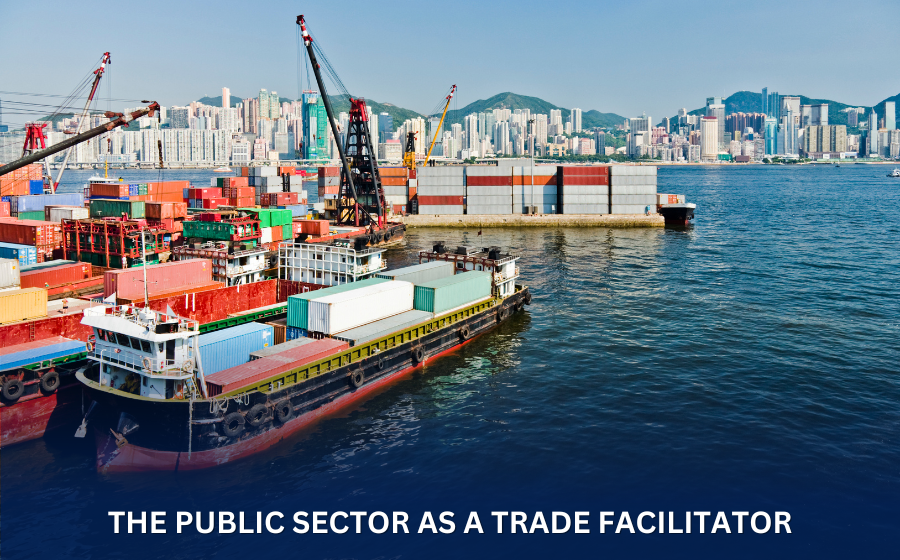
This statement has been echoed by public and private sector representatives alike, academics and administrators, often to make the case for why the private sector should do more to drive economic growth in the country. The other side of this equation is however, not often discussed but must be equally appreciated - though Governments do not trade, they are the facilitators of an enabling environment for trade. As such the role of the public sector is similarly important to the level of economic activity in the country and the degree to which goods and services are traded domestically and exported to other markets.

The following five key areas reflect what the private sector needs Governments to do effectively to enable the sector to enhance trade.

  1. Improve Trade Facilitation

Improving trade facilitation and related measures should be a central aim of the Government's support strategy. Much research has been done and lobbying by business support organisations for key aspects of business facilitation to be addressed over time. Suggested improvements include reducing import duties, streamlining customs procedures, and upgrading logistics infrastructure.

Reducing import duties and providing tax incentives aligns with Barbados’ ongoing efforts to support sustainable practices and improve trade. Admittedly, Barbados has been making strides in modernising customs processes through systems like ASYCUDA (Automated System for Customs Data), which helps streamline customs clearance. Investments in port and logistics infrastructure, such as the modernisation of Bridgetown Port and enhancements at the Grantley Adams International Airport, support trade facilitation by increasing efficiency and capacity. Continuing to upgrade logistics infrastructure supports efficient trade.

  1. Negotiate Trade Agreements

Trade agreements that are enabling must be negotiated to provide a platform for private firms to effectively pursue internationalisation strategies and expand into new markets to earn foreign exchange. Some effort has been made at the regional and global levels to improve international economic integration. Government must ensure the tenets of these agreements are not more favourable to foreign goods and services at the detriment of the domestic private sector. Additionally, the critical step of sensitising firms to the trade agreements must be followed to encourage businesses to access the opportunities afforded for trade.

Barbados participates in several regional trade agreements and has entered into the Economic Partnership Agreement (EPA) with the European Union since 2008 with the CARIFORUM block. The country is also active within the WTO framework, engaging in negotiations that enhance global economic integration.

Actively negotiating and implementing new trade agreements to expand market access ensures that Barbadian businesses can compete internationally.

  1. Strengthen Institutions

Barbados has demonstrated investment in human capital and institutional strengthening, including training, education initiatives, and technological research and development. The Government has initiated programmes to develop human capital, with a focus on education, training, and technological development. An example is the work being done by Export Barbados (BIDC) to offer various training programmes and support services that build business capabilities for participating in international trade. This must be further expanded with a focus on the key and relevant skills needed for new sectors and industries.

Additionally, investments in digitalisation and public sector modernisation by entities like Barbados National Standards Institution aim to uphold product standards and support market access.

  1. Leverage Public-Private Partnerships

Leveraging public-private partnerships (PPPs) can foster collaborative projects, provide trade finance, and promote economic diversiafiaction. Continued investment in PPPs can further develop critical trade-related infrastructure and leverage private sector expertise and investments for infrastructure development. Establishing public-private advisory councils could bridge gaps and foster dialogue, ensuring that policy decisions are informed by private sector feedback and expertise. Active involvement of the private sector in designing business facilitation initiatives ensures that policies are relevant and effective.

PPPs also enable credit and capital access, expanding access to credit, particularly for SMEs, through loan guarantees and venture capital funding. Alternative Financing Options including crowdfunding and peer-to-peer lending can diversify financing sources.

Considerable work is needed to enable private sector expansion in other areas of economic activity. Government can provide incentives for non-traditional exports and investment in emerging industries to broaden the economic base beyond tourism. PPPs can support greater skills development and research & development programmes for competitiveness in new industries.

  1. Enhance the Business Environment

The core argument for increased trade is the creation of an enabling business environment. Efforts to streamline regulations, improve access to finance, and enhance the legal framework can create a better business environment. Streamlined regulatory processes, digitisation and automation of government services can reduce bureaucracy and improve efficiency. This aligns with efforts to modernise services and reduce delays. Greater coordination between government agencies ensures a seamless experience for businesses.

Competition and consumer protection is another aspect of the enabling environment. Regular reviews and updates to competition and consumer protection regulations ensures that the business environment remains transparent and fair. Implementing reforms to state-owned enterprises to increase private sector participation can enhance productivity and efficiency in service delivery. Establishing regular forums for the private sector to provide feedback can inform better policy decisions.

The business case can be made from the aforementioned analysis for the public sector’s facilitation of trade. Greater examination of policies is needed to ensure they are enabling; initiatives for diversification and partnership can spur economic activity, and institutional and regulatory reforms will serve to encourage increased trade by the private sector.

Benefits of the Blue Green Bank

The financial landscape in Barbados is set to benefit from a new entrant. Recently there was the introduction of the African Import & Export Bank, which may be followed by other retail banks from the African continent. With the passage of the Bill in Parliament to launch the Blue Green Bank, (BGB), another financial institution is poised to occupy the development financing space.  

Based on the Green Climate Fund’s synopsis of the BGB, the Bank’s purpose and mission is to reduce the cost of financing for projects that strengthen climate resilience and respond to climate change impacts. This aligns with the broader goal of making green and climate-resilient investments more accessible and affordable for small businesses.

The funding and capitalisation of the Bank includes USD$30 million each from the governments of Guyana and Bahamas, as well as USD$15 million from the Resilience and Sustainability Trust (RST) of the International Monetary Fund (IMF). This substantial capitalisation will provide the necessary resources to fund the Bank's operations and lending activities.

The BGB was developed in collaboration with the Green Climate Fund (GCF) and the IMF's RST. This partnership with major global financial institutions lends credibility and additional funding sources to the Bank's initiatives.

The United States Agency for International Development (USAID) has agreed to provide USD$5 million in technical assistance to help conceptualise and bring the BGB project to fruition. This support can benefit small businesses by improving their capacity to access and utilise the Bank's offerings.

The BGB is envisioned as an institution that can serve the broader Caribbean region, not just Barbados. This regional focus allows the Bank to leverage resources and expertise to support small businesses across multiple countries facing similar climate challenges.

The BGB will work in collaboration with other financiers to lower the cost of funding climate-resilient and green projects. This collaborative approach can further enhance the support for the region’s private sector.

The issue of small business financing is a perennial one with data showing conclusively that this is the number one impediment to SME growth and transformation. A vibrant entrepreneurial ecosystem is one that includes a myriad of financing solutions for the sector – debt, equity, grants and development financing. Since the closer of the Barbados Development Bank three decades ago, there has not been any development financing instruments to fill the gap. The BGB portends to close this gap.

Small businesses can expect a number of benefits from the BGB including but not limited to:

  1. Financing for Climate-Resilient Projects: The primary purpose of the BGB is to fund climate-resilient projects, which aligns with the critical climate challenges facing Barbados. This includes investments in green energy technologies, low-emission technologies, and renewable energy projects.
  2. Flexible Financing Options: The BGB will offer a range of financing products, including grants and loans, to support different types of climate-related projects. This flexibility allows the bank to cater to the diverse needs and capabilities of small firms.
  3. Lowered Financing Costs: The BGB is specifically focused on lowering the financing costs of green and climate-resilient projects. This makes these types of investments more accessible and affordable for small businesses, which often face higher barriers to accessing capital.
  4. Targeted Support for Key Sectors: There are several sectors that the BGB will target for financing, including electric vehicle conversion for public service vehicles, agricultural businesses like aquaponics and greenhouses, and climate-resilient housing and infrastructure.
  5. Partnerships with Other Institutions: The BGB will work alongside other agencies and financial institutions to provide specialised financing instruments. This collaborative approach can further enhance the support available to small businesses and drive innovation in the climate finance space.

There has been much debate at the national level about the migration to green technology, without the concomitant discussion on how this investment will be financed. The BGB is being positioned to address this financing gap. As noted by one Minister of Government, the Bank represents a paradigm shift in how Barbados approaches development, integrating climate resilience and sustainability into the core of the economic framework. This aligns with the Bank's broader mission to support the country's sustainable development and climate resilience.

Proponents of the Bank argue that there is an inextricable link between climate and development, noting that climate change impacts every aspect of life and there is need for development strategies to reflect this reality, which the BGB aims to address. Further there are comprehensive financial and policy measures, including significant tax incentives, which will accompany the launch of the BGB. These measures are designed to create an ecosystem for sustainable development, where the Bank is just one part of a broader effort to support sustainable industries and a resilient future for Barbados.

The funding proposal for the BGB identifies sustainability and scalability as key tenets for the Bank’s success. The BGB aims to attract more concessional or philanthropic providers of capital, expanding the goals of climate action in Barbados without the need for further injections of money by the Government and GCF. This will create long-term sustainability and scalability in the banking sector, with the potential to scale beyond Barbados into the broader Caribbean region over time.

Overall, the BGB represents a comprehensive and innovative approach to unlocking green investments for small businesses in Barbados. By providing flexible financing, lowering costs, and targeting key sectors, the Bank aims to enable small firms to transition to more sustainable and climate-resilient operations, contributing to the country's broader sustainability goals.

Crisis of Contradiction

While Barbadians were focused on the finals of the ICC Men’s T20 World Cup, it was reported in the media that a tranche of BDS$56million was approved by the International Monetary Fund to be drawn down by the Government. This latest disbursement equates to BDS$374million accessed to date from the Extended Fund Facility and Resilience & Sustainability Facility of the IMF.

What was noticeable from this report was the stellar performance of the local economy as proffered in the Fund’s recent review.  This performance is supported by several local economists and institutions, who opine that the economy has sustained consistent growth during the post COVID-19 period. Noteworthy was the realisation that the primary surplus for the prior year was achieved and a target of 4% is projected for fiscal year 2024/25.

Understandably, the question on the lips of many is, where is this growth being experienced? Already, micro, and small firms are indicating unprecedented challenges in growing their markets and earning revenue since consumers have not returned to pre-pandemic levels of spending.

Of particular concern to Business Basics is the social development trajectory and the indications for business and the wider economy. 

Unbeknownst to most, Barbados has descended in its Human Development Index (HDI) ranking, recorded by the United Nations. Ten to 15 years ago the country boasted of being number one on the HDI. That is not the case today, and as expected there is little fanfare about the slide in the ranking. In 2021, Barbados ranked below countries like the Bahamas, Trinidad and Tobago, and Grenada in the Caribbean Community.

What many do not want to discuss is the level of property in Barbados, and its lived reality for many. While policymakers will reference the lack of credible research to produce the numbers, the glaring reality of this in everyday experience cannot be refuted.

Poverty in Barbados has been experiencing a rise since 1996. According to the Borgen Project, household poverty rates increased from 8.7 percent to 15 percent, and individual poverty rates increased from 13.9 percent to 19.3 percent between 1996 and 2016.

A UNICEF report highlights that poverty rates increased for all age groups between 2010 and 2016. The report indicated that in 2016, 32% of young people in Barbados were living in poverty, which is higher than the poverty rate for adults aged 25+ years (21%). The ILO Social Protection Platform notes that poverty levels have been on the rise since 2010, with one in four persons living in poverty.

All these reports agree on one thing – poverty has been worsening in Barbados for some time with significant increases in poverty among young people and other vulnerable groups. The most recent data available is from 2012, which showed that 2.5% of the population, or approximately 7,000 people, lived in multidimensional poverty. The intensity of deprivations in Barbados was 34.2%, indicating a significant lack in several areas such as health, education, and standard of living.

Understandably, current data is needed to quantify and qualify the situation to inform the policy and programmatic solutions needed to reverse this decline.

In 2018, the Barbados Economic Recovery and Transformation (BERT) Plan aimed to address the issue. There is therefore some contradiction if we are experiencing a worsening of social conditions yet a burgeoning economy. One former prime minister was noted to have said “it’s not just an economy, it’s a society”.

Some argue that the decline in Barbados' social development index ranking is also linked to the socio-economic dislocation caused by the COVID-19 pandemic, which exacerbated existing challenges such as poverty and homelessness. The government's efforts to address these issues, include initiatives like the One Family Programme, aimed to alleviate the difficulties faced by many Barbadian families.

Due to the symbiotic relationship between society and the economy, negative implications are there for business activity and real economic growth. If not adequately addressed, this social development slide threatens the gains achieved such as an educated workforce, political stability, and quality of life. Businesses are already challenged with a labour market that is not productive, with poor cognitive skills and a decline due to a brain drain. An increase in crime threatens the lives and livelihoods of all and can erode the quality standard of living known to Barbadians.

A recent speech by George Reid titled "A Practical Approach to Social and Economic Transformation in Barbados," opined some salient points worthy of analysis.

A critique of the development model suggests:

  • Focus on GDP growth doesn't translate to shared prosperity: Barbados' economic growth over the past 40 years has not benefited all Barbadians. Inequality remains high, with the working class and middle class struggling.
  • An over-reliance on tourism and offshore finance: The economy's dependence on tourism and offshore financial services makes it vulnerable to external shocks.
  • Insufficient investment in social programmes: The social safety net is not strong enough to address poverty, especially for vulnerable groups like the elderly and single mothers.

An alternative development approach includes:

  • Focus on human capital development: Investment in education and training to create a skilled workforce and boost productivity.
  • Support for domestic industries: Government should help domestic industries, like manufacturing and agriculture, become more competitive.
  • Social inclusion: Strategies to reduce poverty and inequality should involve targeted social programmes, fairer distribution of income, and ensuring everyone has access to opportunities.
  • Sustainable development: Integrate environmental protection into development plans to ensure long-term benefits.

Building Business Resilience

The 2024 Atlantic Hurricane season commenced last month and already records are being broken. It was predicted that this year would have an increased number of storms with several becoming severe hurricanes. No one would have imagined a category 4 hurricane in the first month of the season, not seen this early in over 50 years. The warmth of the sea water is said to be what normally occurs in September, not the month of June.

This unprecedented occurrence has brough into sharp focus the issue of climate change and the need for business resilience. Several global advocates have been for some time promulgating the climate crisis affecting nations and more so its impact on small island developing states. It will be some time before the current form of industrialisation is abandoned for more environmentally friendly and sustainable modes of development. In the meantime, countries must ensure they put in place a myriad of policy instruments and programmes to protect their spaces from the increase of intense natural disasters.

Businesses too are equally required to adopt sustainable practices. While simple risk management steps like business insurance, continuity plans and the procurement of equipment to sustain operations are lauded, more sophisticated measures may be required to confront the disruptions, natural or otherwise, that threaten the business.

A Forbes article on ‘How to build business resilience’ defines resilience as an organisation's ability to navigate disruptions and adapt to challenges. It emphasises that resilience is not just about survival, but also about enabling long-term, inclusive, and sustainable growth. Building resilience goes beyond just protecting a business' own interests. Sustainable and ethical practices contribute to the well-being of society and the environment, creating a more resilient future for all.

The article outlines three key strategies businesses can implement to build resilience:

  1. Geographic Expansion: Diversifying business operations across different regions mitigates risk and ensures stability during economic downturns.
  2. Fair, Inclusive, and Ethical Frameworks: Implementing ethical frameworks that promote fairness and inclusion fosters trust with stakeholders and future-proofs businesses for a changing consumer landscape.
  3. Circular Business Model and Sustainability Framework: By adopting sustainable practices and circular business models, companies attract environmentally conscious customers, reduce operational costs, and contribute to a more resilient global economy.

These ideas are not esoteric but can contribute to building models in business capable of withstanding climatic events, cyberthreats, pandemics and the myriads of existential threats that confront our region.

There is an inevitability of disasters, particularly at this time, as such a focus on long-term resilience is key. The World Economic Forum posits the importance of building resilience at all levels (organisational, national, and international). It highlights the need for public-private partnerships to address these complex challenges.

In its article ‘How to build business resilience in an era of global risks’ the WEF contends that businesses need to be prepared to react effectively to crises, minimising damage and emerging stronger. The focus on building long term resilience necessitates more than just reacting to immediate crises; but about proactively strengthening the organisation to withstand disruptions.

Four Pillars of Organisational Resilience were proffered as follows:

  1. Technology and Operational Resilience: Maintaining core business functions and ensuring the availability of critical technology.
  2. Workforce Resilience: Having a productive workforce capable of adapting and executing during disruptions.
  3. Data Resilience: Protecting the integrity and confidentiality of data, ensuring compliance during crises.
  4. Financial Resilience: Maintaining liquidity and assets to weather financial strain caused by disruptions.

There is an intrinsic need to integrate core resilience competencies like business continuity, disaster recovery, and incident management to create a cohesive response when a crisis hits.

The world’s economies have arguably seen its share of disruptions in these three decades of the 21st century compared to the prior 10 decades combined:

  • Climate Change and Extreme Weather events have disrupted supply chains and threaten business operations. Firms have resorted to alternative suppliers, trade routes, and scenario planning for climate-related disruptions where practical.
  • Geopolitical Tensions have also disrupted supply chains.
  • Technology Advancements such as AI present both opportunities and risks. Businesses need to be aware of potential risks like misinformation, cyberattacks, and job displacement. Building resilience involves using AI responsibly, managing its risks, and adapting to the changing job market.

There appears to be a never-ending cycle of exogenous shocks and climatic events, for which businesses must confront and address. The key is to embrace the long game approach. Possible strategies include:

  • Assess vulnerabilities: Identify potential disruptions related to climate change, geopolitics, and technological advancements.
  • Strengthen supply chains: Diversify suppliers and consider alternative trade routes to mitigate disruptions.
  • Embrace responsible technology: Use AI responsibly, manage its risks, and plan for the changing job market.
  • Invest in cybersecurity: Protect the business from cyberattacks that could be exacerbated by AI advancements.
  • Scenario planning: Stress test the business strategies against different risk scenarios.
  • Communication and collaboration: Build trust with the workforce and stakeholders, and collaborate with the public sector to address these challenges.

By following these tips, businesses can become more resilient and better prepared to navigate the complex and ever-changing risk landscape. Building resilience involves preparing for potential disruptions and having alternative plans in place.

Building resilience is an ongoing process. By continuously evaluating your vulnerabilities, implementing strategies, and fostering a culture of preparedness, the business will be better equipped to navigate challenges and emerge stronger.

Entrepreneurs Broadstreet Mall

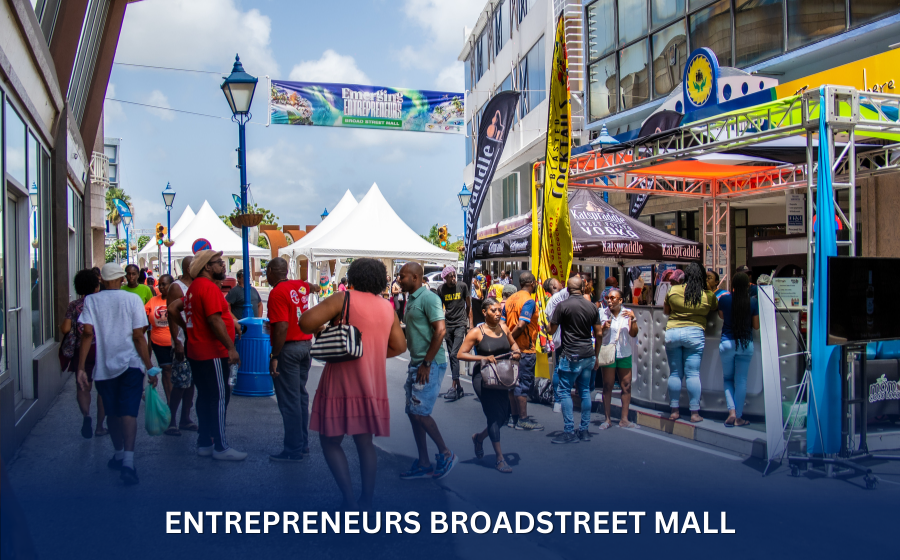
In anticipation of an influx of visitors to the island for the ICC Men’s Cricket World Cup, a number to organisations in the small business ecosystem collaborated to provide opportunities for their clients and members to promote their product offerings in a grand open-door exhibition.

An initiative of the Barbados Trust Fund Ltd., and FundAccess, with the support of Export Barbados, the Youth Entrepreneurship Scheme, the Barbados Youth Business Trust and the Small Business Association of Barbados, some 100 micro, small and medium enterprises were mobilised for the project.

The benefits to be derived for the firms were clearly articulated by the organisers and included:

  • Making connections with others in the field including potential clients or vendors,
  • Learning more about the competition, and building relationships with knowledgeable people in the industry,
  • Gaining access to new products and services that the business may not have otherwise known about,
  • Discovering new opportunities to expand product lines or services,
  • Generating publicity for the business through traditional and/or social media outlets.

 The initiative is to be commended for three key reasons – the ability to mobilise agencies to partner on a common agenda is no small feat. Accordingly, activities that foster the partnership of those with a common mandate to help small businesses to growth and develop, must be encourage. Secondly, most firms represented by these agonies are micro and small and ordinarily would not have the marketing budgets to stage big exhibitions and at the same time invest in the products needed to showcase during these ventures. A third reason is that every opportunity to maximise the potential of firms to grow their markets and expand should be harnessed. The ICC World Cup is one such project that should not be ignored. Business Support Orgnisations, government or non-governmental, would do wisely to explore the sporting, entertainment, conferences and other events to be held locally and regionally, and pursue the potential for their constituents to benefit from these events through mini showcases. With the year-round focus on conferences, sporting and entertainment activity on the local calendar, this can become a permanent feature in the annual work plan of these organisations.

This latter point, however, highlights a key concern to be addressed. While agencies have their individual mandates and programmatic agenda, there is no one coordinating mechanism to ensure that the MSME sector can have a structured and systematised approach to access these national efforts. This was the intention of the Small Business Development Centre Network that now appears to be in abeyance. The SBDC initiative portends to bring together the key agencies careering to micro and small firms, and through a small secretariat coordinate the major activities to provide the sector with a seamless platform to access products and services. It is true that each agency in the network with have its own mandate and due to its specialisation will cater uniquely to a segment of the market. The SBDC was intended however, to transcend this reality and harmonise the work done for the sector so as to collect data seamlessly, coordinate research and focus on those macro issues otherwise not contemplated at the agency level. Whither the SBDC?

The Bridgetown Mall demonstrates why that coordinating mechanism is important and could easily be replicated through a SBDC framework to maximise on all major events year-round. It is unclear why there is no national agenda at small business development despite the myriad of research and position papers prepared over time that show the benefits to be derived from national coordination. There are enough success models regionally and internationally that can be adapted. Small business development transcends partisanism and requires a commitment, particularly by policymakers to employ proven strategies and formula for the sustainable growth of the sector.

Suffice it to say that the Broad Street mall initiative, and a few similar projects before, can be a model for small firms to build capacity, learn marketing strategies and expand in the domestic market. Research shows that a small percentage of those participating in these initiatives will scale to the next level. The percentage of firms that are able to internationalise is generally small in any population but if investments are made to attract a target number of businesses each year, sustainable growth can be realised over a period of time. For sure the domestic consumer can be encouraged to support local small businesses and reduce the need for imports through an import substitution strategy. Not only should agriculture be developed to the point of reducing the food import bill, but other commodities that can be sourced from local suppliers will go a long way towards saving foreign exchange.

Kudos therefore to all businesses that participated during the five Saturdays in June in the Broad Street Mall project. Barbados and visitors alike got the opportunity to sample and purchase products from the firms in the food & beverage; wine and spirits; beauty, health & wellness; and the creative & cultural sectors.

 The SBA is particularly proud of its members who were given the opportunity to showcase during the period. Hats off to the following tenacious and inspiring businesses:

  • Fields and Hills
  • Blasted Cocktails
  • The Golden Spoon
  • J Y S Leather Craft
  • Crafted by Wood
  • Aidzariella Delights
  • Curae Health Inc.
  • Lizchi Exquisite Creations
  • Canewood Rum
  • Well Living Health and Beauty
  • EsNick Craft
  • Kernel Army Gourmet Popcorn
  • Azure Gourmet Skincare
  • Chantalle Designs
  • O’s Inc.
  • Mally’s Cocktails
  • Katspraddle Sweet Potato Vodka
  • Happy Treats

Facilitating Trade with Africa

The Afreximbank recently held its third Trade and Investment conference in the Bahamas with a key focus on encouraging trade between Caribbean firms and their counterparts from the African continent.

The proverbial question on the lips of many, whispered at the sidelines of the conference, was the practicality in forging meaningful partnerships and sustainable ventures, particularly for micro, small and medium enterprises, by Caribbean firms. Understandably these concerns were expressed due to the transportation and logistics issues that obtain, the inability of small firms to scale their operations to meet the demand of the large African market, and a credible financial system and regulatory regime to facilitate trade & investment.  

The conference sought to address these and more of the concerns that have plagued the African and Caribbean regions for centuries and have prevented business activity, tourism, cultural exchanges and simply communication between the two regions. Cognizant of the potential to correct centuries of indoctrination, abuse and ostracization, the conference challenged participants to pursue “economic prosperity on a platform of Global Africa”. Much research has been presented to show the economic benefits for both regions, but particularly the Caribbean, where the private sector is in dire need of accessible markets to pivot their product offerings.

Africa is the fastest growing continent in the world with immense potential for trade and investment. The African Union’s Africa Continental Free Trade Area secretariat reports that by 2035, there will be a USD$450 billion boost to the economy, lifting 30 million people out of poverty.

According to the Brookings Institution, the continent is experiencing a rapidly growing young labor force, increasing technology adoption, and an expanding middle class with trillions of dollars in buying power in the coming decades.

Additionally, as the continent has garnered significant investment in non-traditional sectors, with many cities having established themselves as innovation hubs, the continent has experienced significant inward investment from across the world.

According to the International Trade Centre's (ITC) Trade Map, in 2021, Africa's exports to CARIFORUM accounted for just 0.001% of Africa's total exports, while imports from the region made up 0.002% of Africa's total imports. In contrast, CARIFORUM's exports to Africa constituted 1.4% of CARIFORUM's total exports, with imports from Africa representing 0.4% of CARIFORUM's total imports.

The ITC further projects that by 2028 there will be USD$1.3 billion available for trade between Africa and the Caribbean.

Research by Caribbean Export (CEDA) further shows that CARICOM's import basket from Africa is predominantly composed of petroleum products from West Africa, with over 80% of these imports sourced from Gabon, mainly consisting of petroleum and petroleum products. The primary export destination for CARICOM products in Africa is Ghana, focusing on petroleum and petroleum products.

At the CEDA Investment Forum in November 2022, Secretary General of the AfCFTA H.E Wamkele Mene signaled the manifestation of the changing realities for the Africa-Caribbean relationship. The secretary general spoke about the AfCFTA Private-Sector Engagement Strategy which seeks to present opportunities for firms seeking to invest in Africa in four sectors: automotive; agriculture and agro-processing; pharmaceuticals; and transport and logistics given their high potential to meet local demand and production capabilities. Other sectors identified for future intervention included financial services, telecommunications, and information technology.

The next step strategically for Caribbean firms, is to create a framework where businesses can be developed to internationalise their product offering in these markets. Such a strategy ought to be linked to the overall industrialisation strategy of CARICOM to ensure we leverage the competitive advantage of each nation state, while facilitating the expansion of business. Our MSMEs do not have the capacity on their own and many cannot scale to the volume of production needed to satisfy the growing markets on the continent. National brands therefore need to be developed and in some instances CARICOM approaches will be required to maximise the opportunities for trade.

Evident at the Trade & Investment forum, big businesses were highlighted that accessed capital from African banks, areas included hotel construction, oil refinery and exploration, renewable energy, to name a few. MSMEs are not trading in these sectors but can through the cluster model trade in certain commodities, professional services, manufacturing, tourism services and cultural services, among other areas. What clearly is required is for business-minded individuals to be at the table to carve out a CARICOM strategy for expansion into the African markets. Reliance on politicians and policymakers alone will not produce the desired results.  

The realisation of this objective will be a mammoth task as the tide for centuries has been against the Caribbean treating positively with the African continent. Through the colonisation process Caribbean people have been indoctrinated to believe that the north is better – the food we eat, the language we speak, our perception of culture, and even our approach to business. For centuries, Africa was ostracised through lack of transportation, a gospel of mistrust and inferiority, and confusion in language like the tower of Babel. Even the banks from the north are seen as better, prompting skepticism about African banks and capital markets.

Similar to the ‘door of no return’ at the Ghanian Cape Coast, every effort was made by some interest groups to ensure that the 6th region of Africa, the Caribbean, does not return to the Continent.

There is therefore an urgency of now that requires brave and visionary leadership to close the gap between these two regions, to facilitate social and economic development for the peoples of Global Africa.

Women’s Economic Empowerment

The Investment Climate Reform (ICR) facility recently held a conference in Rwanda on empowering women in entrepreneurship. The event was attended by over 150 leaders involved in development policy and programming, from close to 40 countries in Africa, Caribbean and the Pacific. The ICR facility is a partnership of the European Union, British Council, German Cooperation and the ACP secretariat.

The most impactful revelation was the fact that in 2024 there existed a financing gap of USD$1.7 trillion for women entrepreneurial development. Despite the work done across the ACP countries, the evidence showed that women still found it challenging to access credit. Research further showed that female owned/managed businesses represented better credit options than their male counterparts and had the lowest non-performing loans.

The Caribbean representation at the conference admittedly could speak to great strides in their development agenda. Through progressive reforms the Caribbean has been able to address many of the issues which still plauged several African markets today. Some of the reported impediments to women empowerment on the continent included:

  • Access to technology, primarily in rural areas.
  • A huge informal sector resulting in limited or no access to banking services.
  • Strong patriarchal cultures which inhibited women’s involvement in business ownership.
  • Lack of access to colllateral to provide securitisation for credit.
  • Limited or no rights to borrow, start a business or even own property which may be used as collateral for business development.

The Caribbean in 2024 was not bound by these issues due to legislative reforms and social advancement. The World Bank research showed many regional countries were considered middle income with a high quality of living. Some African countries admittedly were aggressively pursuing reforms cognisant of their status on the development trajectory and need for sustainable economic growth. Host country Rwanda as an example, had achieved commendable results in 2024 with 61% of its parliament as women and 50% of both the executive and judicial arms of government being female. Relative to women entrepreneurship, the Rwanda Development Board reported that through the reforms of the country, women-owned firms grew from 27% in 2017 to 34% of all businesses in 2022.

While great strides were recorded in the region, there is still much work to be done. It is a truism that you cannot deny over 50% of your population from participating in the economic development of the country and expect to see transformational growth. The converse is true with research demonstrating that countries with a gender equality policy regime and inclusive frameworks are better positioned to see sustainable economic advancement.

An article by Jeanette Awai confirmed the positive correlation between women entrepreneurship and economic growth. A number of ideas have been posited including:

  • Women entrepreneurs possess valuable skills: They are adept at multitasking, communication, and understanding customer needs. These skills translate well into running a successful business.
  • Focus on sustainability and community: Caribbean women are known for their resourcefulness and eco-friendly practices. Women-led businesses are more likely to be environmentally conscious.
  • Innovation and filling market gaps: Women entrepreneurs are entering traditionally male-dominated fields and starting social enterprises that address social issues.
  • Economic benefits: Studies show that closing the gender gap in business leadership could add significantly to global GDP. Investing in women-owned businesses is good for the economy.
  • Diversity of perspective: Women entrepreneurs bring new ideas and approaches to the table, fostering innovation and growth.

Women however continue to face severe challenges in their entrepreneurial pursuits, chief of which is the lack of access to funding. The data suggests more needs to be done and aggressively so, in light of the need for the Caribbean to post sustainable economic growth in the aftermath of COVID-19 and the continued challenges occasioned by global supply chain disruptions.

A Republic Bank report on "Why Women Entrepreneurship Boosts Caribbean Economic Growth" revealed some telling facts about status of economic empowerment in Latin America and the Caribbean.

  • Women-owned businesses comprise only 23% of MSMEs in the LAC region.
  • Only 1% of women entrepreneurs have access to angel investors, seed and venture capital.
  • Goal 5 of the UN’s Sustainable Development Goals aims to achieve gender equality, but women hold only 15% of management positions and own only 14% of companies.
  • In the Caribbean, 30% of women-owned businesses are financially constrained compared to only 25% of male-owned businesses.
  • A McKinsey report suggests that if businesses worldwide addressed gender equality, it could add $13 trillion to global GDP by 2030.
  • 13 million women in Latin America and the Caribbean left the workforce during the COVID-19 pandemic.

Several of the international agencies like the World Bank, UN Women, among others, have been researching this issue and publishing data that should help the region to reform its policy framework to address the inequalities that exist. When an assessment is done on what happens on the ground with women who attempt to enter the market, it would appear these reforms are not moving fast enough and making the desired impact.

Gender inequality persists despite legal protections against discrimination, in some countries in the region, this is pervasive and threatens overall economic growth. Women face higher unemployment, lower wages, and limited opportunities compared to men and in some parts of the Caribbean they carry a heavier burden of unpaid caregiving responsibilities.

More must be done to change this trajectory and to empower women entrepreneurs in the region. Only then can we pivot to the desired goal of inclusive economic development.

Spread the Wealth

Consumers and households can be very selective in who they do business with. They may even be selfish in patronising a few vendors, whom they like for whatever reason. This is not the case with some institutions like governments or membership organisations. These are bound by a different set of rules and usually cannot be that selective.

Governments through their procurement regimes will seek to ensure that the big firms as well as the small share in their acquisition of goods and services. Similarly, membership organisations, if they must procure products, will adopt systems to either rotate vendors, spread the opportunities across a number of members and even facilitate cooperative ventures. On occasion, despite the best efforts of these entities, there are still those who will complain that a section of the constituency is not benefiting from the opportunities available.

There is cause for concern when such accusations are factual.

Government, with the widest population, has a greater moral responsibility to the whole. The cry that too few companies in construction, professional services, entertainment and other general services are benefiting from government’s procurement, cannot go on deaf ears.

Small firms in a recent focus group gave examples of what they term selective procurement by government – one real estate firm appears to benefit from government’s property sales or property development projects. (The slaves who died on the Drax Hall plantation would be rolling in their graves if they got wind of the development with that sale); few construction firms were contracted to build or repairs roads; despite complaints about the poor quality of food by a particular catering firm, that company was usually contracted for many state events because of ‘connections’. The list is long and varied.

The modernisation of governemnt’s procurment regime was intended to address some of this inherent bias by ensuring greater transparency and accountability to the public. The project, which was funded by the Inter-American Development Bank (circa 2012), contemplated a technological framework where all procurment opportunities would be posted online and the award to vendors monitored. The modern iteration of this regime portends a similar construct but is still to be meaningfully operationlised. More so, the recent Procurement Act, provided for a percentage of government procurement being assigned to specific groups. The absence of any transparent reporting renders the effectiveness of this regime almost impossible.

Protagonists of selective procurement will argue that issues of poor quality and lack of capacity of some providers cannot be ignored. It is true there are examples of businesses both big and small, that lack the capacity to deliver on time, with the desired quantities and at acceptable standards. Whether small contractors or service providers, the issue of capacity cannot be easily refuted.

Business Basics is concerned with an intrinsic ideology that is underpinned by a commitment by government to carry along the masses in the development process. The approach must be to help firms build capacity and grow, notwithstanding the need to maximise profitability and ensure efficiency. The objective is to spread the opportunities so all firms can participate in a measured way, thus ensuring equity and enfranchisement.

The architects of Barbados’ constitution contemplated a democratic socialist construct so that citizens can equally participate in the goverence of the country at the same time share in the prosperity of the State as it develops. Unfortunately, administrations have failed to advance this ideology, with a few exceptions along the way. Consequently, the wealth is not being spread equitably and the divide between the rich and the poor continues to widen. Based on current data the poverty levels in Barbados continue to increase.

A modern Barbados should not be defined by circumstances where Black governments fail to introduce policies for the enfranchisement of black populations.

Some argue that Barbados is practicing a more a neoliberal style of governance than is expected.

Dr Keston K. Perry, Assistant Professor in the Department of African American Studies at the University of California, wrote a telling article on the style of politics observed in Barbados and concluded that we had deviated from our original socialist moorings. He argued that ‘neoliberalism has profoundly harmed Global south countries, dramatically increased inequalities and exploitation of working-class peoples, and irreversibly harmed the environment’. Dr Perry opined that:

  • The current administration’s economic policies as neoliberal – the article details actions like public sector worker layoffs, pension reforms, and support for free-market tourism that the author associates with neoliberalism.
  • The policies have not addressed inequality – the excerpt claims the government policies have not challenged the wealth gap between the Barbadian working class and the elite, contradicting the idea of progressive leadership.
  • The stance on reparations and climate justice does not hit the mark – the author argues that proposals for debt relief and climate change mitigation have not challenged the existing power structures but maintain a neoliberal framework.

Even those watching from the sidelines of global affairs have concluded that on the current trajectory, existing policies will not address inequalities and social justice.

It is evident that the current approach is ineffective. A new vision is needed that is truly democratic socialist not only in the ideals espoused but by the policies and programmes implemented. Government must carry along the masses in the development model for the country and ensure the chasm that exists between the rich and poor is obliterated. It’s time to spread the wealth, equitably.

Get in Touch

Secretariat

Suite 101, Building 4
Harbour Industrial Estate
Bridgetown, Barbados

Phone

+1 (246) 228 0162

Email

theoffice@sba.bb

Follow Us

Image
Image
Image
Image