SBA News

Investing in Young People to Build the Next Generation of Entrepreneurs

Entrepreneurship is often presented to young people as an opportunity: start a business, pursue an idea, become financially independent and perhaps even create employment for others. However, between having an idea and building a sustainable enterprise lies a much more difficult journey—one that requires skills, mentorship, networks, access to markets and an understanding of what it takes to operate a formal business.

That gap between entrepreneurial ambition and sustainable enterprise is precisely where stronger partnerships can make a difference.

It is against this background that the Small Business Association of Barbados (SBA) and the Barbados Youth Development Council (BYDC) recently entered into a three-year Memorandum of Understanding (MOU). The agreement establishes a strategic partnership focused on youth entrepreneurship, business development, training, digital innovation, networking and the creation of practical opportunities for young Barbadians.

The significance of the agreement, however, lies less in the signatures on the dotted line and more in what happens next.

The case for greater attention to youth entrepreneurship becomes clearer when the numbers are considered.

MSMEs account for approximately 98 per cent of formal businesses in Barbados, making entrepreneurship and small business development fundamental to the country's economic landscape. Yet young Barbadians remain considerably underrepresented among formal businesses.

Data highlighted from the recent State of the Sector research showed that only about 2 per cent of formal businesses were owned by persons aged 18 to 24 at the end of 2025. Ownership increases among those aged 25 to 34, but overall, less than 20 per cent of formal enterprises are owned by persons within the broader youth demographic.

That distinction—formal enterprises—is particularly important.

Barbados does not necessarily have a shortage of young people with business ideas. Social media has made it easier than ever to see young Barbadians selling food, clothing, beauty services, creative products and professional services. The challenge is moving more of that entrepreneurial activity from the informal or early-stage level towards businesses that are properly structured, sustainable and able to scale.

BYDC President Caleb Brathwaite addressed this concern during the signing, noting that young people are already creating businesses but may not always understand how to formalise and operate them successfully.

This is where business support becomes critical.

Starting a business is relatively easy. Sustaining one is considerably harder.

Young entrepreneurs must understand pricing, financial management, taxation, marketing, regulatory compliance, customer service, technology and business planning. They must also build networks and learn how to identify opportunities beyond their immediate circles.

The MOU seeks to create a more structured pathway through which young people can access some of that support.

Under the agreement, BYDC members will be encouraged to participate in entrepreneurship programmes and training opportunities, while eligible youth-owned businesses can access SBA initiatives. The partnership also provides for workshops, seminars, networking opportunities and leadership & business skills development.

Importantly, the agreement includes access, where appropriate, to the National Vocational Qualification (NVQ) in Small Business Entrepreneurship.

That component matters because entrepreneurship should not be treated simply as something one attempts when traditional employment is unavailable. Running a business requires competencies that can be taught, developed and strengthened.

The SBA's involvement in youth entrepreneurship also predates this agreement. During the signing, reference was made to entrepreneurial training, job attachments, mentorship and other initiatives provided through schools since 2009, as well as the Association's subsequent work in vocational entrepreneurship training with secondary schools.

The partnership with the BYDC therefore provides an opportunity to extend that work through an organisation whose network reaches youth groups across Barbados.

Training alone, however, does not build a business. Entrepreneurs need customers.

One of the more practical aspects of the partnership is therefore its potential to connect young entrepreneurs with existing businesses and consumers.

The MOU specifically provides for networking events, youth enterprise exhibitions, Small Business Week activities and other collaborative initiatives. It also envisages young entrepreneurs participating in programmes and opportunities across the SBA's wider business network.

This creates the possibility of something particularly valuable: intergenerational business relationships.

Established entrepreneurs can provide mentorship and experience. Young entrepreneurs can bring new ideas, digital capabilities and different approaches to consumer engagement. Connecting the two creates opportunities for collaboration that neither group necessarily achieves in isolation.

It also addresses one of the less visible barriers to entrepreneurship—access to networks. Knowing who to speak to, where to find information and how to access an opportunity can sometimes be almost as important as the business idea itself.

The partnership also recognises that the businesses being created today will operate in a very different environment from those established a generation ago.

Digital capability is increasingly fundamental to competitiveness.

The MOU therefore includes collaboration on digital innovation, paperless business practices, technology-enabled services and digital communication platforms. One of the proposed initiatives is a digital Youth Discount Card using the SBA's digital membership platform.

The wider Youth Discount initiative also demonstrates how collaboration can create benefits on both sides of the marketplace.

During the event, it was announced that more than 100 businesses had agreed to participate in activities surrounding International Youth Day on August 12, offering young people discounts on selected purchases.

Such an initiative increases access to participating goods and services for young consumers. For businesses, it provides exposure to a younger customer base, increased traffic and an opportunity to develop relationships with consumers who may return long after the promotion ends.

There is a wider lesson here for business development.

No single institution can build an entrepreneurial ecosystem alone.

Youth organisations understand and represent the needs of young people. Business support organisations possess technical knowledge and networks. Government provides the policy and institutional environment, while the private sector offers markets, mentorship, investment and practical business experience.

The MOU signing should therefore be viewed as a starting point rather than an achievement in itself. The agreement explicitly commits both organisations to fostering entrepreneurship, supporting youth-owned businesses, encouraging innovation and developing programmes that create long-term value for young people and the wider small business community.

With young people currently accounting for a relatively small share of Barbados' formal businesses, there is considerable room for that number to grow. The SBA-BYDC partnership provides another mechanism through which that can happen.

The real value of this partnership will be seen if, three years from now, more young Barbadians have moved beyond simply having a business idea to owning enterprises that are formal, resilient, innovative and positioned to grow.

The Business of Crop Over

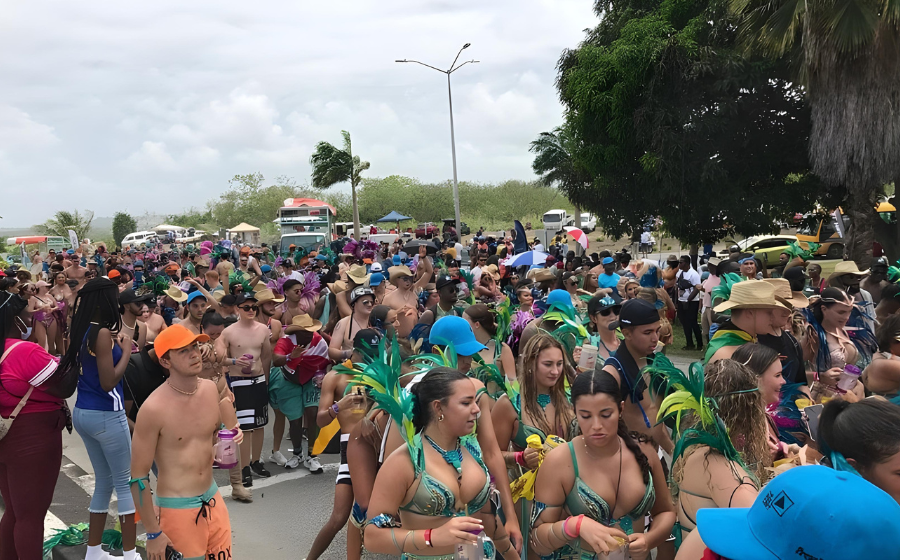
Every year, the Crop Over festival transforms Barbados. Streets become stages, local designers showcase their creativity, food vendors extend their operating hours, taxis stay busy, accommodation providers welcome visitors, and entrepreneurs seize opportunities that simply do not exist at any other time of the year. While the festival is celebrated as a cultural tradition rooted in the island's sugar industry, it has evolved into one of Barbados' most important periods of economic activity.

Crop Over has become one of Barbados' flagship tourism products, attracting visitors from across the Caribbean, the Diaspora and internationally, while stimulating spending across accommodation, food services, entertainment, retail and transportation sectors.

Although Barbados has yet to undertake a comprehensive annual economic impact assessment of the festival, a previous estimate suggests that Crop Over contributes approximately BDS $100 million to the economy—equivalent to around 1 per cent of GDP. While this figure would benefit from updating, it illustrates that the festival's value extends well beyond culture and entertainment.

The Central Bank of Barbados continues to identify tourism as one of the country's principal drivers of economic growth, employment and foreign exchange earnings. Festivals such as Crop Over strengthen Barbados' tourism offering by encouraging visitor spending across a wide range of industries rather than concentrating it solely within hotels and attractions.

Perhaps more importantly, Crop Over demonstrates how the creative economy operates. Every major event relies on organisers, entertainers, printers, decorators, photographers, security companies, caterers, transport providers, sound technicians and countless other businesses working behind the scenes. In effect, the festival functions as an economic ecosystem in which spending in one area creates opportunities throughout the wider economy.

With approximately 98 per cent of Barbados' formal private-sector enterprises classified as micro, small and medium enterprises (MSMEs), it is small businesses that stand to benefit most from periods of heightened economic activity.

Costume designers spend months preparing collections. Hairdressers, barbers and makeup artists experience full appointment books in the weeks leading up to Grand Kadooment. Food vendors, caterers and beverage suppliers support the growing number of fetes and community events. Photographers, videographers and content creators capture everything from costume launches to road experiences, while taxi operators and tour providers experience increased demand from both visitors and locals.

These businesses may operate on a relatively small scale individually, but collectively they form the commercial backbone of the festival.

What makes Crop Over particularly valuable is that it supports sectors that often receive limited attention in traditional economic discussions. Creative professionals, artisans and service providers—many of whom operate as sole proprietors or micro-enterprises—are able to convert talent into commercial opportunity.

The economic value of Crop Over extends well beyond direct spending.

When a visitor purchases a costume, that payment supports not only the band but also the seamstress, fabric supplier, designer and photographer involved in its production. A restaurant experiencing increased demand purchases more produce from local farmers, while event organisers contract security firms, rental companies, electricians and entertainment providers.

Economists describe this as the multiplier effect—the process through which spending circulates throughout the economy, creating income for multiple businesses rather than remaining with a single enterprise.

This is why Crop Over should be viewed as more than a festival. It is a seasonal economic stimulus that generates demand across numerous industries while creating temporary employment and business opportunities.

Yet Barbados still lacks detailed data showing precisely where this spending occurs, which industries benefit most and how much revenue ultimately reaches local MSMEs. Better measurement would allow policymakers to identify gaps, improve planning and maximise the festival's long-term economic value.

Barbados is not the only Caribbean country recognising the economic importance of its cultural festivals.

In Jamaica, an economic impact assessment found that Carnival in Jamaica generated approximately J$7.7 billion in direct economic activity in 2025, with every J$1 invested by the Government returning an estimated J$225.95 in economic benefits.

Similarly, Trinidad and Tobago has commissioned comprehensive economic impact studies to better quantify their Carnival's contribution to GDP, employment and business development. These studies are intended to provide policymakers with reliable data to guide investment and maximise economic returns.

These examples highlight an opportunity for Barbados. Crop Over is undoubtedly one of the country's most important cultural assets, but understanding its true economic value requires consistent measurement. Reliable data would strengthen policymaking, improve investment decisions and help ensure that more businesses benefit from the festival.

A good starting point would be a comprehensive economic impact assessment. Reliable data on visitor spending, employment, sectoral participation and MSME involvement would enable policymakers and industry stakeholders to make informed decisions while identifying opportunities for future investment.

Greater collaboration between tourism stakeholders and local businesses is equally important. Hotels, event promoters and major organisers should continue expanding opportunities for Barbadian suppliers, whether through catering, entertainment, décor, transportation or locally manufactured products. Keeping more of the festival's spending within the local economy ultimately benefits everyone.

Access to finance also deserves greater attention. Many entrepreneurs invest heavily months before earning any revenue. Costume designers purchase materials, vendors secure equipment and promoters commit to venues and performers well in advance. Financing solutions tailored to the Crop Over cycle would allow more MSMEs to participate without placing undue pressure on cash flow.

Around the world, successful creative economies generate value long after festivals concluded by commercialising intellectual property, exporting cultural products and building internationally recognised brands. Crop Over provides an ideal platform to showcase local fashion, music, visual arts, culinary products and creative services to international audiences.

Rather than limiting commercial activity to the festival season, local entrepreneurs should be supported in expanding online sales, developing export-ready products and leveraging digital platforms to reach visitors long after they have returned home. Members of the Barbadian Diaspora, repeat visitors and international consumers already associate Barbados with Crop Over; the opportunity now is to convert that recognition into year-round business.

In doing so, Crop Over becomes more than a festival. It becomes a launchpad for sustainable enterprise and creative entrepreneurship.

For the country's MSMEs, the festival generates income, supports employment, stimulates entrepreneurship and showcases the remarkable talent that exists across Barbados' creative and business communities.

The next step is to ensure that these benefits are better understood, more widely measured and more deliberately expanded. Stronger data, targeted business support, improved financing and deeper integration between tourism and local enterprise would allow Crop Over to deliver even greater value to the Barbadian economy.

Disability is not Inability in Entrepreneurship

Entrepreneurship is often described as a pathway to independence. It allows individuals to turn their skills into income, create employment and build livelihoods on their own terms. However, that pathway is not equally accessible to everyone.

Persons with disabilities may encounter barriers before a business is even established. Training venues may be inaccessible, online platforms may not accommodate assistive technology, financing processes may be difficult to navigate and transportation challenges may restrict access to customers, suppliers and business support services.

These obstacles do not indicate an absence of entrepreneurial ability. Instead, they reveal that many of the systems supporting enterprise were not designed with different needs in mind.

Disability is not a marginal issue. The World Health Organisation estimates that 1.3 billion people, or approximately one in every six persons globally, experience a significant disability.

Despite representing such a substantial share of the global population, persons with disabilities remain less likely to participate in the labour market. International Labour Organisation data also show that persons with disabilities are more likely to be self-employed, particularly in countries where opportunities for paid employment are limited.

This suggests that entrepreneurship already plays an important role in the economic lives of many persons with disabilities. However, self-employment should not simply become a last resort when conventional employment is unavailable. With the right support, it can be a deliberate route to business ownership, innovation and financial independence.

The difficulties facing entrepreneurs with disabilities frequently have little to do with the viability of their ideas.

A person may have a marketable product but be unable to attend a training session held in an inaccessible building. An entrepreneur with a visual impairment may encounter a business registration portal that cannot be properly navigated using a screen reader. Someone with a hearing impairment may be excluded from an online workshop without captions or interpretation.

Access to finance can create further challenges. Complicated forms, inaccessible websites and assumptions about an applicant’s capability may discourage entrepreneurs before their business proposals are fully considered.

Barbados’ recent Situational Analysis on the Rights of Persons with Disabilities identified continuing gaps in areas such as accessibility, transportation, employment and data collection. It also noted that the country’s recorded disability figures may not fully reflect the true size of the community.

These barriers are not solved simply by encouraging persons with disabilities to “become entrepreneurs”. Inclusion requires practical changes to the systems through which persons are trained, and businesses financed, registered and connected to markets.

Digital technology has expanded the possibilities for entrepreneurship.

Online stores, remote consulting, social media marketing, digital payments and cloud-based business tools allow entrepreneurs to reach customers without depending entirely on traditional commercial premises. A person with restricted mobility may be able to provide professional services from home. A craft producer can promote and sell products online, while a consultant can serve clients through virtual meetings.

However, digital access should not be taken for granted. A website without appropriate labels, a video without captions or an application that cannot be used with assistive technology may recreate online the same barriers found in physical spaces.

Digital transformation must therefore include digital accessibility. When platforms are designed to accommodate different users, they broaden access not only for persons with disabilities but also for older persons and others who may experience difficulties using conventional systems.

The passage of the Rights of Persons with Disabilities Act in 2025 was an important step in strengthening the framework for inclusion. Its provisions address several areas of participation and recognise the importance of employment, self-employment and entrepreneurship for persons with disabilities.

Legislation provides the foundation, but practical programmes are also necessary.

In 2026, the Barbados Council for the Disabled and the Rotary Club of Barbados South launched the AccessAbility: Pathways to Independence programme. The initiative seeks to equip persons with disabilities with income-generating skills while improving their employment and entrepreneurial prospects.

Programmes of this nature can help individuals identify viable opportunities and develop confidence. Training should also be connected to longer-term support. Entrepreneurs may also require mentoring, financing, assistance with registration, accessible technology and opportunities to promote their products and services.

Trinidad and Tobago offers one useful example of targeted support.

In 2025, the United Nations Development Programme and the Digicel Foundation provided funding to several recipients through an Innovation Challenge for Persons with Disabilities. The successful grantees were eligible to receive up to TT$450,000 to develop their business ideas and inclusive solutions.

The significance of the initiative was not simply the funding. It approached disability inclusion as an investment in innovation rather than an act of charity.

This distinction is important. Entrepreneurs with disabilities should not be viewed only as persons requiring assistance. They are potential business owners, service providers, employers and creators of products that may address needs overlooked by the wider market.

Internationally, entrepreneurs are also using lived experience to develop solutions for underserved markets.

In India, the Youth Co:Lab National Innovation Challenge invited young entrepreneurs, including persons with disabilities, to create solutions that improved accessibility and well-being. Six start-ups were ultimately selected for ideas spanning technology, education and inclusive care.

This highlights an important business opportunity. Persons with disabilities may identify gaps in products, services and customer experiences that others do not immediately recognise. Their perspectives can contribute to innovation in tourism, transportation, education, technology, healthcare and communication.

A more inclusive business environment does not require a separate system for every entrepreneur with a disability. It requires mainstream systems that are sufficiently flexible and accessible to serve a wider range of people.

Training organisations should provide accessible venues and materials. Financial institutions should ensure that application processes can be navigated by persons with disabilities. Digital services should follow accessibility standards. Public and private procurement opportunities should be communicated in formats that allow wider participation.

Most importantly, persons with disabilities should be involved in designing these interventions. Policies and programmes are more likely to succeed when the individuals who experience the barriers are directly involved in identifying solutions.

The objective should not be to position entrepreneurs with disabilities outside the mainstream business community. It should be to ensure that they can enter that community, access its resources and compete on the strength of their ideas.

Barbados cannot afford to overlook entrepreneurial talent. A stronger and more inclusive economy will emerge when business opportunity is determined by ability, preparation and innovation rather than by whether the systems surrounding an entrepreneur were designed to include them.

BiMPay: A New Era for Barbados' Small Businesses

The way businesses exchange money is changing. Customers increasingly expect transactions to be completed quickly, conveniently and securely, whether they are purchasing goods in a market, paying a contractor, placing an order through social media or settling an invoice online. In many countries, instant payments have become an integral part of everyday commerce, enabling businesses to improve cash flow, strengthen customer relationships and operate more efficiently.

Barbados has now taken a step in that direction with the launch of BiMPay, the country's new instant payments ecosystem. While much of the initial public discussion has focused on downloading the app or understanding the technology, the more important conversation for the small business sector is how instant payments can transform the way businesses manage their daily operations and prepare for an increasingly digital economy.

This was the focus of the Small Business Association of Barbados's recent webinar, "BiMPay is Launched: What's Next for Small Business in Navigating Instant Payments". Facilitated by Kent Emile-Smith, Senior Solutions Designer, Payments & Cards at CIBC Caribbean, the session explored what instant payments mean for the future of Barbados' micro, small and medium enterprises (MSMEs).

Every entrepreneur understands that making a sale is only part of the business equation. Equally important is how quickly that payment becomes available for use.

For many MSMEs, cash flow remains one of the greatest operational challenges. Businesses often wait for cheque clearances, transfer confirmations or batch payment processing before they can restock inventory, pay suppliers or meet payroll obligations. Delays that may seem insignificant individually can quickly accumulate, creating unnecessary pressure on working capital.

During the webinar, Mr. Emile-Smith explained that instant payments reduce the time between a customer making a payment and the business having access to those funds, allowing entrepreneurs to make faster business decisions and better manage their daily operations.

For a small retailer, this could mean purchasing replacement inventory the same day. For a contractor, it may allow materials to be ordered immediately after receiving a client's payment. For a service provider, deposits can be confirmed instantly, reducing uncertainty and improving scheduling.

In each case, the benefit extends beyond speed—it improves business agility.

One of the most valuable themes emerging from the discussion was that digital payments do far more than move money.

Every digital transaction creates a record.

Maintaining accurate financial records remains an ongoing challenge for many small firms. Manual reconciliation, cash handling and incomplete documentation often consume valuable time while making it more difficult to monitor business performance.

Digital payment systems simplify much of this process by automatically creating transaction histories that support reconciliation, improve financial reporting and provide greater visibility into business activity.

This is particularly significant given the findings of the national research of the MSME sector, which showed that Barbados' business community remains dominated by micro-enterprises. These firms frequently operate with lean administrative structures, meaning that technologies capable of simplifying routine financial processes can deliver disproportionate operational benefits.

The webinar also explored how stronger transaction histories may improve access to finance. As businesses increasingly receive payments digitally, financial institutions are better positioned to assess revenue patterns and cash flows when considering applications for credit or business expansion. Adopting digital payments is therefore not simply about modernising collections—it is about building stronger financial foundations.

Customers increasingly expect businesses to offer payment options that are simple, convenient and immediate. The webinar illustrated several practical examples of how instant payments can support these everyday interactions.

A market vendor displaying a QR code allows customers to pay even when they are not carrying cash. A beautician can request deposits electronically before appointments, reducing no-shows and improving scheduling. Contractors can receive staged payments linked to individual projects, while online retailers can confirm payment before dispatching goods.

These are not merely conveniences.

They contribute to smoother transactions, faster service and greater confidence for both businesses and customers.

As consumer expectations continue to evolve, businesses that provide flexible payment options are likely to be better positioned to compete in an increasingly digital marketplace.

Perhaps the most significant message throughout the session was that BiMPay should not be viewed as an isolated payment platform. Instead, it forms part of a wider digital infrastructure that can support future innovation across the Barbados economy.

The presentation highlighted capabilities such as QR payments, digital payment requests, payment links and digital invoicing—all tools that can streamline collections while improving record keeping and customer convenience. Over time, these capabilities can support broader developments including subscription services, online marketplaces, social commerce and integrated digital business systems.

The MSME research found that while social media adoption among firms is relatively high, more advanced forms of digital transformation—including integrated digital systems and emerging technologies—remain less widespread. Initiatives such as BiMPay therefore provide an opportunity for businesses to move beyond using digital tools solely for marketing and begin integrating them into their day-to-day operations.

Digital transformation is no longer simply about having an online presence. It is about operating more efficiently, serving customers more effectively and building businesses capable of competing in a changing economy.

Barbados is joining a growing number of countries that have embraced instant payments as part of their national financial infrastructure.

During the webinar, examples from Brazil, India and the United Kingdom demonstrated how these systems have evolved from simple payment mechanisms into platforms that support everyday commerce.

Brazil's Pix has become one of the world's most successful instant payment systems, allowing businesses and consumers to send and receive payments within seconds at any time of day. India's Unified Payments Interface (UPI) has transformed digital commerce by supporting billions of transactions annually while enabling millions of merchants to participate in the digital economy. Similarly, the United Kingdom's Faster Payments Service has become an established component of everyday banking for businesses and consumers alike.

While Barbados' market is considerably smaller, these international examples demonstrate what becomes possible when businesses embrace digital payment infrastructure as part of normal commercial activity.

The launch of BiMPay represents more than the introduction of another payment option.

It signals the continued evolution of Barbados' digital economy and provides MSMEs with an opportunity to strengthen the way they operate in an increasingly connected marketplace.

As with any significant innovation, technology alone will not determine success.

Its true value will depend on how effectively businesses incorporate it into their everyday operations, strengthen their internal processes and embrace the wider opportunities that digital transformation presents.

Small Businesses Welcome the End of the Foreign Exchange Fee

For nearly a decade, the 2% Foreign Exchange (FX) fee has quietly become one of the hidden costs of doing business in Barbados. Unlike corporation tax or Value Added Tax (VAT), it is not always immediately visible in a company's financial statements. Yet every time a business pays online for imported goods, subscribes to cloud-based software, purchases online advertising, or settles an overseas supplier invoice online, the fee has added another layer to the cost of operating.

Against this backdrop, the recent announcement by Minister of Finance, Hon. Ryan Straughn, that Government intends to remove the 2% FX fee on foreign exchange transactions within the next 12–18 months has been welcomed by many in the business community. The announcement signals more than the removal of another tax measure; it represents an opportunity to improve the operating environment for Barbados' micro, small and medium enterprises (MSMEs) at a time when digitalisation, innovation and international competitiveness have become increasingly important.

According to the Minister, the phased removal of the fee reflects Government's intention to balance tax reform with fiscal sustainability, particularly as recent changes to corporate tax continue to take effect. He also acknowledged that the International Monetary Fund (IMF) has repeatedly recommended the removal of the tax.

The FX fee was introduced in 2017 as part of Barbados' fiscal adjustment programme. At the time, the country faced significant economic challenges, including declining foreign reserves and the need to strengthen Government’s revenues while broader economic reforms were implemented.

The measure imposed a 2% levy on the sale of foreign currency and on a wide range of foreign exchange transactions, including online credit card purchases, wire transfers and payments for imported goods and services.

Although introduced as a revenue measure, the fee gradually became embedded in the day-to-day operations of businesses across Barbados. According to Minister Straughn, the FX fee has generated approximately BDS $565.6 million in revenue over the past six fiscal periods.

Running a business increasingly means operating within a digital economy. Even the smallest enterprise may rely on Microsoft 365 for email, Canva Pro for marketing, Zoom for virtual meetings, QuickBooks Online for accounting, Google Workspace for collaboration, Meta and Google Ads for advertising, Shopify for e-commerce, Adobe Creative Cloud for design work, or international cloud hosting services.

Every one of these transactions attracts foreign exchange costs.

Businesses importing machinery, raw materials, packaging, inventory or equipment have effectively paid an additional 2% on top of already rising freight costs, insurance charges and exchange-related expenses.

While two per cent may appear modest in isolation, the cumulative impact over hundreds or even thousands of transactions, annually, has represented a meaningful operational expense for MSMEs.

The timing of this announcement is therefore significant when viewed against the realities facing Barbados' small business sector.

Recent national research on the state of small firms found that more than 53% of MSMEs generate annual revenues below BDS$100,000, while many businesses continue to operate on relatively narrow profit margins. The research also found that firms are increasingly embracing digital technologies, although adoption remains uneven across the sector.

Every dollar saved on operational expenses creates opportunities to invest elsewhere—whether in inventory, staff development, technology, marketing or business expansion.

The removal of the FX fee therefore represents more than a tax adjustment. It improves the economics of doing business.

One of the less discussed implications of removing the fee is its potential impact on digital transformation.

The COVID-19 pandemic accelerated the adoption of digital technologies among businesses worldwide. Online commerce, digital marketing, cloud computing, cybersecurity and remote collaboration have become standard components of modern business operations rather than optional extras.

The Organisation for Economic Co-operation and Development (OECD) notes that digital adoption improves productivity, expands market access and strengthens business resilience, particularly among SMEs.

For Barbadian businesses, however, every investment in digital tools has effectively carried an additional cost due to the FX fee.

Removing that cost reduces one of the financial barriers to technology adoption.

A business considering investing in customer relationship management software, e-commerce platforms or digital accounting systems may now find those investments slightly more affordable.

While the savings on individual subscriptions may appear relatively small, the cumulative effect across multiple digital services becomes increasingly significant over time.

Competitiveness is ultimately about cost, productivity and efficiency. Every unnecessary business cost reduces competitiveness.

By lowering transaction costs associated with imports and digital services, the removal of the FX fee has the potential to improve the competitiveness of local enterprises, particularly those engaged in export markets, e-commerce and technology-driven services.

The World Bank has consistently highlighted that reducing the cost of doing business supports private sector development and enhances productivity, particularly among small and medium enterprises.

Perhaps the greatest benefit for MSMEs will be improved cash flow.

Cash flow remains one of the most significant challenges facing small businesses worldwide. Unlike larger corporations, MSMEs often operate with limited reserves and have fewer financing options available to absorb rising operating costs.

Reducing recurring expenses—even relatively small amounts—creates additional liquidity that can be redirected towards productive investment.

The announcement of the FX tax removal also sends a positive signal regarding Barbados' broader business environment.

International investors increasingly evaluate jurisdictions based on the ease and cost of doing business. Reducing transaction costs associated with international commerce helps improve Barbados' attractiveness as a location for entrepreneurship, digital services and investment.

Creating an environment where businesses can adopt technology more affordably complements these broader policy objectives.

While businesses will naturally welcome lower operating costs, the removal of the FX fee also presents an opportunity. The savings generated should not simply improve profitability; they should become investments in future growth.

Businesses may choose to upgrade technology, strengthen cybersecurity, improve staff training, expand digital marketing, invest in artificial intelligence tools or develop new products and services.

These are investments that improve long-term productivity and competitiveness.

In this sense, the removal of the FX tax is not simply about reducing costs. It creates additional capacity for businesses to innovate and modernise.

The success of the FX policy will ultimately be measured not simply by the removal of a fee, but by whether the resources retained by businesses are reinvested into stronger, more competitive and more resilient enterprises.

Citizenship, Immigration and the Barbados Brand

In business, reputation is often one of the most valuable assets a company possesses. It takes years to build but can be damaged far more quickly than it was earned. The same principle applies to countries.

Barbados’ most valuable assets are not found in an economic report, foreign exchange earnings or an investment portfolio, is the Barbados brand itself. Barbados has an international reputation built on political stability, strong institutions, sound governance and a passport that continues to rank among the strongest in the Caribbean.

Recent debate surrounding the proposed Citizenship and Immigration Bills has therefore attracted significant public attention. While discussion has largely centred on citizenship, immigration and national identity, there is also an important economic dimension to consider.

The strength of a passport is often viewed through the lens of travel. However, for business owners and entrepreneurs, it is much more than that.

The Barbados passport currently ranks among the strongest in the Caribbean and continues to enjoy significant levels of visa-free and visa-on-arrival access internationally. According to the Henley Passport Index 2026, Barbados ranks 20th globally, providing access to 163 destinations without requiring a prior visa. Barbados remains the highest-ranked Caribbean passport on the index.

For micro, small and medium enterprises (MSMEs), this matters.

Business travel remains an important part of export development, market exploration, trade missions, investment attraction and regional expansion. The ability to move efficiently between jurisdictions reduces friction and creates opportunities for entrepreneurs seeking to grow beyond the domestic market.

In this sense, passport strength is not merely a personal benefit; it is also an economic asset.

At the same time, Barbados faces legitimate demographic and labour market challenges.

Like many developed and middle-income economies, Barbados is grappling with an ageing population, emigration of skilled workers and labour shortages across several sectors. Businesses frequently cite difficulties recruiting and retaining workers with the skills required to support growth and expansion.

This challenge is not unique to Barbados. Across the Caribbean and globally, governments are increasingly using immigration policy as a tool to address labour shortages and support economic activity.

Countries such as Canada, Australia and New Zealand have long operated targeted immigration programmes aimed at attracting skilled workers in sectors experiencing labour deficits.

Access to labour among small firms can determine whether businesses expand, stagnate or close. Immigration reform therefore deserves serious consideration as part of Barbados' long-term economic strategy.

The question is not whether immigration should play a role.

The question is how it should be structured.

One of the more important issues emerging from the current debate is the distinction between immigration and citizenship.

Most countries facing labour shortages rely on work permits, residency programmes and skilled migration pathways to attract workers. Citizenship is generally treated as a separate process that follows longer periods of residency, contribution and integration.

Critics of the proposed legislation have expressed concern that provisions perceived as accelerating citizenship could create international perceptions similar to those associated with Citizenship by Investment (CBI) programmes operating elsewhere in the Caribbean.

Whether those concerns ultimately prove justified remains a matter for public debate and legislative scrutiny.

However, perception itself carries significance.

International confidence is often shaped not only by what legislation does, but also by how it is interpreted by foreign governments, international institutions and global mobility rankings.

The Caribbean provides several examples of how citizenship policies can influence international relationships.

Countries including Dominica, St Kitts & Nevis, Antigua & Barbuda and Grenada have operated Citizenship by Investment programmes for many years. These programmes have generated substantial revenues and attracted foreign investment.

At the same time, they have also attracted increased scrutiny from major international partners.

In 2023, the United Kingdom imposed visa requirements on Dominica and specifically referenced concerns surrounding citizenship policies and identity management systems.

Canada similarly imposed visa requirements on St Kitts & Nevis in 2014, citing concerns related to passport issuance and identity management practices associated with its Citizenship by Investment programme.

These developments illustrate an important reality. Citizenship policies increasingly attract international attention, particularly in an era where security, financial transparency and migration controls have become major global concerns.

For MSMEs, this discussion is not merely theoretical.

Barbados' reputation influences investment decisions, tourism performance, financial sector confidence and international business relationships. It also affects how easily Barbadian entrepreneurs can travel, establish partnerships and pursue opportunities abroad.

The Barbados brand has been built over decades. It is associated with stability, transparency, democratic governance and a relatively high level of international trust.

These qualities have helped Barbados attract visitors, investors and businesses despite operating as a small open economy.

Any policy perceived as weakening those advantages deserves careful examination.

This does not mean reform should be avoided. Rather, it means reform should be designed in a way that protects the very assets that make Barbados attractive in the first place.

Another important consideration is whether immigration alone can solve the challenges Barbados faces.

Labour shortages are real. However, they are only one part of a broader competitiveness discussion.

Businesses continue to face challenges related to productivity, skills development, access to finance, workforce retention and succession planning. Immigration can assist in addressing some labour market gaps, but it cannot substitute for investments in education, workforce development and entrepreneurship.

Similarly, if the objective is to strengthen economic growth, policies that support innovation, business expansion and export development remain equally important.

The most successful economies tend to combine immigration policies with broader strategies aimed at enhancing productivity and competitiveness.

The debate surrounding the Citizenship and Immigration Bills is likely to continue as the legislation moves through the various stages of debate.

For the business community, however, the discussion extends beyond citizenship itself.

It is ultimately about competitiveness.

Barbados must continue to attract talent, investment and skills while preserving the credibility and trust that have contributed significantly to its international standing. These objectives are not mutually exclusive, but achieving both requires careful policy design.

Citizenship is more than a legal status. It is also a signal of belonging, credibility and trust. Small countries like Barbados, operating in a highly competitive global environment, such qualities carry significant economic value.

As Barbados considers the future of its immigration regime, the challenge will be ensuring that efforts to strengthen economic competitiveness do not inadvertently weaken one of the country's strongest competitive advantages: the Barbados brand.

Artificial Intelligence is Changing Business—But Is It Changing Us?

Generative Artificial Intelligence (AI) has rapidly moved from a futuristic concept to a practical business tool. Across industries, organisations are using AI to improve productivity, streamline operations, enhance customer service and support decision-making. Yet while much of the public discussion focuses on what AI can do, far less attention is given to how AI is changing the way people think, learn, work and interact.

These issues formed the basis a recent webinar held by the Small Business Association of Barbados (SBA) under the theme "The Psychology of AI in Business: How Artificial Intelligence is Changing Business and Human Behaviour." The session was facilitated by Professor Dwayne Devonish of the University of the West Indies. During the presentation, Professor Devonish challenged participants to look beyond the technology itself and consider the profound impact AI is having on organisations and individuals alike.

One of the strongest messages emerging from the session was that AI is no longer an emerging trend. It is already embedded in the way modern organisations operate.

Professor Devonish highlighted how global firms such as Microsoft, Amazon and JP Morgan Chase have integrated AI into customer service, research, coding, marketing, data analysis and internal operations. Tasks that once required hours—or even days—can now be completed within minutes through AI-assisted systems.

For micro, small and medium enterprises (MSMEs), this reality presents both an opportunity and a challenge.

Small businesses often operate with limited staff, limited resources and limited time. AI can help address these constraints by automating repetitive tasks, generating marketing content, analysing customer data and improving operational efficiency. In many respects, AI provides smaller firms with access to capabilities that were once available only to larger enterprises.

Yet the research on Barbados' MSME sector suggests that adoption remains relatively low. During the webinar, Professor Devonish referenced findings indicating that fewer than one in five employers are currently integrating AI into their operations. This suggests that while technology is advancing rapidly, business adoption is not necessarily keeping pace.

While discussions about AI often centre on technology, Professor Devonish argued that the more significant issue may be psychological rather than technical.

Every major technological revolution created uncertainty. From the introduction of computers into offices, to the emergence of the internet, employees have often worried about whether technology would replace their jobs or make existing skills obsolete.

AI is generating similar concerns today.

The webinar explored how employees can experience anxiety about job security, concerns about being replaced by automated systems and uncertainty about whether their existing skills will remain relevant in the future. These concerns are not unique to Barbados. They are being reported globally across a wide range of industries.

Business owners cannot simply introduce AI tools and expect immediate acceptance. Successful adoption requires training, communication and trust. Employees need to understand that AI should be viewed as a tool that supports human decision-making rather than a replacement for human judgement.

The session also highlighted a critical balancing act.

On one hand, AI offers significant productivity gains. It can summarise reports, assist with research, draft correspondence, analyse information and automate routine administrative tasks. This allows business owners and employees to devote more time to strategic thinking and higher-value activities.

On the other hand, excessive reliance on AI can create unintended consequences.

Professor Devonish warned against the risk of outsourcing critical thinking to technology. When individuals rely too heavily on AI-generated outputs without questioning, analysing or verifying information, there is a danger that problem-solving and analytical skills may gradually weaken.

This issue is particularly relevant for entrepreneurs.

Successful business ownership requires judgement, creativity, intuition and adaptability. These qualities cannot simply be delegated to an algorithm. While AI can provide information and recommendations, the responsibility for making decisions ultimately remains with the business owner.

The challenge, therefore, is to use AI as an assistant rather than a substitute.

Another important theme emerging from the webinar was the increasing importance of digital literacy.

Professor Devonish noted that more than 90 per cent of jobs now require some form of digital skill. As AI becomes more integrated into the workplace, digital competence will become even more important for employees and business owners alike.

This has implications for workforce development, education and lifelong learning.

The reality is that technological change is occurring at an unprecedented pace. Skills acquired today may require updating within a relatively short period. As a result, continuous learning is becoming less of an advantage and more of a necessity.

This requires investing not only in technology but also in people.

Businesses that combine technological adoption with employee development are likely to be better positioned to compete in an increasingly digital economy.

The conversation around AI is not simply about technology. It is ultimately about competitiveness.

Barbados operates within a global economy where businesses increasingly compete across borders. Customers now expect faster service, personalised experiences and greater convenience. At the same time, competitors in other markets are leveraging technology to improve productivity and reduce costs.

For local MSMEs, the question is not whether AI will influence the business environment. It already is.

The more important question is how quickly businesses can adapt and whether they are prepared to develop the skills, systems and mindset necessary to take advantage of emerging opportunities.

Failure to engage with these technologies could widen productivity gaps and limit competitiveness. Conversely, thoughtful and responsible adoption could help MSMEs improve efficiency, enhance customer engagement and strengthen their market position.

The recent SBA webinar provided an important reminder that AI is not solely a technology issue. It is equally a people issue.

The success of AI adoption will depend not only on the quality of the technology itself but also on the willingness of individuals and organisations to learn, adapt and embrace change responsibly.

The opportunity is significant for MSMEs. AI has the potential to improve productivity, support innovation and expand access to information and expertise. However, realising these benefits will require investment in digital skills, thoughtful leadership and a commitment to maintaining the human judgement that remains at the heart of successful business decision-making.

As Professor Devonish observed during the session, the future is unlikely to belong solely to those who understand technology. Rather, it will belong to those who understand how to use technology responsibly, ethically and strategically to create value.

MSMEs seeking to remain competitive in an increasingly digital world, the use of AI wisely may be one of the most important lessons of all.

Be Prepared: Resilience Begins Before the Forecast

June 1st marks the official start of the Atlantic Hurricane Season, a date that serves as an annual reminder of the importance of preparedness for the region. While much of the public focus tends to centre on households securing supplies and protecting property, hurricane readiness is equally important for the business community. Micro, small and medium enterprises (MSMEs) understand that preparedness is not simply about weathering a storm—it is about protecting operations, employees, customers, assets and revenue.

Hurricanes are not only weather events. They are business interruption events. They affect stock, equipment, staff, suppliers, customers, electricity, internet connectivity, transportation, cash flow and, in some cases, the ability of a business to reopen at all. For MSMEs operating with limited reserves, even a few days of disruption can create consequences that last for weeks or months.

The experience of Hurricane Beryl in 2024 brought this reality sharply into focus. Although Barbados was spared the worst possible outcome, the impact on coastal infrastructure and the fishing sector demonstrated how quickly livelihoods can be disrupted. More than 200 fishing vessels were reportedly damaged or lost, with some of the most significant impact concentrated at the Bridgetown Fisheries Complex.

The damage caused by Beryl was not abstract. It affected real businesses, real households, and real supply chains. The fisheries sector is often discussed as a livelihood sector, but it is also an economic sector connected to vendors, processors, restaurants, transporters and consumers.

A rapid assessment following Beryl reported that 209 boats were affected, either damaged or lost, out of 312 registered boats in Barbados in 2024. That represents a major disruption to productive capacity in one sector alone.

The recent MSME research reinforces why hurricane preparedness must be treated as a business priority. While 81% of MSMEs reported no direct climate-related impacts in the previous five years, only 8.1% had a formal climate preparedness plan. Nearly 63% reported having no plan at all.

This gap is important. It suggests that many businesses may not yet be experiencing climate shocks directly, but they are also not sufficiently prepared for when those shocks occur. That is a risky position in a region where climate-related events are becoming more unpredictable and more costly.

The same study found that financial constraints and limited knowledge were among the main barriers to climate resilience. This is understandable. Many small businesses are focused on immediate pressures: rent, wages, suppliers, customers and cash flow. However, preparedness cannot remain secondary, because a single event can reverse years of work.

Hurricane preparedness is still thought of in physical terms for many firms: boarding windows, moving stock and securing premises. These actions matter, but they are only one part of business resilience.

A prepared MSME should also know how it will communicate with staff, protect records, preserve cash flow, contact customers, manage suppliers and resume operations after disruption. A business continuity plan does not have to be complicated, but it must be practical.

The goal is not perfection. The goal is to avoid improvising during a crisis.

The cost of poor preparedness is rarely limited to physical damage. It often appears in lost sales, delayed reopening, spoiled inventory, damaged equipment, missed contracts and reduced customer confidence.

The national research study already points to a sector operating with limited financial buffers, with many MSMEs reporting low revenue levels and narrow margins. In that context, recovery is not automatic. A larger firm may absorb temporary losses; a micro business may not.

This is why resilience must be seen as part of competitiveness. A business that can reopen quickly after a disruption is not only protecting itself, but protecting jobs, customers and community services.

One of the strongest lessons from Hurricane Beryl was the vulnerability created by uninsured or underinsured assets. Reports indicated that many of the vessels affected by the hurricane were uninsured, creating a heavier recovery burden for owners and the State.

Insurance should not be treated as an afterthought. Business owners should review whether their coverage includes storm damage, flooding, equipment, stock, business interruption and liability. They should also keep digital copies of key documents, including policies, licenses, supplier agreements, payroll records and customer information.

Cash flow planning is equally important. Businesses should consider how many days they can operate without income, whether emergency reserves exist, and how quickly they can access financing if repairs or replacement stock are needed.

Hurricane preparedness is also a digital issue. If records are only kept on one computer, if customer information is not backed up, or if payment systems depend on one physical location, recovery becomes harder.

The National MSME study found that while social media use is widespread, deeper digital adoption remains limited among many firms. This matters because digital tools can help businesses communicate during disruption, receive payments remotely, update customers, store records securely and resume operations more quickly.

A business that can continue taking orders, advising customers and coordinating suppliers online has a better chance of maintaining income during disruption. Digital readiness should therefore be part of every hurricane preparedness plan.

Preparedness, however, should not be viewed as a once-a-year activity. It should become part of how businesses operate.

This means reviewing plans before the season begins, updating emergency contacts, checking insurance, backing up records, securing premises, identifying critical suppliers, and speaking with staff about roles and expectations.

Business support organisations, financial institutions and government agencies also have a role to play. MSMEs need practical templates, affordable insurance options, emergency financing pathways, and targeted training that speaks to their realities. A preparedness plan that works for a large corporation may not work for a sole trader, vendor, fisher, salon owner or small manufacturer.

Hurricane Beryl showed Barbados that climatic shocks can affect business sectors quickly and deeply. The damage to the fishing industry was a national reminder that livelihoods, supply chains and productive assets can be disrupted in a matter of hours.

For MSMEs, the message is simple but urgent: be prepared.

Beyond protecting buildings, preparedness is also about protecting income, employment, customers, records, assets and continuity. It is about ensuring that a business can recover not only physically, but financially and operationally.

As another hurricane season has started, the small business community cannot afford to treat resilience as optional. In a climate vulnerable region, preparedness is now part of doing business.

The Cost of Being Left Behind in an Era of Digital Transactions

The recent public discussion around Apple Pay, Cash App, Venmo, Google Pay, and online creator monetisation touches a larger issue than convenience. It raises a central question for Barbados’ digital economy: are our small businesses and creators being given the same tools as the customers, tourists, and audiences they are trying to serve?

For micro, small and medium enterprises (MSMEs), payments are no longer a back-office issue. They affect sales, customer experience, cash flow, and market access. A tourist accustomed to tapping a phone to pay for coffee, a taxi, a craft item, or a tour experience does not separate payment convenience from the quality of service. If the transaction feels difficult, the business—not the payment system—often absorbs the frustration.

Payment flexibility can determine whether a sale is completed or lost. This is especially true in tourism-facing sectors, where visitors often arrive with established payment habits. Barbados recorded 727,310 stay-over tourist arrivals in 2025, which reinforces the scale of the market interacting daily with local businesses, restaurants, taxi operators, vendors, attractions, and service providers.

Digital wallets are already standard in many of Barbados’ key visitor markets. Apple’s official list shows Apple Pay support in countries including Canada, the United States, The Bahamas and the Dominican Republic, while Google Wallet’s supported-country list includes Barbados. Cash App, however, states that its core app is only available in the United States and United Kingdom, and Venmo requires users to be physically located in the United States. These differences matter because “digital payments” are not one system; each platform has its own geographic, banking and regulatory limitations.

The recent research on the MSME sector shows that more than half of MSMEs operate at very low or low levels of digital adoption, while fewer than one in five report high or very high adoption. Social media use is widespread at 78.7%, but advanced systems, integration and AI use remain limited. This suggests that many firms are visible online, but not yet fully integrated into the digital systems that convert visibility into sales, payments and growth.

That distinction is important. A business may have an Instagram page, WhatsApp contact and a loyal customer base, but still struggle to complete a transaction smoothly. Digital presence without digital payment readiness creates a gap between marketing and revenue.

The research shows that over 53% of MSMEs report annual revenues below BDS $100,000, while nearly half report operating at a loss or breaking even. In that environment, every lost transaction counts.

The rollout of BiMPay should not be seen as being in competition with global payment platforms. It is better understood as part of the foundation Barbados needs for a modern payments ecosystem.

The Central Bank of Barbados states that BiMPay will be a national instant payment system (IPS) allowing payments between individuals, businesses and Government on a 24/7/365 basis. It is designed to be interoperable, allowing users to send and receive money regardless of whom they bank with, or whether they are banked at all.

The IPS can help reduce delays, improve cash flow and lower dependence on cash. However, BiMPay solves a domestic payments problem. It does not automatically solve the issue of global platform access, tourism-facing payment preferences, or creator monetisation restrictions. Barbados needs both: strong local payment infrastructure and broader compatibility with the tools visitors and digital markets already use.

Tourism is increasingly shaped by frictionless experiences. Visitors book online, check in online, review businesses online, navigate by phone, and expect to pay digitally. The payment experience is now part of the destination experience.

Consider a small tour operator selling last-minute experiences to cruise passengers or stay-over visitors. If the visitor can book through social media but cannot pay instantly, the business may lose the sale. Likewise, a food vendor or craft seller may attract attention through a viral post, but if payment options are limited, interest may not convert into income.

This is where the digital economy becomes practical. It is not only about technology for technology’s sake. It is about ensuring that businesses can meet customers where they already are.

The second part of the discussion—the ability of Barbadian creators and influencers to monetise content—is just as important.

The recent visit by global streamer IShowSpeed to Barbados and the wider Caribbean showed the scale of opportunity in real time. His Caribbean tour generated major online attention, and CBC reported that Barbados received significant exposure during his visit. BET also reported that the tour included Barbados among several Caribbean stops.

This matters because creators are no longer merely entertainers. They are tourism promoters, cultural exporters, brand partners and digital entrepreneurs. YouTube states that it paid more than US$70 billion to creators, artists and media companies between 2021 and 2023. That figure shows the scale of the global creator economy and why countries excluded from monetisation systems are not just missing entertainment revenue—they are missing business income.

The frustration around “geo-tagging” or geo-restrictions is really a frustration about unequal participation. Many platforms determine eligibility based on country availability, banking infrastructure, tax systems, compliance frameworks and advertising-market readiness. For creators, this can mean building audiences without access to the same monetisation tools available elsewhere.

Instagram’s monetisation policies require accounts to reside in an eligible country to use monetisation or promotional tools, while Facebook Content Monetisation is available only in certain countries and languages. These eligibility rules shape who can earn directly from content and who must rely on indirect income such as sponsorships, event hosting or brand deals.

Creator monetisation intersects with entrepreneurship, tourism, culture, foreign exchange earnings and digital exports. A creator who earns from content is operating a business. A small business that uses creators to market products is also participating in the digital economy.

The appeal for Apple Pay, Cash App, Venmo, Google Pay and creator monetisation is ultimately a plea for modern business infrastructure. MSMEs are not asking for novelty. They are asking for tools that reduce friction, expand customer reach and allow them to compete.

The challenge is regulatory as much as technological. Payment systems require compliance with anti-money laundering rules, banking standards, data protection, taxation and platform-specific requirements. That work cannot be avoided. However, delays have real costs. Every year without broader digital compatibility is one where businesses and creators operate with fewer tools than their international counterparts.

In today’s economy, being digitally visible is no longer enough. Barbados must also be digitally payable, digitally bankable, and digitally monetisable.

Get in Touch

Secretariat

Suite 101, Building 4
Harbour Industrial Estate
Bridgetown, Barbados

Phone

+1 (246) 228 0162

Email

theoffice@sba.bb

Follow Us

Image
Image
Image
Image