SBA News

The Lender of Last Resort

Much research has been done on the development outcomes of countries that have borrowed from the International Monetary Fund. Whereas some argue for the benefit that governments derive from access to low interest loans to boost their fiscal positions, the trade-off on the society in the short to medium term have been posited by many as too severe to endure.

Administrations overtime have accessed loans from the IMF to help with balance of payments support following various crises caused primarily by exogenous shocks. one administration of recent memory became renowned for its insistence on self-governance and was able to demonstrate an ability to manage its own economic affairs. This resulted in the expulsion of IMF personnel from the precincts of Barbados.

From 2018, Barbados opted to borrow from the Fund in circumstances that were posited as the ‘last resort’. The loan programmes dubbed the Extended Fund Facility (EFF), and the Resilience and Sustainability Facility (RSF) arrangement were described as ‘homegrown’ and from all reports, have contributed to a significant improvement in Barbados' fiscal position. The country was able to reduce its public debt and increase its international reserves. The primary fiscal balance recorded a surplus of 2.5 percent of GDP in FY2022/23, following a deficit in previous years. The budget for FY2023/24 targeted a primary surplus of 3.5 percent of GDP, in line with programme targets.

Based on the Central Bank Governor’s reports, the economy recovered strongly, driven by a rebound in tourism and related activities. The country has experienced eleven consecutive quarters of growth, and international reserves are at a historic high.

The reality on the ground for households and businesses alike paints a different picture. While a very small percentage of the population appears to be enjoying the benefits of economic growth, austerity is the lived experience of the majority. Young people are unable to access jobs based on their qualifications, many are opting to emigrate or accept low paying jobs where available. Startups and early growth businesses are confronted with a labyrinth when seeking to navigate the policy and programmes space for doing business; and households continue to struggle in maintaining acceptable living standards.  The growth is not trickling down to the average citizen.

Research shows that the effects of IMF loans are a complex issue with varying results depending on the country and economic situation, however few countries overtime have reported any success after entering these loan agreements. The result too often is the increase in the country's debt burden and a lack of investment in growth-promoting areas in the long run.

IMF loans can provide much-needed financial resources during economic crises. They can also push for reforms that improve a country's fiscal health, such as reducing government spending or improving tax collection. However, the downside impact is often too severe. Austerity measures, which involve cutting spending on social programmes, is a price too high to pay. Additionally, these measures stifle economic growth in the short – medium term.

While the IMF does not explicitly mandate austerity, it often features certain conditionalities that portend austerity on the population. Since the devil is in the detail, countries would be wise to pay attention to the fine print evidenced in Barbados’ situation of having to pay huge surcharges on top of regular interest payments and other fees due to its high level of IMF debt.

Two known types of conditions are:

  • Prior Actions: Steps a country takes upfront, like tax reforms or clearing existing debts, to establish a solid foundation for the loan programme's success.
  • Quantitative Performance Criteria (QPCs): Measurable targets related to economic health, often involving limits on government spending or borrowing. These aim to control deficits and stabilise the economy.

Critics argue that austerity measures, often linked to QPCs, can have negative social consequences, including Reduced Social Spending - cuts in government spending can negatively impact social programmes like healthcare and education, disproportionately affecting vulnerable populations who rely on them; and Stifled Growth - while intended to improve fiscal health, austerity hinders economic growth in the short term. Reduced government spending decreases demand for goods and services, slowing economic activity.

This latter point is germane to the state of many small firms that ordinarily depend on government procurement to help build capacity and to grow their operations. At present too many small businesses in construction, services and manufacturing are not benefiting from government procurement in circumstances where there is increased demand. It is either too few are benefiting from this procurement regime or there is a reduction in overall spending.

Little success can be cited from Caribbean countries that entered into arrangements with the Fund. These countries often have high levels of poverty and inequality. Cuts to social programmes disproportionately impact their populations, thus worsening the situation.

Proponents of austerity argue that by reducing government debt, it frees up resources for long-term economic growth, which could eventually benefit the entire society. However, research has shown that austerity actually hinders growth in the short term. There is little evidence of direct social benefits from the measures themselves; they often worsen social problems, particularly for the most vulnerable.

While researchers continue to assess the impact of the policy prescriptions of these Bretton Wood Institutions, small and vulnerable countries are feeling the brunt of austerity with the potential to retard social gains. The proverbial question must be asked of our governors, is it worth it in the long run?
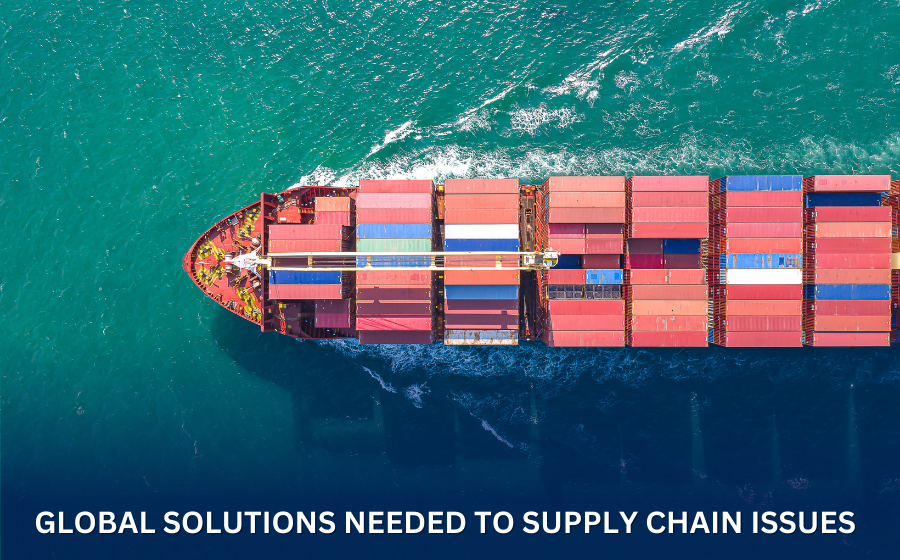
Global Solutions needed to Supply Chain Issues

It is somewhat fortuitous that the United Nations Conference on Trade and Development is hosting the first ever Global Supply Chain conference in Barbados this week, as citizens in countries around the world, particularly Small Island Developing States, continue to feel the brunt of high inflation and increasing cost of living.

Economists have done various analyses on the determinants of the high cost of living positing the problem is ineffective policy, poor governance and even existential shocks. Whatever the research reveals, the undeniable fact is that it is increasingly difficult for the average citizen to maintain an acceptance standard of living and a key contributor to this is the disruption being experience in the globally supply chains.

A global solution is therefore needed to this global crisis.

The Global Supply Chain conference is understandingly being held against the backdrop of several global challenges including:

  • Unprecedented disruptions to global trade: COVID-19 pandemic, climate change, geopolitical tensions.
  • The lack of resilience and sustainability in global supply chains, especially for developing countries.
  • Disproportionately affected vulnerable economies, particularly SIDS and Landlocked Developing Countries (LLDCs).

The COVID-19 crisis caused a 1.5% increase in global consumer prices due to higher maritime transport costs, with an even greater impact (7.5% increase) on SIDS.

Both businesses and consumers have been adversely affected by the disruption in supply chains. Financial consequences for businesses include:

  • Escalating Costs: Disruptions have led to increased production costs.
  • Revenue Loss: Delays in delivering products translate to lost sales and revenue. Dissatisfied customers may switch to competitors, impacting future sales.

To combat the cost to businesses, firms have considered sourcing materials from alternative, potentially more expensive, suppliers; expediting shipping to meet deadlines, incurring higher transportation costs; temporarily halting production due to material shortages, leading to lost productivity. All of these factors will erode profit margins.

The consequences for consumers include:

  • Higher Cost of Living: The increased cost of production due to supply chain disruptions gets passed on to consumers in the form of higher prices for goods.
  • Product Shortages: Disruptions lead to stockouts and limited availability of certain products.
  • Longer Waiting Times: Delays in getting products from factories to stores result in longer wait times for consumers.

One key point noted from the first day of the UNCTAD conference is the role of small and medium enterprises in supply chains. This sector is arguably the engine of growth for economies and more so, the catalyser for social justice and enfranchisement of societies’ vulnerable - women and the youth. The conference therefore underscored “the difficulties faced by SMEs in accessing global supply chains and the necessity of financial inclusion to support their participation. Programmes aimed at upgrading technology and decarbonising SME operations were mentioned as ways to help these businesses enter export markets and comply with increasingly stringent environmental standards”.

Several small business administrators and business owners agreed with the conference’s summation and opined that the provision of adequate financial resources is needed to build resilient and sustainable SMEs. The addition of the digital transformation agenda further compounds the capacity vulnerabilities of small businesses to navigate supply chain disruptions.

The deleterious impact of such disruptions was evidenced in the world’s largest economy in an article on USbank.com which showed how supply chain disruptions can contribute to inflation. These disruptions were a major factor in the rise of inflation in 2021 and 2022 in the US. Inflation declined from a peak of 9.1% in June 2022 to 3.2% in February 2024 as issues with supply chains began to normalise.

There is a positive correlation between price increases and Inflation: Disruptions cause a shortage of available goods. When demand for goods remains high, prices rise significantly. This is evident in the example of the COVID-19 pandemic where high demand for goods coupled with production limitations led to a surge in inflation.

Individual consumers and businesses feel the impact of price increases: Consumers are at the receiving end of these disruptions. They face limited availability of certain products or are forced to pay a much higher price due to scarcity. A recent example of this was seen with the disruption in the supply of building materials, which created a scarcity in the market and the resultant price hikes for lumber and related construction materials.

Research done by o9 Solutions showed how supply chain disruptions impacted consumer behavior.

  • More than half (52%) of surveyed consumers reported experiencing supply chain disruptions in the past year.
  • Nearly half (49%) of consumers faced difficulty finding products they typically buy.
  • These disruptions have led to changes in how consumers shop, resulting in
    • Cost-Conscious Choices: Over a third (38%) stopped buying certain items due to price increases.
    • Increased Comparison Shopping: 35% reported doing more comparison shopping to find better deals.
    • Prioritisation: 33% adjusted their buying habits to prioritise essential purchases.

As assessment of the consumer’s confidence in Supply Chain functionality revealed that 38% believed supply chains were working well; 39% lacked confidence in their performance and 24% were unsure about how well they function.

Consumers perceived there were a number of reasons for supply side disruptions, with 58% indicating Inflation was the biggest driver, followed by labor shortages, transportation issues and Geopolitical factors.

Hopefully during this week many of the solutions to this global crisis will be explored. For sure SIDS in the region can begin to look inward and discuss a regional industrial policy to rationalise the production of key commodities for the Caribbean, address the issue of transportation to get these commodities across borders quickly and cheaply, and harness the investment capital in the region for the development of the private sector.

The Cybercrime Bill in Focus

The Government of Barbados recently walked-back on the Cybercrime Bill 2024, sending the Bill to a Joint Select Committee after it was passed in the House of Assembly. This development has been welcomed by many as it afforded citizens, locally and abroad, the opportunity to weigh in on the merits and demerits of the Bill before it is passed.

In reviewing the Bill several laudable ideals were noted:

  • Combating Cybercrime: The Bill aims to criminalise various cybercrimes including illegal access to computer systems, data modification, denial-of-service attacks, and cyberstalking. It also outlines procedures for investigating and prosecuting these offenses.
  • Protection of Interests: It seeks to safeguard legitimate business interests in the digital landscape by deterring cyberattacks and data breaches.
  • International Cooperation: The Bill facilitates collaboration with other countries on cybercrime investigations and extradition of cybercriminals.

Despite the above there is much objection due to the perceived overreach in the Bill.

A widely circulated petition by citizens highlights concerns about potential human rights violations within the Bill. Some of the points proffered in the petition include:

  • Law enforcement has excessive power to seize devices and access data, potentially infringing on privacy.
  • The ability to compel telecom companies to reveal user data without sufficient justification raises privacy concerns.
  • The hefty fines and prison sentences for offenses like transmitting "offensive" data.
  • Vague definitions of prohibited acts like "offensive" content could lead to misinterpretations and abuse.
  • The Bill's provisions might create a system of excessive Government surveillance.
  • The petition advocates for independent oversight mechanisms to ensure the Bill's proper implementation.

The petition emphasises aligning the Bill with international human rights standards and avoiding restrictions on free speech.

It is appreciated that the Bill sought to expand the Computer Misuse Act (2005) which was seen as no longer fit-for-purpose. However, in so doing, the Bill is described as overreaching in the domain of free speech and privacy rights.

Understandably the Barbadian public is voicing their concerns and objections.

The public is worried that the Bill might give law enforcement too much power to access personal data on electronic devices and seizure of such devices, potentially infringing on privacy rights. Not even the United States Government was able to get Apple to access the data of an iPhone user.

There is concern that vague definitions of offenses, like "malicious communications," could be used to restrict online speech and expression. Unclear language in the Bill creates uncertainty about what constitutes a crime, making it difficult for citizens to understand their rights and obligations. Citizens are concerned about the lack of clear safeguards to prevent abuse of the Bill's provisions by law enforcement. The hefty fines and prison sentences for cyber offenses are also viewed as excessive.

The public’s consensus is one of caution. Barbadians understand the need to combat cybercrime, but they are also concerned about potential infringements on their fundamental rights.

Enters Niel Harper, who based on his resume, appears to be the most qualified antagonist in this debate. A summary of his arguments include:

  • Focus on Clarity and Specificity: Vague language in the Bill could lead to misinterpretations and unintended consequences. Clear definitions of offenses and limitations on law enforcement powers are crucial.
  • Protection of Fundamental Rights: The Bill should not infringe on freedom of expression, privacy, or the right against self-incrimination. Safeguards are needed to prevent abuse.
  • Balance Needs: The Bill should strike a balance between effective cybercrime prevention and the protection of civil liberties.
  • Learn from Best Practices: International models like the Budapest Convention offer valuable insights for crafting a balanced and effective cybercrime law.
  • Invest in Capacity Building: Training programmes for law enforcement, prosecutors, and judges are essential for successful implementation of the Bill.

Relative to business, some suggest there are both pros and cons of the Bill:

The Pros include:

  • Enhanced Cybersecurity: The Bill aims to strengthen cybersecurity measures, potentially leading to a safter digital environment for businesses. This could reduce the risk of data breaches, financial losses, and reputational damage.
  • Increased Confidence: Stronger cybercrime laws could boost investor and customer confidence in Barbadian businesses by demonstrating a commitment to online security.
  • Improved Compliance: The Bill could clarify legal requirements for data protection and handling, making compliance easier for businesses.

The Cons proposed are:

  • Increased Costs: Implementing new cybersecurity measures to comply with the Bill might require additional investments in technology, training, and personnel.
  • Operational Challenges: Businesses might face operational burdens due to stricter data handling procedures and potential law enforcement requests for data access.
  • Uncertainty and Vagueness: Unclear definitions of offenses or overly broad powers granted to law enforcement could create uncertainty for businesses, making it difficult to understand compliance requirements and leading to potential legal risks.
  • Potential for Abuse: Vague language or lack of oversight could lead to misuse of the Bill's provisions by law enforcement, potentially hindering legitimate business activities.
  • Impact on Innovation: Overly restrictive measures could stifle innovation in areas like data analysis and cloud computing.

Overall, if the Bill addresses public concerns, provides clear guidelines, and focuses on proportionate measures, it could benefit businesses and the public alike, by creating a more secure digital environment. However, an overly broad Bill with poorly defined provisions would create significant challenges and uncertainties for all. Some are asking, what is the mischief to be addressed?

Monetising the Blue Economy

Barbadians were introduced to the potential of commercialising our oceanic resources with the creation of the Ministry of the Blue Economy in 2018. The first of its kind arguably in the Eastern Caribbean, the focus of this ministerial portfolio was towards the economic benefit that can portend for the country from our ocean resources. This development captured the imagination of many. Unfortunately, the prominence of this idea appears to be short-lived as the focus of the blue economy is now subsumed in another ministry.

With calls from noted economists for a diversification of the Barbados economy, monetising the blue economy, similar to the orange and green, represent a viable strategy to be pursued.

It is against this backdrop that the Small Business Association of Barbados recently engaged the Director of the Coast Zone Management Unit, in its monthly webinar series on a discussion around commercial benefits to be derived from the blue economy.

Small business owners and administrators were treated to a wealth of information by Dr Leo Brewster, Director of the Unit, on the value of the ocean for a myriad of business opportunities and other environmental and health benefits.

The ocean provides over half of the world’s oxygen and stores more than 50% of the carbon dioxide in our atmosphere.  It regulates our climate and weather patterns, provides for maritime transportation and recreation, and contributes to the economy of the country.

Noting that for centuries the ocean has created stable conditions for the atmosphere and made it possible for life below water, today, that equilibrium has been broken. The growing emission of greenhouse gases, primarily due to human activities, has interrupted the energy balance, heating the oceans and altering their ability to absorb these gases.

The year 2023 was the hottest on record for surface temperatures, which averaged 30 degrees Celsius, whereas the average normal was between 27 – 28 degrees Celsius.

This upended equilibrium has modified the overturning circulation, altering the transport of nutrients with the consequential loss of life.  It has also increased the ocean’s acidification to a degree that it can potentially collapse rich ecosystems and entire habitats.

Dr Brewster opined that the blue economy is inclusive and improves the lives of all. The idea is to promote economic growth and protect environmental locations.  The blue economy uses smart shipping to lessen the impacts on the environment, is based on sustainable fisheries, harnesses renewable energy, protects coastal communities from the impacts of climate change, and conserves marine life and oceans. Modern technologies can promote government-private sector partnerships and with a scientific approach, can lead the process to avoid scammers and the misinformed.

Considering the need for economic diversification, the blue economy can contribute to the development of Barbados by providing new opportunities for investment, new opportunities for economic growth, and make Barbados a world leader as a small island with responsibility for one of the largest marine spaces in the Caribbean (186,000 kilometers).

Whereas traditional marine sectors are well known such as ship building and ship repair, cargo and ferry transport, fisheries, offshore oil and gas, these are abundant opportunities especially for small businesses.

Value to be created for micro, small and medium enterprises included marine fisheries and aquaculture; marine trade; shipping and transport; sea salt production; marine tourism; maritime education and research; non-traditional species culture; maritime surveillance; marine spatial planning, marine biotechnology; carbon sequestration; and marine renewable energy.

Small business owners can also consider fish processing, warehousing, connection with transshipment, local ship building, coastal tours, desalination (while expensive this can be linked to renewable energy to reduce electrical costs), offshore wind energy, tidal energy, and coastal environmental protection. Another potential area could be sea moss cultivation.

Fish processing provides another opportunity for advancement and expansion, and while fishing, new fish species can be identified for commercial exploitation.  Dr Brewster noted that an aquaculture project was started in St Lucy in the past, and cage culture has potential as evidence from the model being used in Panama. The haul-out facility at the Shallow Draught is scheduled to come on stream shortly, and boat and yacht repair can become a viable commercial option.

At present, a number of areas being commercialised include sea turtle viewing, coastal cruises, diving, snorkeling, motorised water sports, commercial fishing, recreational fishing, deep sea and game fishing, glass bottom boats, party boat cruises, sea kayaking, jet blading, and underwater cultural heritage. There is however room for create value-added to be created.

Dr Brewster posited that seasonal whale watching will grow over the next five to seven years as humpback whales were coming to Barbados’ waters every two years. However, this activity will also require management and control, similar to sea turtle nesting.

As is the case with any business opportunity, access to capital to monetise these opportunities featured heavily in the discussion. Whereas the formation of co-operatives and consortia of businesses can prove a lucrative strategy, existing financiers must consider new areas of financial products to provide options for MSMEs who are desirous of pursuing the opportunities available. One must wonder if the continued ministerial focus on the blue economy may not have produced significant results by now in creating new industries, attracting new entrants in the market and unlocking greater financial and investment opportunity towards diversifying the economy.

Small Businesses are Slow to Adopt Technology

Studies are still being done on the impact of the COVID-19 pandemic on business. One glaring effect has been the influence of technology on the way business is done.  

Many firms have adopted digital modalities for convening meetings, procuring services, marketing their products, and servicing the needs of customers. Consumers too enjoy the ease of paying bills, placing orders for a variety of products and services, and accessing information on goods and services online. Despite these developments post the pandemic, data suggest that small firms are still hesitant to use technology in their businesses.  

The European Business Magazine in its February 2024 edition posited that small businesses are generally the ones who stand to gain the most from implementing new technology. Benefits include a decrease in expenses, boosting competitiveness, and savings on labour costs—all of which are significant bottlenecks experienced by small firms.

These businesses, however, lack the resources to make a proactive change because of their tight budgets. Whereas being at the forefront of technology is important, for small businesses it is not always possible.

Many businesses still struggle to make their operations sufficiently environmentally friendly, even now when technology is making sustainability more accessible. This additional expense frequently acts as a deterrent to affordability.

Adopting new technology can be a costly affair.

Implementing new technology or switching to a new system is usually quite costly. Additionally, the costs of training and adjusting the employees to efficiently use the new system can be prohibitive. The primary cause of small businesses' slower adoption of new technologies is their inability to pay for them. They cannot afford to migrate, to take any chances, and they cannot afford to hire more workers for this job.

The benefits to be had for adoption cannot be easily disputed. Ishaque Valasseri (2022) cites the top benefits of technology for Small Business Owners to include:

  • Operational Efficiency
  • Enhanced Productivity with Automation
  • Better Storage Solutions with Data Security
  • Maintaining Future Readiness
  • Improving Customer Experiences
  • Cutting Costs and Increased Efficiency
  • Digital Transformation

One sure way for small businesses to be resilient and sustainable is to adopt the appropriate technology. Yet, 80% of these businesses do not make the most of the technology available.  

Further research in 2021 by One Step Study of more than 4200 small business owners and decision makers in six countries namely – Australia, Canada, New Zealand, Singapore, the United Kingdom, and the United States measured the perceptions and beliefs of small businesses relating to technology adoption.

The 12 key behavioural barriers involved in the decision-making process are:

  1. Resistance to change – some business owners do not want things to change, even if this is a good thing.
  2. Sunk costs – since they have already invested in their current solutions, the view is that the time, effort and resources expended would go to waste if a change is made.
  3. Hassle factor – taking on new technology and the effort it takes can be seen as a hassle.
  4. Satisficing – If they believe their current technology is working fine, they will not see a need for a new one.
  5. Stuck in the present – although the long-term benefits of technology are evident, small business owners have more pressing matters to deal with and they cannot get past the up-front costs.
  6. Seeing losses, not gains – the focus is solely on the length of time, and resources required to research and implement this new technology.
  7. Avoid decision regret – small business owners worry if they are making the wrong decision and if this new technology could be bad for business in the end.
  8. Only seeing known risk – small businesses are unable to bear the risks associated with change.
  9. Ambiguity, uncertainty – there is a great deal of uncertainty regarding what will happen.
  10. Relative judgement – there is also uncertainty with how to weigh the options and determining what is best for the business.
  11. Information avoidance – there is so much information available that it becomes too much to handle and as a result it is avoided completely.
  12. Choice paralysis – All of the choices become overwhelming.

FutureCIO Editors (2021) opined that the research further revealed that even after the pandemic forced businesses to implement digital solutions, only one in five small businesses consider themselves to be technology adopters, compared to nearly one in three who acknowledge they consistently put off investing in new technology. This is despite the significant and well-documented benefits of technology adoption.

According to the research, an “adoption gap” results from the behavioural barriers, including attitudes and beliefs about technology and change that are commonly held by small businesses worldwide.

These business owners think that despite the possibility of improved performance from new technology, their current solutions are adequate. When contemplating a shift, they concentrate on the threats and immediate losses. They find it difficult to deal with the large number of technological options to choose from, compare and comprehend.

Chief Customer Officer at Xero, Rachael Powell, proffered that deeper anxiety and concern about how complicated and expensive the change process might be are the biggest obstacles for small businesses when it comes to utilising the benefits of technology, rather than a lack of knowledge or options.

Although small businesses owners may be aware of the advantages, they are not implementing technology because the thought of doing so makes them feel extremely uneasy and even threatened.

Let Vendors Share the Prosperity Pie

Barbados will host the final in the ICC Men’s T20 World Cup in a matter of weeks.  There is much hype around the event as many are projecting significant economic returns for the country in the short, medium and long terms.

The local hotel stock is being upgraded to facilitate the expected influx of visitors. Attractions, transportation, restaurants and other relevant sectors stand to benefit from the increased economic activity. Entrepreneurial-minded persons will explore whatever opportunities may accrue to them as they take the necessary risk associated with the projected returns to be had. It stands to reason therefore that with the expected bounty there will be enough for the benefit of all.

Vendors in the Cheapside and surrounding areas appear not to have gotten that memo, as it seems there is an effort to relocate these businesses due to their proximity to the Kensington Oval. Admittedly, reports in the press suggest some confusion over this move, notwithstanding, any plan to relocate these vendors in today’s progressive environment must by condemned as a regressive step.

Many of the vendors in Bridgetown have relied on this trade to support their livelihoods for some time. They are operating legally and have regulatory protection following the recent passage of the National Vending Bill (2021). They have a right to expect part of the cricket bounty too. Their activity does not only produce economic gains but contributes to the cultural and social expression of the country. A feature that if packaged effectively can contribute to the value proposition of Barbados’ tourism product.  

There are significant benefits to be had for vendors and small businesses from major sporting events. Research by RJ Gumban on the Super Bowl of 2023 in the USA proposed several positive impacts for vendors.

Increased Foot Traffic: As a result of the high inflow of visitors to the host city, local businesses such as restaurants, bars, and retail establishments should see a surge in foot traffic, more sales and income for firms.

Boost to the Local Economy:  The event should benefit the local economy by generating significant revenue from tourism, event expenditure, and other associated activities.

Exposure:  Companies from all around the world would use the event to promote their products and services to a worldwide audience. For these businesses, this should signify increased brand awareness and consumer base.

Networking Opportunities:  The Super Bowl would give local business owners and entrepreneurs the opportunity to network and develop new relationships with other businesses and prospective clients.

Increased Employment: The event promoted local job opportunities, especially in hospitality and tourism.

Despite these projections, there are several examples around the world where governments introduced punitive measures on their vending community.  

In preparation of the Olympics in Paris this year, authorities aim to outlaw the unofficial market and prevent anyone from selling goods on the streets prior to the Olympics. There are hundreds of street vendors in the city centre where tourists frequent.
DW (2024) reported that the prefect of police for Paris, recently declared that "street vending and other delinquent activities will have been completely eradicated” by the opening ceremony for the games. The rationale is that with tens of thousands of people expected for the opening ceremony on the river and surrounding area, police have warned that the traditional stalls — some of which have been operational for more than a century — may be bomb targets.

The Commonwealth Games held in India a decade ago was plagued with similar issues. The BBB News reported that a number of Delhi Street vendors were evicted before the Games started.

One vendor who sold fruit in Delhi's Sarojini Nagar market every day for thirty years, with daily earnings of roughly $3 to $4, and providing for a family of nine, was ordered to pack up and leave by the city authorities as the Indian capital prepared to host the 11-day Commonwealth Games.

He was quoted in the news story as saying, "I have been told to go, they told me: disappear from Delhi and don't come back until the Games are over."

The Delhi government declared in June that "illegal" vendors selling clothing and food, and roadside vegetable sellers, were a "major security risk" and would be removed from their homes. Many of the vendors in the market submitted multiple license applications over the years. Even though they could provide the authorities with documentary proof of their applications, they were still regarded as illegal since they had not received their licenses.

The Olympic games in London in 2012 when research indicated that there was not any meaningful benefit to the business community. According to a survey conducted by the research firm BDRC Consultancy (2014), the 2012 Olympic Games did not significantly improve the economic situation for small businesses in London, only 4% of all British small and medium enterprises were awarded contracts for the games — an improvement over previous year. Specifically, many capital-based businesses claimed that the Olympics had a damaging effect on their operations following the Games and that it did not serve as a spur to expand into new markets.

The local authorities may need to assess the situation in Barbados to determine if a legacy similar to the aforementioned cities is desirable, or if every effort should be made to facilitate vendors’ participation in the economic pie expected from the international cricket event.

Reform Education with Focus on Entrepreneurship

The question is repeatedly asked, does Barbados have an entrepreneurial economy. The candid response from many in academia, policy and even business, is a resounding NO. The research is overwhelming and suggests that entrepreneurship underpins the transformation we seek as a new Republic. Equally significant is that education will be the catalyst to drive this transformation.

It can therefore be surmised that the current national discussion around education reform lacks the depth and comprehensive approach needed to create that entrepreneurial ecosystem to drive the new Barbados. The late Nelson Mandela opined that “education is the most powerful weapon which you can use to change the world”. What better time therefore to convert this former colony, once reliant on a monocrop economy, into a vibrant and globally competitive republic, than now.  

The 2024 edition of CEOWORLD Magazine listed the top ten Most Entrepreneurial Countries in the world as follows:

  1. United States
  2. Germany
  3. United Kingdom
  4. Israel
  5. United Arab Emirates
  6. Poland
  7. Spain
  8. Sweden
  9. India
  10. France

In the Caribbean, Jamaica is posited as the most entrepreneurial country in the region.

It can be opined that the tenets of the Babson College model for an entrepreneurial ecosystem are evident in these countries. Further still, is the focus on the human capital development or more so the quality of the educational infrastructure. The promotion of STEM (science, technology, engineering and mathematics) subjects, robotics, financial literary, commerce, are but a few of the subject areas needed to be embedded in our curricula from early.   

Even the United Kingdom, which can be credited with the system of education in the Anglophone countries, has embraced more progressive strategies. One such initiative called Social Enterprise in Secondary Schools and introduced by the British Council in 2018 focused on the teaching of social business concepts and skills. The project was designed to close the gaps in the school-to-work transition by encouraging students to think creatively and entrepreneurially about solving their employment problems. One of the programme's primary skills was financial literacy.

Jamaica also introduced a similar programme amongst its high schools in 2018, to provide entrepreneurship programmes as part of the government's education reform initiative. Rather than emphasising exam passing, the new standards curriculum aimed to develop more well-rounded individuals.

The programme attempted to provide students practical experience managing a business as well as the essential skills needed for profitable enterprises. the knowledge and hands-on training would provide students a feasible choice between pursuing entrepreneurship as their primary source of income or as a means of supplementing it while working in their specialised fields of study.

This latter initiative is akin to the Small Business Association’s Enterprise in Action Youth programme started in a number of secondary schools in 2009 and designed to help fourth and fifth formers to understand the entrepreneurial world and to think entrepreneurially. Unfortunately, this has not pivoted to the national level and incorporated in the overall educational product.

Martin Lackeus (2015) argues that the perception of entrepreneurship as a key driver of economic growth and job creation is the most frequent justification offered by scholars and experts for the support of entrepreneurial education. Additionally, it is common to view entrepreneurial education as a response to the world currently and in the future, which is becoming more globalised, uncertain, and complex, and necessitates that all individuals and organisations in society possess an increasing level of entrepreneurial competencies. Entrepreneurial education has been positioned as a way to enable individuals and groups to produce social value for the public good because of the role entrepreneurship can play in tackling significant societal challenges.

In the words of Rob May in his article on Entrepreneurship in Schools (2021), young people all across the world are choosing careers in entrepreneurship, with 33% of those between the ages of 18 and 24 aiming to launch a firm in the next three years.  These goals have been accelerated by the worldwide pandemic, as conventional labor market institutions are disintegrating.

Employers are looking for workers that have an entrepreneurial mindset as businesses and marketplaces adjust to the COVID-19 legacy. Workers who can recognise fresh chances and overcome obstacles will command a higher salary from employers. The majority of young people do not think about entrepreneurship until after they graduate from college because business education is not given much attention in curricula and schools. Though not everyone is born with a talent for business, research shows a favourable correlation between entrepreneurship education and entrepreneurial activities.

May (2021) proffers there are two main benefits to teaching entrepreneurship early. First, the knowledge gained allows students to build on this at a later stage in their lives. Secondly, entrepreneurship education has a greater effect on the growth of non-cognitive skills. It was found that while academic benefits fade, the non-cognitive benefits including teamwork, self-esteem, and self-confidence stay with students for their lifetime.

In Barbados’ education reform agenda, more attention is needed at preparing citizens for a globally competitive world and pivoting this new republic to be a socially just, inclusive and progressive nation able to produce and earn sustainably. This necessitates a rethinking of how we are educating and developing our young people. The curriculum, testing methodologies and overall performance indicators have to be transformed. The Ministry of Education has a sacred responsibility to lead this change of transformation, hopefully this can begin with embracing the right vision.

Navigating the Barbados Revenue Authority

The Small Business Association of Barbados recently used its webinar series to engage the Barbados Revenue Authority (BRA) in preparation for the April tax season and to sensitise the business community about a number of tax-related measures.

Government’s chief tax administration agency is often seen as a labyrinth particularly for small firms whose owners do not have the resources to contend with delayed refunds, unannounced regime changes and the concomitant penalties for noncompliance, and the lack of customer facing mechanisms to address issues from the public. As such the engagement with the agency was intended to remove the proverbial maze.

The Revenue Commissioner provided good context of the operations of the BRA in appreciating the significant role played as government’s main tax collection department. The agency records annual tax revenue of over BDS$1.9 billion. Several objectives articulated for the organisation included stabilisation, growth and transformation. In seeking to be recognised as a good employer, the BRA continues to upgrade its digital interfaces, its people platform, and healthcare for its staff. 

The business community was introduced to various online portals intended to make the tax filing process more customer friendly. An example was the land tax portal where payments can be easily facilitated and applications for land tax certificates accessed. Also available electronically are pensioners rebate forms, the hotel and villa rebate form, the objection form, and the ministerial waiver form. Effective April 2023, the BRA discontinued paying refunds by cheque, all refunds are now paid by Direct Deposit.

With these improvements in technology and access to information, participants raised an obvious question – what is contributing to the outstanding payable of over $1.8 billion due by taxpayers. While no figure was given for refunds due by the BRA, there should be a regime implemented to provide an offset to taxpayers in the same tax category. Further analysis is needed in this area to reduce the huge receivable on the books of the agency.

Relative to the self-employed and sole traders, a Certificate of Registration and Application for Registration from CAIPO is required once they have a business name, and the taxpayer registration for Incorporated Entities was also reviewed.

Self-employed individuals should maintain proper books and records of all business transactions, must keep a separate bank account for the business and register with BRA for all applicable taxes. A tax return is required to be filed annually whether or not the business makes a profit.

Referencing the Income Tax Act, Section 2, dealing with the Requirement to File, it was noted that every company and every person who has carried on a business in an income year, whether or not an assessable income has been derived by that person or company in that income year, shall deliver to the Commissioner a return of the assessable income for that income year, together with such additional information as is prescribed, on or before the due dates.

Tax obligations listed included corporation tax, withholding tax, value added tax, PAYE, personal income tax, product development levy, and room rate levy.

Tax compliance was again underscored as an important cog in the wheel of an efficient economy as it keeps the country’s systems working by collecting the revenue needed to fund services provided by the government. The benefits of being tax compliant include avoidance of penalties and interest, additional expenses like legal fees, and prosecution, as failure to file is an offense. Being tax compliant also results in improved knowledge of financial affairs and records and provides useful information for planning and policy.

Often not discussed are the taxpayer’s rights – the right to a fair system administered in an even-handed manner, privacy and confidentiality of their information, and an appeal to an Independent Tribunal against any assessment of the BRA.

The new tax rate of 5.5% for small businesses from income year 2024, was also discussed, with an understating that the Ministry of Business will be automating the registration for Approved Small Businesses status.

While the engagement was informative for stakeholders, the session did leave several issues for further resolution.  

  • Why can’t firms set off their payable against the refund due by the Authority in the same tax category?
  • While payment using a credit card is welcomed, the system does not allow for payments of any amount. Individuals must refer to their banking partner to have their accounts debited.
  • Should there not be a review of the Value-Added Tax threshold to remove the high administrative cost for the Authority and small businesses alike, in collecting meager VAT contributions?
  • Why is there not a provision for small businesses to use the information in their filing with the agency to verify their status to benefit from the tax rate of 5.5%?
  • When will the taxation on pensions be discontinued? This is akin to double taxation and is disadvantageous to seniors who otherwise should be allowed to enjoy the fruits of their labour in their twilight years.

While these issues will warrant a policy intervention and are not the remit of the BRA per se, the agency should also consider its advocacy role relative to tax policy to further contribute to an effective tax regime.

Barbadians by nature are law abiding and are not deliberately recalcitrant in honoring their statutory obligations. The tax regime can be more efficient if greater effort is made at enabling policy and procedures that are facilitatory more so than punitive.

New Tax Rate for Small Businesses Welcomed

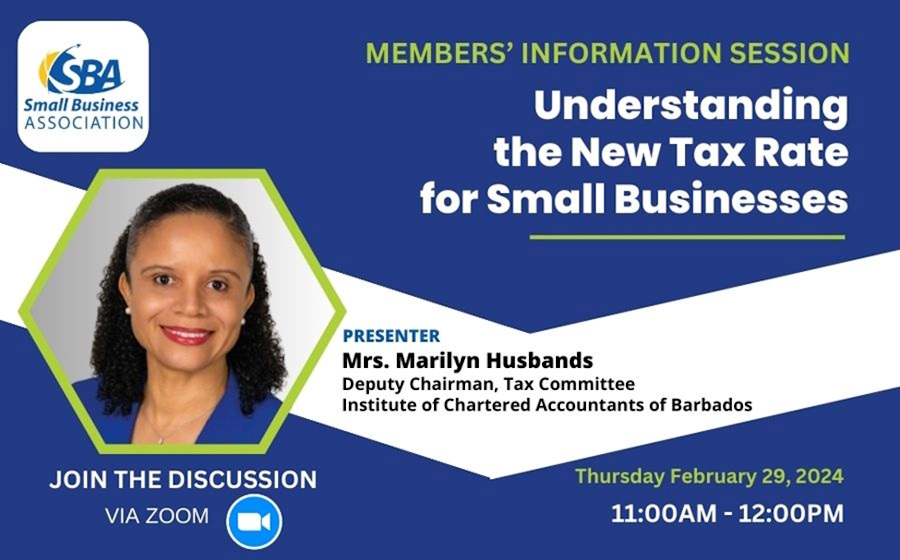
Following the recent announcement by the Minister of Finance that a new rate of 5.5% on the taxable income of a company will be applicable to small businesses from tax year 2024, the Small Business Association of Barbados recently held an educational session to discuss this new framework.

Mrs. Marilyn Husbands of the Institute of Chartered Accountants of Barbados was invited to share her thoughts with small business owners on the new regime. The presentation’s underlying theme was one of compliance considering the international regulatory framework being adopted by countries globally.

The point was underscored by the presenter that the changing landscape in the global arena will affect businesses in Barbados, and Government in its effort to respond to international financial protocols, is required to monitor business activity in the country.  Mrs. Husbands opined that there must be a line of sight of all businesses in keeping with international regulations.

The November 7, 2023, ministerial statement by the finance minister was discussed within the context of the Global Minimum Tax Deal agreed to by more than 140 countries. The new Barbados tax regime addressed tiered rates to be in effect from January 1, 2024, with the standard corporate tax rate increasing to 9%. However, the following categories were outside the scope of the new corporate rate - insurance companies, international shipping, in-scope multi-national enterprises, and small businesses registered under the Small Business Development Act.

Specifically for the small business sector the proposal is as follows:

A company whose gross income is currently below $2M and which is registered as a Small Business under the Small Business Development Act, Cap. 318C, shall be subject to a corporation tax rate of 5.5 %.

It should also be noted that subject to the stated requirements, the small business is not owned or controlled by a company with share capital or annual sales above $1 million and $2 million respectively, or by a subsidiary of that company or by a larger group. The small business should also have no agreement for the payment of fees outside of the company for managerial or other services outside of normal business operations.

The issue of consternation for most small business owners is the process of registration to access the preferential tax rate. Beneficiaries are required to register as an Approved Small Business (ASB) pursuant to the Small Business Development Act.

The Act specifically gives power to the Minister to determine an ASB:-

"Where an application referred to in subsection (1), has been made and the Minister is satisfied that the business

(a) is a small business within the meaning of section 3(1); and

(b) carries on an activity which is of significant or substantial socio-economic benefit to Barbados, the Minister may by order declare the business to be an approved small business."

This process requires the submission of the relevant application forms accompanied by the company’s incorporation documents, tax clearance certificate from the Barbados Revenue Authority, clearance from the National Insurance office, audited financial statements if gross assets or revenue exceeds $1 million, review engagement for the financial year preceding the year the application was made if gross assets or revenue do not exceed $1 million, a statement of projections for three years from an accounting organisation or a qualified accountant if the company has been in business for less than one year, and any other information requested by the Minister.

Many small firms have described the aforementioned process as onerous. One common area of concern is the challenge encountered in receiving timely supporting data from other relevant Government departments. However, as noted by the presenter, delays are often caused by incomplete information being submitted by business owners. The process should take approximately two weeks, while the confirmation of the statutory instrument should take a further two weeks.

Once the application has been approved, the confirmation is published in the Official Gazette and listed in the register of small businesses. Anecdotal information from businesses owners is that this process can take between three – six months.

Another component of this new regime that has taken many small business owners by surprise is the requirement to make monthly prepayments. It is expected that from income year 2025, all companies will be required to make monthly prepayments based on the previous year’s taxable income. Participants in the information session viewed this as a further burden to operations, requiring diligent cash flow management, which is in itself a challenge due to the uncertainty and unreliability of revenue streams.

The session discussed the trajectory of the business in relation to future cash flows, and the need by businesses to develop a strategy to ensure that the firm can protect its revenue flows. While the presenter underscored the significant socio-economic benefit provided by small firms to the development of Barbados, business owners were encouraged to pay attention to what was going on in the business environment and to remain compliant with laws and regulations.

Business Basics has been informed that since the Ministerial Statement there has been much consultation among stakeholders on the proposed tax regime and amendments are expected to incentivise the sector to benefit from the new tax rate. The business community awaits with bated breath the 2024/25 Financial Statements & Budgetary proposals to be presented by the Minister of Finance on March 18, 2024.

Get in Touch

Secretariat

Suite 101, Building 4
Harbour Industrial Estate
Bridgetown, Barbados

Phone

+1 (246) 228 0162

Email

theoffice@sba.bb

Follow Us

Image
Image
Image
Image