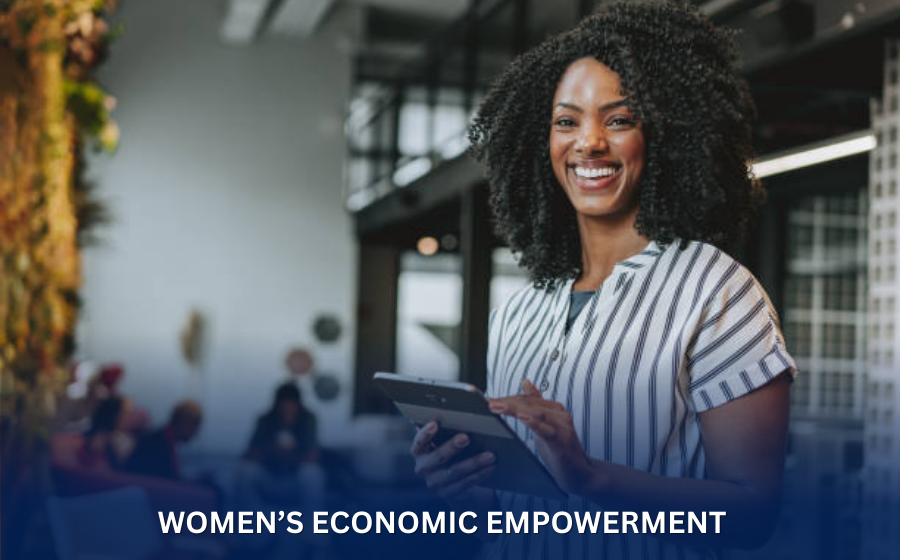
The Investment Climate Reform (ICR) facility recently held a conference in Rwanda on empowering women in entrepreneurship. The event was attended by over 150 leaders involved in development policy and programming, from close to 40 countries in Africa, Caribbean and the Pacific. The ICR facility is a partnership of the European Union, British Council, German Cooperation and the ACP secretariat.
The most impactful revelation was the fact that in 2024 there existed a financing gap of USD$1.7 trillion for women entrepreneurial development. Despite the work done across the ACP countries, the evidence showed that women still found it challenging to access credit. Research further showed that female owned/managed businesses represented better credit options than their male counterparts and had the lowest non-performing loans.
The Caribbean representation at the conference admittedly could speak to great strides in their development agenda. Through progressive reforms the Caribbean has been able to address many of the issues which still plauged several African markets today. Some of the reported impediments to women empowerment on the continent included:
- Access to technology, primarily in rural areas.
- A huge informal sector resulting in limited or no access to banking services.
- Strong patriarchal cultures which inhibited women’s involvement in business ownership.
- Lack of access to colllateral to provide securitisation for credit.
- Limited or no rights to borrow, start a business or even own property which may be used as collateral for business development.
The Caribbean in 2024 was not bound by these issues due to legislative reforms and social advancement. The World Bank research showed many regional countries were considered middle income with a high quality of living. Some African countries admittedly were aggressively pursuing reforms cognisant of their status on the development trajectory and need for sustainable economic growth. Host country Rwanda as an example, had achieved commendable results in 2024 with 61% of its parliament as women and 50% of both the executive and judicial arms of government being female. Relative to women entrepreneurship, the Rwanda Development Board reported that through the reforms of the country, women-owned firms grew from 27% in 2017 to 34% of all businesses in 2022.
While great strides were recorded in the region, there is still much work to be done. It is a truism that you cannot deny over 50% of your population from participating in the economic development of the country and expect to see transformational growth. The converse is true with research demonstrating that countries with a gender equality policy regime and inclusive frameworks are better positioned to see sustainable economic advancement.
An article by Jeanette Awai confirmed the positive correlation between women entrepreneurship and economic growth. A number of ideas have been posited including:
- Women entrepreneurs possess valuable skills: They are adept at multitasking, communication, and understanding customer needs. These skills translate well into running a successful business.
- Focus on sustainability and community: Caribbean women are known for their resourcefulness and eco-friendly practices. Women-led businesses are more likely to be environmentally conscious.
- Innovation and filling market gaps: Women entrepreneurs are entering traditionally male-dominated fields and starting social enterprises that address social issues.
- Economic benefits: Studies show that closing the gender gap in business leadership could add significantly to global GDP. Investing in women-owned businesses is good for the economy.
- Diversity of perspective: Women entrepreneurs bring new ideas and approaches to the table, fostering innovation and growth.
Women however continue to face severe challenges in their entrepreneurial pursuits, chief of which is the lack of access to funding. The data suggests more needs to be done and aggressively so, in light of the need for the Caribbean to post sustainable economic growth in the aftermath of COVID-19 and the continued challenges occasioned by global supply chain disruptions.
A Republic Bank report on "Why Women Entrepreneurship Boosts Caribbean Economic Growth" revealed some telling facts about status of economic empowerment in Latin America and the Caribbean.
- Women-owned businesses comprise only 23% of MSMEs in the LAC region.
- Only 1% of women entrepreneurs have access to angel investors, seed and venture capital.
- Goal 5 of the UN’s Sustainable Development Goals aims to achieve gender equality, but women hold only 15% of management positions and own only 14% of companies.
- In the Caribbean, 30% of women-owned businesses are financially constrained compared to only 25% of male-owned businesses.
- A McKinsey report suggests that if businesses worldwide addressed gender equality, it could add $13 trillion to global GDP by 2030.
- 13 million women in Latin America and the Caribbean left the workforce during the COVID-19 pandemic.
Several of the international agencies like the World Bank, UN Women, among others, have been researching this issue and publishing data that should help the region to reform its policy framework to address the inequalities that exist. When an assessment is done on what happens on the ground with women who attempt to enter the market, it would appear these reforms are not moving fast enough and making the desired impact.
Gender inequality persists despite legal protections against discrimination, in some countries in the region, this is pervasive and threatens overall economic growth. Women face higher unemployment, lower wages, and limited opportunities compared to men and in some parts of the Caribbean they carry a heavier burden of unpaid caregiving responsibilities.
More must be done to change this trajectory and to empower women entrepreneurs in the region. Only then can we pivot to the desired goal of inclusive economic development.