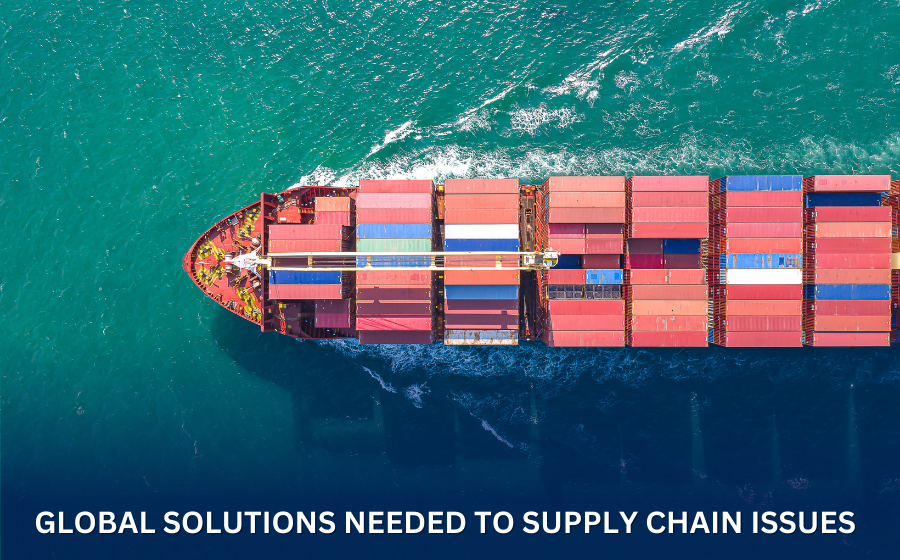
It is somewhat fortuitous that the United Nations Conference on Trade and Development is hosting the first ever Global Supply Chain conference in Barbados this week, as citizens in countries around the world, particularly Small Island Developing States, continue to feel the brunt of high inflation and increasing cost of living.
Economists have done various analyses on the determinants of the high cost of living positing the problem is ineffective policy, poor governance and even existential shocks. Whatever the research reveals, the undeniable fact is that it is increasingly difficult for the average citizen to maintain an acceptance standard of living and a key contributor to this is the disruption being experience in the globally supply chains.
A global solution is therefore needed to this global crisis.
The Global Supply Chain conference is understandingly being held against the backdrop of several global challenges including:
- Unprecedented disruptions to global trade: COVID-19 pandemic, climate change, geopolitical tensions.
- The lack of resilience and sustainability in global supply chains, especially for developing countries.
- Disproportionately affected vulnerable economies, particularly SIDS and Landlocked Developing Countries (LLDCs).
The COVID-19 crisis caused a 1.5% increase in global consumer prices due to higher maritime transport costs, with an even greater impact (7.5% increase) on SIDS.
Both businesses and consumers have been adversely affected by the disruption in supply chains. Financial consequences for businesses include:
- Escalating Costs: Disruptions have led to increased production costs.
- Revenue Loss: Delays in delivering products translate to lost sales and revenue. Dissatisfied customers may switch to competitors, impacting future sales.
To combat the cost to businesses, firms have considered sourcing materials from alternative, potentially more expensive, suppliers; expediting shipping to meet deadlines, incurring higher transportation costs; temporarily halting production due to material shortages, leading to lost productivity. All of these factors will erode profit margins.
The consequences for consumers include:
- Higher Cost of Living: The increased cost of production due to supply chain disruptions gets passed on to consumers in the form of higher prices for goods.
- Product Shortages: Disruptions lead to stockouts and limited availability of certain products.
- Longer Waiting Times: Delays in getting products from factories to stores result in longer wait times for consumers.
One key point noted from the first day of the UNCTAD conference is the role of small and medium enterprises in supply chains. This sector is arguably the engine of growth for economies and more so, the catalyser for social justice and enfranchisement of societies’ vulnerable - women and the youth. The conference therefore underscored “the difficulties faced by SMEs in accessing global supply chains and the necessity of financial inclusion to support their participation. Programmes aimed at upgrading technology and decarbonising SME operations were mentioned as ways to help these businesses enter export markets and comply with increasingly stringent environmental standards”.
Several small business administrators and business owners agreed with the conference’s summation and opined that the provision of adequate financial resources is needed to build resilient and sustainable SMEs. The addition of the digital transformation agenda further compounds the capacity vulnerabilities of small businesses to navigate supply chain disruptions.
The deleterious impact of such disruptions was evidenced in the world’s largest economy in an article on USbank.com which showed how supply chain disruptions can contribute to inflation. These disruptions were a major factor in the rise of inflation in 2021 and 2022 in the US. Inflation declined from a peak of 9.1% in June 2022 to 3.2% in February 2024 as issues with supply chains began to normalise.
There is a positive correlation between price increases and Inflation: Disruptions cause a shortage of available goods. When demand for goods remains high, prices rise significantly. This is evident in the example of the COVID-19 pandemic where high demand for goods coupled with production limitations led to a surge in inflation.
Individual consumers and businesses feel the impact of price increases: Consumers are at the receiving end of these disruptions. They face limited availability of certain products or are forced to pay a much higher price due to scarcity. A recent example of this was seen with the disruption in the supply of building materials, which created a scarcity in the market and the resultant price hikes for lumber and related construction materials.
Research done by o9 Solutions showed how supply chain disruptions impacted consumer behavior.
- More than half (52%) of surveyed consumers reported experiencing supply chain disruptions in the past year.
- Nearly half (49%) of consumers faced difficulty finding products they typically buy.
- These disruptions have led to changes in how consumers shop, resulting in
- Cost-Conscious Choices: Over a third (38%) stopped buying certain items due to price increases.
- Increased Comparison Shopping: 35% reported doing more comparison shopping to find better deals.
- Prioritisation: 33% adjusted their buying habits to prioritise essential purchases.
As assessment of the consumer’s confidence in Supply Chain functionality revealed that 38% believed supply chains were working well; 39% lacked confidence in their performance and 24% were unsure about how well they function.
Consumers perceived there were a number of reasons for supply side disruptions, with 58% indicating Inflation was the biggest driver, followed by labor shortages, transportation issues and Geopolitical factors.
Hopefully during this week many of the solutions to this global crisis will be explored. For sure SIDS in the region can begin to look inward and discuss a regional industrial policy to rationalise the production of key commodities for the Caribbean, address the issue of transportation to get these commodities across borders quickly and cheaply, and harness the investment capital in the region for the development of the private sector.