SBA News

Make this Christmas Count

The Christmas season in Barbados is not just a time for ham-cutters and sorrel; it is the single most critical economic event on our calendar. It is when our collective heart opens, and our wallets follow, injecting a massive, concentrated wave of festive spending that sustains the entire economy.

The traditional ritual of Christmas shopping, from selecting the perfect gifts to preparing the holiday feast, determines the profitability, and indeed the survival, of many small firms. This period is a magnificent display of consumer power and generosity. Understanding the precise, joyous economic value of Christmas spending and, crucially, steering a greater share of it towards our micro, small, and medium enterprises (MSMEs), is an act of pure patriotism and a fundamental step toward shared national prosperity.

The sheer volume of transactions during November and December transforms the retail landscape. Research confirms the phenomenal concentration of consumer activity during the holidays, with the period often accounting for about 20 per cent of annual retail spending in major economies. This surge, representing hundreds of billions of dollars across the globe, presents an unparalleled opportunity for national stimulus at home. However, the true benefit hinges entirely on where those dollars land. When we prioritise our local establishments, that money remains in circulation longer, creating a powerful, measurable chain reaction we call the Local Multiplier Effect. This economic principle is the foundation of resilience, guaranteeing that our spending builds wealth right here on the island, rather than shipping it overseas to foreign shareholders.

Leakage and the Imperative to Support Local Firms

The financial health of the Barbadian economy rests squarely on the shoulders of our hardworking MSMEs. When we support our small firms, the economic impact is amplified exponentially. Studies consistently indicate that for every dollar spent at a local business, two to three times more money stays within the local economy compared to spending at a large, foreign owned chain or international online retailer. This money is immediately recycled: it is used to pay local wages to our neighbours, procure local supplies from our farmers and artisans, and fund other local service providers, fostering a robust internal market that creates jobs year-round and supports our national tax base.

Conversely, Barbados, like many small island developing states (SIDS), faces the harsh reality of elevated economic leakages, where money leaves the economy quickly through payments for imported goods or is repatriated as profits by foreign owned companies. This problem is particularly acute in tourism reliant regions. The Holiday season, with its immense demand for electronics, imported toys, and non-local food items, severely exacerbates this structural weakness. Actively encouraging consumers to support MSMEs during the Christmas season is therefore not merely a patriotic plea; it is a calculated, strategic investment in our own future, minimising this drainage and maximising local benefit. Our MSME sector is the true engine of domestic value creation and the heartbeat of our communities.

Overcoming the Convenience Challenge

The primary threats to local MSME dominance during the Christmas rush are the twin forces of cheap imports and the superior retail convenience offered by international players. Global shipping has made it effortless for consumers to buy products online that are often cheaper than locally sourced alternatives, even when accounting for duty and taxes. This creates a psychological barrier, forcing consumers to choose between immediate savings and long-term national gain. It is our collective responsibility to make the choice to support local a seamless, high quality experience that competes directly with the ease and efficiency of the large global entities.

The convenience gap is often rooted in logistics and digital infrastructure. Consumers buying for Christmas demand swift delivery, guaranteed stock availability, and effortless, secure payment options. Many smaller Bajan businesses, operating with limited capital and scale, struggle to provide the same guaranteed service as the major international competitors. To truly capture the economic value of Christmas, the MSME sector needs collaborative support to scale their online presence and integrate reliable pooled delivery solutions. This is a fundamental infrastructure requirement for competing in the modern retail environment.

Empowering Consumers and Entrepreneurs for Sustainable Growth

We must utilise smart, forward-thinking policy to reduce the friction of local shopping and offer financial incentives that can enhance the competitiveness of local firms. This requires a dual focus on infrastructure and fiscal encouragement.

First, policymakers should urgently address the digital convenience gap by supporting MSMEs in their transition to digital platforms and logistics solutions. During the intensely busy holiday period, consumers prioritise ease of transaction, making widespread access to affordable, reliable digital payment solutions and pooled delivery networks absolutely essential to compete with large online vendors. By investing in these shared digital tools, MSMEs will be enabled to overcome scale limitations and effectively reach consumers who rely on technology for their Christmas shopping.

Secondly, the government must explore powerful financial support mechanisms that directly influence consumer choice at the point of sale. While outright cash transfers can boost demand generally, research on small states suggests that strategically deployed fiscal stimulus, such as time limited tax breaks or vouchers specifically for goods bought at registered local MSMEs, can be extremely effective in encouraging consumers to choose small firms, first. This approach ensures that public money is efficiently channelled directly into the local productive sector, multiplying the economic benefits and ensuring every dollar works harder for the nation.

Make This Christmas Count

This Christmas season is more than just a date on the calendar; it is a profound, patriotic opportunity to make a collective statement about our unwavering commitment to Barbados' future. The economic value of Christmas shopping is enormous, but its true worth lies in the jobs saved, the local dreams financed, and the community resilience secured when that money stays local. We must move beyond sentiment and fully embrace the proven strategies of high impact promotion, technological convenience, and targeted consumer incentives.

Merry Christmas to our readers and God’s blessings for a prosperous new year.
Whither the Vendors’ Act – Four Years On

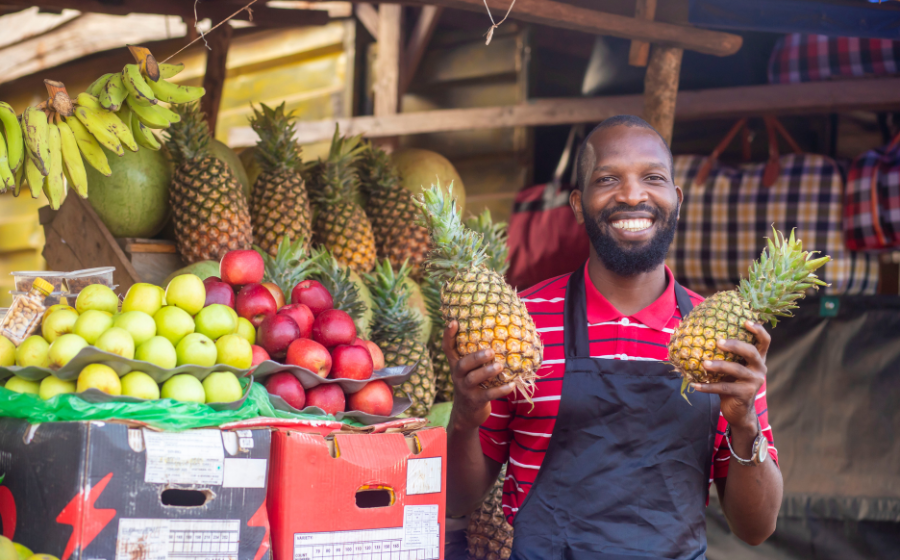
Drivers on the nation’s roads cannot help but notice the increased number of persons vending on the highways, often in very dangerous conditions. It is even worst now at Christmas time, as people hustle to make ends meet to provide for themselves and family, during the Yuletide season. Anyone who followed the parliamentary debate four years ago on the new Vendors’ Bill will wonder why it is taking so long to provide the safe spaces and enhanced environment proposed for vendors.

When the National Vending Act was passed in December 2021, it was rightly described as a landmark moment for Barbados. For the first time, vending was formally recognised as a legitimate economic activity rather than an informal, tolerated necessity. The Act represented a commitment to fairness, security, and opportunity for hundreds of Barbadians who make their living on the streets, beaches, and roadside verges. Now, as another December closes, it is timely to ask what is the status of the promise made to our vendors.

A Long-Awaited Step Towards Dignity

For decades, informal vendors operated in a climate of anxiety. Many dealt with uncertainty about where they could set up, fear of confiscation of goods, or even the threat of prosecution. As recently as the late 2010s, vending without a licence could result in criminal charges. This created an unfair and disproportionate burden on low-income earners whose only “offence” was trying to earn an honest living. The 2021 Act was therefore transformative: it removed criminal penalties and replaced them with administrative fines, offering greater clarity and fairness.

The legislation also guaranteed key protections. Vendors were promised at least 30 days’ notice before relocation, the right to appeal a decision, and compensation if their goods were damaged by authorities. It established a national vendor registry to bring greater order and transparency to the sector. In principle, these provisions were expected to usher in a new era of dignity, predictability, and structure.

The Everyday Reality: Roadside Vending and the Risks Bajans Face

The Act offered so much to uplift a sector occupied by ordinary, working-class Barbadians. It cannot be acceptable in an era of enhanced accountability, governance and transparency that policies and programmes intended to improve the lives and livelihoods of the marginalised will take forever to be implemented. According to the proverbial saying ‘while the grass is growing the horse is starving’.

Many vendors lack the resources to improve their operations, resulting in high levels of unstructured roadside vending. This has implications not only for aesthetics or regulation, but also for personal and public safety. These challenges are not the fault of vendors. They are the direct outcome of a system that has legalised vending but has not yet enabled vendors to trade safely, sustainably, or with dignity. Without financial support, a proper marketplace, or infrastructure, roadside vending remains the only viable option for too many.

Imagine “Marlon” the vendor setting up at 5:30 a.m. on a blind corner to catch early commuters. He has no shelter, no designated space, and no sanitation facilities. Cars rush past at speed. Rain or extreme heat exposes him to the elements. The goods are vulnerable to spoilage, theft, or being damaged by passing vehicles. For customers, the risks are equally clear: unsafe parking spots, limited visibility, and poor lighting in early morning or late evening.

The Vending Act gave Marlon hope. He imagined applying for a licence, securing a small loan to buy a proper tent, storage containers, and protective equipment, and eventually moving into a designated vending zone.

However, none of that has been possible. He has no fixed address to satisfy complex loan application requirements, and his cash-based system means he lacks the formal financial statements required by traditional lenders. Without a dedicated credit programme and without structured vending areas accessible at reasonable cost, he remains on the roadside—exposed to unpredictable weather, traffic hazards, and uneven enforcement. His business survives, but it cannot grow. His earnings fluctuate with tourism traffic and weather events. The promise of the Act feels incomplete.

This is the story of many Barbadians whose entrepreneurial spirit is strong, but whose opportunities are constrained by structural gaps.

Earlier this year an official from the Ministry of Energy and Business was quoted in the press giving the assurance that an aggressive rollout of vending zones will happen in 2025, acknowledging the safety problem, but until those zones are constructed and operationalised, the hazard persists. We are now at the end of the year!

What Barbados Must Now Do

As policymakers, business advocates, and development partners consider 2026 priorities, this issue must be brought back to the forefront. To unlock the full potential of the Vendors’ Act, Barbados must:

  • Establish a dedicated Vendor Loan Fund with low interest, simplified requirements, and flexible repayment conditions, potentially utilising social collateral (group lending) or cash-flow history.
  • Develop modern, well-lit vending zones across high-traffic areas, designed with sanitation, shelter, and security in mind. This is a critical infrastructure investment that must be prioritised.
  • Launch a nationwide vendor registration and financial literacy campaign so that all vendors understand their rights, responsibilities, and financing options, specifically teaching them how to use digital platforms to build credit history.

These reforms will not only enhance safety and dignity but would also strengthen the micro and small business sector, increase tax fairness, reduce informality, and create a pipeline of micro entrepreneurs ready to scale.

The Vending Act was a bold and progressive milestone in 2021. It signalled respect for a historically marginalised sector and promised opportunity. Laws are however only as effective as the systems that support them. As the Act enters its fifth year, Barbados has an opportunity—and an obligation—to honour its spirit.

Vendor-specific financing, safer trading spaces, and structured development pathways are not luxuries; they are necessities for inclusive growth. Elevating vendors elevates families, communities, and the wider economy.

Let 2026 be the year we finally deliver the promise made in 2021.

Ensuring Fairness in the Energy Transition

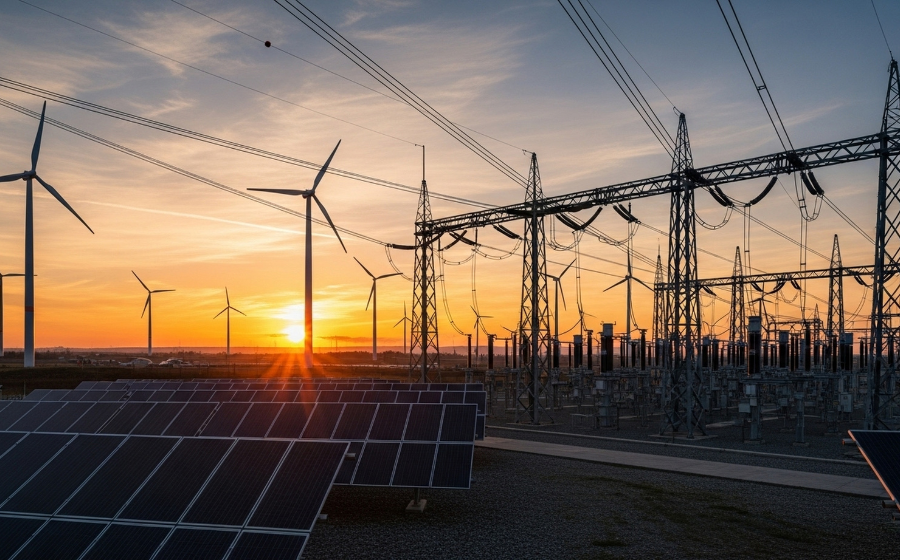
Many have wonder for years, why was it taking so long to roll out the new renewable energy industry. Calls have been made in various quarters for a diversification of the local economy from the heavy reliance on tourism. Renewable energy (RE) appeared to have been identified by the current government as a response to that call, to assist with the diversification strategy.

The promise of a 100% RE future in Barbados seemed constrained by a single, stubborn limitation within the electricity grid. This was not merely a technical inconvenience; it became a significant economic setback for firms including micro, small, and medium enterprises (MSMEs). The new RE industry portended for MSMEs reduced operating costs and potential revenue from selling electricity back to the grid via the Feed-in-Tariff (FIT) or Renewable Energy Rider (RER).

Despite Government’s encouragement for the private sector to invest millions in solar energy, the grid could not absorb their power. The result was a prolonged “gridlock” that stalled both innovation and cash flow.

The Policy–Reality Divide: Loans Without Returns

Hundreds of MSMEs however heeded the initial call, investing in equipment and taking on loans. However, the non-smart grid soon reached its safe capacity limit, recognised to be approximately 100 MW of distributed solar, beyond which intermittent energy posed risks to national grid stability. These small businesses soon found themselves unable to connect systems that were already purchased, installed, and fully inspected. Their expected energy savings vanished while loan repayments continued. What should have been a smooth clean-energy transition became a cash-flow crisis and a setback for national progress.

The response by government through the Energy Smart Fund (ESF) II, to provide MSMEs a financing solution in the form of low-interest loans for solar photovoltaic (PV) systems was a lauded solution but late in the game. The Loan Refinancing Facility under the ESF II, effective April 2025 was intended for MSMEs that obtained financing from other institutions but were unable to connect their systems, to refinance their loans. Delivered through partners such as Fund Access and the Enterprise Growth Fund Limited, the refinancing option typically carried an interest rate of 3.75% and was designed to ease immediate repayment pressures. However, many businesses were already saddled with payment to financial institutions, loss of revenue from planned projects and non-earning assets simply deteriorating by the week.

A $500 Million Turning Point: Unlocking the Technical Solution

The recent signing of new operating licences between the government through the Ministry of Energy and the Barbados Light & Power Company (BL&P) marks a decisive turning point. It is more than a regulatory formality; it is the moment when MSMEs can finally access the RE benefits they invested in. The priority now is to ensure rapid interconnections and full utilisation of the financial measures established to correct this long-standing imbalance.

The signing of the new 30-year operating licences will facilitate the utility to secure the long-term financing required for large-scale grid modernisation. With regulatory certainty restored, over BBD $500 million in investment can now be mobilised for Battery Energy Storage Systems (BESS). These systems will absorb excess daytime solar generation and stabilise the grid, enabling hundreds of waiting MSME projects to be safely connected. This marks the moment when the physical limitations of the grid can finally be expanded, releasing MSMEs from their long period of enforced inertia.

Clearing the Path Ahead: Priorities for a Fair and Efficient Rollout

With the new licences now signed and the grid modernisation process officially underway, the next phase depends on clear, coordinated action. For MSMEs that have waited, some for years, the following priorities are essential to ensure that the benefits of renewable energy finally reach those who invested first.

1. Immediate Interconnection

A transparent timeline is needed for lifting the connection pause and commissioning the hundreads of stalled MSME systems. Early adopters, many of whom have already met all regulatory requirements, should be among the first to access renewed grid capacity once BESS systems begin coming online.

2. Effective Promotion of the Loan Refinancing Facility

The Loan Refinancing Facility can provide substantial relief, but only if MSMEs are fully aware of the support available and can access it without undue administrative hurdles. Clear communication and a streamlined process are essential to ensure the facility delivers the stabilisation it was designed to provide. It is counterproductive to introduce relief mechanisms and embroil them in tedious bureaucratic processes such that the intended beneficiaries are discouraged from accessing the support.

3. Strong and Transparent Oversight

With a 30-year licence in place, consistent oversight from the Fair Trading Commission and the Ministry of Energy will be critical. This includes ensuring fair access to the grid, preventing punitive tariffs, and guaranteeing that national energy policy goals, particularly regarding MSME inclusion, remain central during implementation.

A Fair Transition Must Honour Its Early Builders

Barbados now stands at a pivotal point. The regulatory certainty is in place, the technical solution is within reach, and the financial mechanisms have been strengthened. Yet the success of this new era will not be measured by announcements or infrastructure alone, it will be measured by whether the MSMEs who invested early, and at considerable risk, finally receive the returns they were promised.

These enterprises stepped forward when the nation set its renewable energy ambitions. They borrowed, built, and innovated in alignment with Barbados’ vision of a low-carbon economy. They endured delays not of their making. As the country embarks on its next stage of grid modernisation, ensuring that these early contributors are meaningfully prioritised is both an economic necessity and a matter of principle.

A just transition is not only about deploying clean technology; it is about fairness, accountability, and restoring confidence. With momentum building and the path ahead finally clear, Barbados now has the opportunity, and the responsibility, to deliver on its commitments.

November, all Over

The month of November is significant to Barbadians as we commemorate the Independence of the nation and look forward to celebrating all things Bajan. This year global attention was also on our heath sector, and the work needed to arrest the rise of NCDs as November was dubbed ‘Health Awareness’ month.

November is also significant for another reason, this month marks the end of the Atlantic Hurricane season, and many breathe a sigh of relief every year at this time.

The season was again severe with heavy rain fall leading to unprecedented flooding in Barbados and the ferocity of hurricane Melissa on regional neighbours, Jamaica, Haiti and Cuban. The recent, exceptionally intense Melissa, with its measured escalation in wind speed, is undeniable proof of a new climate reality.

It is ironic that COP 30 was also held in November in Brazil, with little to show in the progress towards climate financing for Small Island Developing States (SIDS) and a global compact for large economies to pay their fair share toward development support to small and emerging economies. It is undeniable that SIDS feel the brunt of the climate crisis while contributing negligibly to the cause of the crisis. The Conference of Parties appeared to be another year of speeches and hyperbole.

The intense climatic events experienced in Barbados and other SIDS represent a vastly unfair share of the climate crisis impact, based on the contribution these countries make to global emissions. Across the CARICOM region, several nations are ranked among the countries globally that have endured the highest economic losses relative to their GDP, from extreme weather events over the past two decades. This overwhelming loss is largely due to the region’s reliance on sectors highly sensitive to climate events, like tourism and agriculture.

The sharp increase in wind speed witnessed during major storms is directly linked to the sustained warming of the world's oceans, which provides the energy that fuels these systems.

For micro, small and medium enterprises (MSMEs), which comprise the vast majority of our businesses and often operates with tight budgets and limited insurance, this heightened physical risk translates directly into acute financial instability. For example, studies have modelled that a severe coastal event could shrink the entire Barbadian economy by more than 7 per cent, with the heaviest losses falling on MSME-dominated sectors like tourism, retail, and construction. The message is plain: climate risk is no longer a distant environmental concern; it is a central financial liability that must be managed now.

The ability of local businesses to withstand these shocks is weakened by issues related to infrastructure resilience and financial protection. Much of our commercial property and essential service infrastructure was built for a climate that no longer exists. The widespread damage and prolonged power outages caused by even a Category 1 storm like Hurricane Elsa in 2021 showed a severe weakness in both public and private assets. Furthermore, a large portion of business assets, particularly those owned by MSMEs, are either uninsured or underinsured. This forces the cost of recovery back onto the individual business owner or, ultimately, the government. Also, the financial sector, which has many loans secured against coastal properties, faces a rising threat of increasing defaults if a major storm hits.

The Global Context: The Crisis of Adaptation Finance

Globally, the crisis signalled by climate volatility is inextricably linked to the international community’s failure to adequately finance climate adaptation. While SIDS collectively require approximately USD$12 billion in average annual finance for adaptation, the actual international public funds directed to SIDS have been significantly less than this necessary amount. This massive gap in adaptation funding represents a critical ethical and economic failing by wealthier nations.

Alarmingly, a large portion of the limited adaptation finance that does reach SIDS (nearly half) is provided as debt. This simply worsens the already severe debt distress across many small economies, forcing them to spend money servicing debt rather than investing in essential resilience projects. This is in sharp contrast to the global goal for developed nations to at least double their collective adaptation finance provision to developing countries.

Internationally, the best practice is demonstrated by strong regulation that aims to bring in private capital. In developed economies, financial regulators are increasingly requiring banks and insurers to include climate-related financial risks in their routine financial stress tests and public reports. For Barbados, ensuring the future strength of the MSME sector requires the active creation of a national framework that:

  1. Requires local financial institutions to better track and report physical climate risks, especially within their MSME loan books.
  2. Offers incentives to the private sector, including large companies and international investors, to invest directly in local MSME resilience projects, perhaps through tax relief or preferential loan terms tied to verifiable climate-proofing efforts.

The Call to Action: Mastering the New Climate Reality

The reality of the new climate condition that the MSME sector must master demands an end to slow, reactive planning and the adoption of a fully proactive, integrated strategy for resilience.

The future success and stability of the sector depend on two key areas of smart adaptation:

  • Climate-Smart Operations: Every small business must conduct a formal assessment of its risks and invest in stronger building standards and independent energy solutions. This is not an optional expense; it is a critical investment in business continuity and long-term viability.
  • Adopting Green Technology: The MSME sector must become the driving force behind the national energy transition, adopting and promoting green technologies. This approach not only lowers operating costs and reduces reliance on unstable global energy markets but also creates new commercial opportunities.

The time for seasonal certainty is past. The intensity and unpredictability of the new climate regime is a definitive test of the resourcefulness and commitment of our economies. We can no longer simply pray for November to come; we must adapt new resilience models as a deliberate country strategy.

Why the ‘Blockchain Bank’ Could Be a Game Changer for Barbadian Businesses

In the bustling landscape of Barbadian commerce, from the artisan workshops in Pelican Village to the tech start-ups in Warrens, a crucial conversation is growing louder. It is not just about how we make money, but how we keep it, grow it, and protect it from the eroding tides of inflation. This past week, the Small Business Association (SBA) of Barbados held a pivotal Members’ Information Session that challenged the very foundations of how we view our business finances.

Guest speaker, Mr. Hallam Hope, a renowned blockchain and cryptocurrency researcher and educator, discussed a concept that sounds futuristic but is rooted in the oldest principle of business: financial sovereignty. The topic was “Introducing the Blockchain Bank – A Game Changer in Access to Finance.”

The session commenced with a provocative question: Is money an asset or a liability?

Traditionally, we are taught that cash is king, an asset to be hoarded. However, the economic reality paints a starkly different picture. During the session, it was highlighted that since the US dollar, to which our Barbadian dollar is pegged, fully decoupled from gold in 1971, its purchasing power has declined by well over 85 per cent due to inflation.

For a small business owner, this is devastating. It means the retained earnings sitting in a low-interest savings account are not just stagnant; they are actively decaying in value. With the cost of living rising and the effective tax burden on the middle class estimated at around 32.8 per cent, the traditional model of "save, save, save" in a standard fiat account is no longer a guaranteed path to wealth preservation, let alone creation. We are effectively running up a down escalator.

Enter the Blockchain Bank

So, what is the alternative? The webinar introduced the concept of the Blockchain Bank.”

Unlike the brick-and-mortar institutions, a Blockchain Bank is not a building on Broad Street. It is a concept of self-custody using blockchain technology. It involves moving funds from the traditional banking system, where you are essentially lending your money to the bank for negligible returns, onto a secure, immutable ledger where you control the keys.

The premise is simple yet revolutionary: by utilising hardware wallets and secure blockchain ledgers, businesses can cut out the middleman. Mr. Hope illustrated this by contrasting a traditional leather wallet with a hardware wallet. This device allows you to hold digital assets like Bitcoin or stablecoins securely.

Critics often dismiss blockchain as speculative gambling. However, the session provided irrefutable data that the "smart money" has already made its move. There is a massive institutional shift.

Major global financial players like BlackRock and Fidelity, firms that manage trillions of dollars—have entered the space aggressively. Their US-listed Bitcoin Exchange Traded Funds (ETFs) collectively hold well over $80 billion in assets under management.

Furthermore, global banking giant JP Morgan now moves between $10 and $11 trillion a day using its own private blockchain technology to facilitate speed and reduce costs. If the largest banks in the world are adopting this technology to improve their efficiency, why should Barbadian businesses remain tethered to outdated systems?

A Caribbean Imperative: Lessons from Regional Digital Currencies

For the Caribbean, the embrace of blockchain is not just about personal investment; it is about regional resilience and the failure of traditional systems to serve MSMEs. We are a region constantly threatened by de-risking, where international correspondent banks sever ties, choking the lifeblood of cross-border trade.

The Caribbean has already taken a lead in exploring digital currency solutions. The Eastern Caribbean Currency Union (ECCU) launched DCash, the Bahamas pioneered the Sand Dollar, and Jamaica introduced JAM-DEX. These Central Bank Digital Currencies (CBDCs) are powered by Distributed Ledger Technology (DLT), the same foundation as blockchain, and were specifically designed to increase financial inclusion and modernise payments for local populations, including MSMEs.

While these initiatives are groundbreaking, their adoption by the small business community highlights both the opportunity and the challenge. The ECCB’s DCash pilot, for instance, closed recently having onboarded over 400 businesses across eight territories. Similarly, The Bahamas’ Sand Dollar had around 1,500 merchant wallets (small businesses) by September 2023. These figures demonstrate that while the formal, regulatory-driven DLT is operational, adoption has been slow, highlighting the challenge of convincing merchants and consumers of the demonstrable added value of the technology over cash or card payments.

This push for digital adoption is already showing rewards. In a recent Mastercard survey, 91 per cent of Jamaican MSMEs that adopted digital payments reported significant growth, with 88 per cent reporting time and cost savings. These are the exact productivity gains that the decentralised finance movement promises, but at a far greater scale and lower cost. The lesson from our neighbours is clear: the demand for a digital, efficient financial system exists, and blockchain, in its various forms, is a solution.

The Prerequisite: Education over Speculation

However, a word of caution is necessary, and it was a point stressed repeatedly during the webinar. This is not a get-rich-quick scheme. The volatility of these markets is real, as evidenced by the data reviewed during the session showing exponential growth accompanied by significant dips.

The key to success is education. Mr. Hope warned against the "blessing circles" and schemes where you hand your money to others to manage. The philosophy of the Blockchain Bank is self-sovereignty: "You do not have to trust anybody". You must own the keys, and you must understand the technology.

This requires a commitment to learning, setting aside time weekly to understand market cycles, security protocols (like 2-Factor Authentication), and the difference between "hot wallets" (connected to the internet) and "cold storage" (offline and secure). It requires the patience and discipline to manage long-term investments, much like the commitment required to run a successful small business.

Barbados’ Quiet Catastrophe – Diabetes and Non-Communicable Diseases

On November 14, 2025, organisations globally observed World Diabetes Day. One key area of focus during the recent Diabetes & Hypertension Association’s panel discussion on the subject, was the high cost of non-communicable diseases on the workplace. Stakeholders came to the stark reality that this health crisis is not just a burden on the healthcare system, it is a silent, insidious threat to the economy, particularly to the very engine of economic growth – micro, small, and medium enterprises (MSMEs).

Diabetes and the wider spectrum of Non-Communicable Diseases (NCDs) are eroding the foundation of business productivity and threatening the resilience of the Barbadian workforce. The figures are nothing short of a national crisis. NCDs, including cardiovascular diseases, cancers, and most prominently diabetes, are responsible for a staggering 75% of all deaths in the Caribbean. For Small Island Developing States (SIDS) like Barbados, the economic ramifications of this health epidemic are devastating. While acknowledging the costs of treatment and hospital care (the direct costs), the true financial drain comes from the indirect costs, the loss of human capital and workforce efficiency. It has been estimated that NCD-related illness, which includes diabetes, costs Barbados approximately US$75 million annually due to decreased work efficiency and productivity. This haemorrhage of capital directly impacts MSMEs, which represent a formidable 92.2% of formal businesses and employ over 60% of the workforce. When workers suffer, businesses cannot thrive.

Unpacking the Invisible Drain: Lost Productivity

The true financial burden of diabetes on businesses is largely invisible, rooted in two key areas: premature mortality and productivity impairment. A scholarly paper titled, "Uncovering the Indirect Costs of Diabetes in the Small Island Developing State of Barbados" by Economist Nicholas A.J. Landis, shone a critical light on this issue by decomposing these costs for the period 2015 - 2019. The findings are a wake-up call to every CEO, manager, and business owner.

The study estimated the total indirect costs for losses from Diabetes in Barbados over the five-year period is a staggering BD$32,054,937. This figure accounts for the economic loss from:

  1. Premature Mortality: The loss of highly skilled and experienced workers who die before the age of retirement due to diabetes complications, valued at BD$8,792,699.
  2. Productivity Impairment: The loss of output from employees who are present at work but are operating at a reduced capacity due to their condition, a phenomenon known as presenteeism, which accounts for BD$23,262,237.

This data confirms a crucial point: productivity impairment is the single biggest cost driver of the indirect economic burden of NCDs, exceeding the costs of absenteeism (missed workdays) and replacement costs for lost workers. A worker struggling with uncontrolled blood sugar, fatigue, or the mental strain of managing their condition is a worker who is unable to fully engage, innovate, or contribute to the bottom line.

The prevalence of diabetes in Barbados, which was reported to be around 14.9% in adults (with a higher rate of 16.7% in women) a few years ago, is alarming, but what is perhaps more concerning is the work culture that often fails to accommodate and support those living with the disease.

It is evident that not enough is being done at the level of the firm to truly support the workforce. While the direct cost of treatment is a national concern, the failure of many employers to adopt flexible and compassionate practices creates a debilitating culture of silence.

A recent global study conducted by the International Diabetes Federation (IDF) reveals the unspoken toll of managing diabetes in the workplace, and the parallels for the region are compelling:

  • Negative Treatment: Four out of every ten employees globally living with diabetes reported experiencing negative treatment in the workplace because of their condition.
  • The Fear of Disclosure: One in ten did not disclose their condition to their employer, with many fearing being treated differently or that it would limit their career progression.

Furthermore, the lack of supportive policies creates direct barriers to essential self-care. More than a quarter of respondents in the IDF study reported being denied breaks or time off for the vital self-management of their condition. This is more than just poor practise; it is a direct attack on a worker's health, dignity, and, by extension, the company’s stability. When an employee is forced to choose between managing their chronic illness and maintaining a professional façade, the resulting stress and inadequate management will inevitably lead to complications, greater absenteeism, and, most damagingly, greater presenteeism.

A National Mission: MSMEs’ Role in Resilience

Barbados’ government and social partners have already acknowledged the gravity of this crisis in the Declaration of Mission Barbados. One of the six 'Missions' is to "create a society that prioritises wellness and happiness," with the ambitious target to achieve a 50% reduction in new cases of non-communicable diseases by 2030.

This national aspiration cannot be achieved by the Ministry of Health alone. It requires a fundamental shift in corporate culture; a paradigm shift away from simply treating the sick towards preventing illness and supporting wellness. The Investment Case for NCD Prevention and Control in Barbados highlighted that scaling up prevention interventions could yield to a Return on Investment of 4.1, resulting in a total of BDS$580 million in increased productivity over the 2016 - 2030 period. The onus is now squarely on the MSME sector, as the largest employer, and other stakeholders, to step up and make the change.

The indirect cost of diabetes, that BD$32 million drain on the economy, is a cost of inaction. By investing in the health of our people, we are not just fulfilling a moral obligation, we are enacting the single most vital strategy for ensuring the resilience, profitability, and longevity of the Barbadian small business sector. The productivity of our companies, and the sustainable development of our economy depends on it.

Get in Touch

Secretariat

Suite 101, Building 4
Harbour Industrial Estate
Bridgetown, Barbados

Phone

+1 (246) 228 0162

Email

theoffice@sba.bb

Follow Us

Image
Image
Image
Image