SBA News

20 Years of the CSME: A Vision Still in Progress

20 Years of the CSME: A Vision Still in Progress

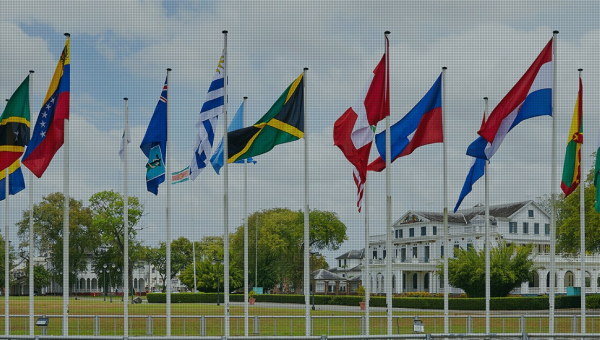
January 2026 marked an important milestone for the Caribbean integration project. In January 2006 regional leaders launched the CARICOM Single Market and Economy (CSME), a regional initiative designed to deepen economic cooperation among member states. The vision was ambitious: to create a single economic space where goods, services, capital and people could move freely across the Caribbean Community, allowing the region’s small economies to compete more effectively in an increasingly globalised world.

Individually, Caribbean economies are small and constrained by limited domestic markets. Regional integration was therefore seen as a pathway toward expanding opportunities for businesses, improving productivity, and strengthening the region’s collective economic resilience.

Two decades later, however, an important question remains: how close has the Caribbean actually come to achieving that vision?

When the CSME was introduced, its goals were clear. By removing trade barriers and harmonising economic policies across the region, CARICOM hoped to build a more integrated market that would allow businesses to operate seamlessly across borders. The initiative also aimed to facilitate the movement of skilled labour, encourage cross-border investment, and improve the competitiveness of Caribbean enterprises.

Micro, small and medium enterprises (MSMEs) were considered a key beneficiary of this vision. A single regional market could significantly expand the customer base available to small firms while creating new opportunities for partnerships, investment and innovation.

Yet twenty years on, the region still struggles with a fundamental challenge: the gap between the vision of integration and the reality of implementation.

This column has highlighted the slow pace of implementation before in a seminal piece titled “What’s Next for the CSME?” following the 48th Regular Meeting of CARICOM Heads of Government. At that time, it was noted that while regional leaders had reaffirmed their commitment to advancing the CSME, there was little clarity on the concrete steps required to move the initiative forward.

The twentieth anniversary of the CSME presents an opportunity to assess whether the region has moved meaningfully closer to achieving the integrated economic space that was originally envisioned.

One of the clearest indicators of regional integration is the level of trade between member states. Ideally, a functioning single market would result in high levels of intra-regional trade as businesses take advantage of easier market access.

In reality, however, trade within CARICOM remains relatively modest. Estimates suggest that intra-regional trade accounts for roughly 15 percent of total CARICOM trade, significantly lower than levels seen in other regional economic blocs such as the European Union and African Union.

This limited trade activity highlights the structural challenges facing regional integration. While tariff barriers have largely been reduced, non-tariff barriers, logistical constraints and administrative inefficiencies continue to restrict the free flow of goods within CARICOM.

Perhaps the most striking reality twenty years after the launch of the CSME is that the “single economy” component appears to be shelved.

While some elements of the single market—such as the movement of certain categories of skilled labour—have been implemented, the deeper economic integration required for a fully functioning single economy has yet to materialise. Harmonised fiscal policies, coordinated industrial strategies, and unified regulatory frameworks remain works in progress.

This lack of economic coordination continues to limit the effectiveness of the CSME. Without deeper policy alignment among member states, businesses still encounter regulatory differences, administrative delays and inconsistencies that undermine the idea of a seamless regional market.

Observers across the region frequently point to political will as the central obstacle to deeper integration. While CARICOM leaders consistently express support for the goals of the CSME, national priorities take precedence over regional commitments.

This tension between national sovereignty and regional cooperation has slowed the implementation of several key measures intended to strengthen the single market. Decisions agreed upon at the regional level can take years to be fully implemented within individual member states, if implemented at all.

For businesses attempting to operate regionally, these delays create uncertainty. Entrepreneurs may be legally entitled to establish businesses across member states, but administrative barriers and inconsistent regulatory environments can make that process far more difficult than beneficial.

Then there is the issue of uneven participation of CARICOM member states. While most CARICOM countries are part of the single market, the Bahamas remains outside the CSME framework, although it continues to participate in the broader CARICOM.

The absence of one of the region’s largest economies highlights the complexities of regional integration. Concerns about labour mobility, domestic economic policy and regulatory sovereignty have contributed to hesitancy among some states regarding full participation in the single market and economy.

Despite these challenges, the importance of regional integration has arguably grown rather than diminished. Caribbean economies today face an increasingly complex global environment marked by geopolitical uncertainty, supply chain disruptions, climate vulnerabilities and limited access to financing.

Individually, Caribbean states have limited influence in global markets. Collectively, however, the region represents a population of approximately 16 million people and a combined GDP exceeding US$90 billion, creating a more meaningful economic presence.

For the region’s private sector, particularly MSMEs, a fully functioning single market could provide the scale necessary to support innovation, productivity improvements and export expansion. The CSME is not simply a political project—it is an economic opportunity. Small businesses across the region frequently face the same structural limitations: limited domestic markets, restricted access to capital, and challenges achieving economies of scale.

Regional integration offers a potential solution to these constraints. By creating a larger economic space, the CSME can facilitate business expansion beyond national borders while providing new customers, suppliers and investment opportunities.

However, for these benefits to materialise, the systems and institutions supporting the single market must function effectively. Businesses require clear rules, efficient procedures and reliable infrastructure if they are to confidently operate across the region.

As the Caribbean reflects on twenty years of the CSME, the conversation must shift from aspiration to implementation. The region has spent decades discussing the potential benefits of integration; the next phase must now focus on delivering tangible outcomes.


We must Build Women-owned Businesses that are able to Scale

Global economies celebrated International Women’s Day on March 8, 2026, with much discussion on women’s entrepreneurial development and the potential for economic growth, particular in emerging markets.

A review of Barbados’ business landscape will reveal that women are at the centre of entrepreneurial activity. From small catering services and beauty enterprises to consulting firms, digital services and retail ventures, women continue to play a defining role in the country’s micro and small business sector. These enterprises are not only sources of income for households but are increasingly contributors to national economic development.

While some progress has been made, evidence in the significant number of women-owned enterprises started in the 2020 – 2025 period, much of this activity is at the micro level. The barriers that prevent many female-led firms from scaling and entering international markets are yet to be addressed.

Across Barbados and much of the Caribbean, female entrepreneurs are particularly active in the services sector, including tourism services, wellness, education, professional consulting, and creative industries. These sectors tend to require lower start-up capital and offer greater flexibility, which can be important for women balancing business responsibilities with family and caregiving roles.

By contrast, industrial sectors such as manufacturing, construction, and heavy industry remain largely male-dominated. These industries typically require higher capital investment, greater access to financing, and specialised technical infrastructure. As a result, women-owned businesses are less represented in sectors that traditionally drive export growth and large-scale economic expansion.

This pattern is not unique to Barbados. Regional research shows similar sectoral dynamics across Caribbean economies, where female entrepreneurship thrives in services but is less prominent in production-intensive industries. While the growth of service-based enterprises has created valuable economic opportunities, the imbalance also highlights the need for policies that encourage greater diversification of women-owned firms into higher-value sectors.

One of the most persistent challenges facing women entrepreneurs is the difficulty of moving from micro or small operations into medium-sized enterprises. This transition is crucial. Firms that reach the small-to-medium stage are far more likely to expand into export markets, invest in innovation, and generate higher levels of employment.

The challenge is not about starting businesses—many women successfully launch ventures each year – the goal is in sustained growth and formal expansion. Smaller firms often operate with limited staffing, restricted capital, and minimal access to strategic business support. Without deliberate capacity building initiatives, these businesses can remain small for years, limiting their potential contribution to national economic growth.

The ability to scale is closely linked to internationalisation. Caribbean economies are small by nature, as such, sustainable growth will require access to regional and global markets. However, relatively few women-owned businesses in Barbados currently operate beyond the domestic market. Strengthening pathways for women-led enterprises to become export-ready could therefore unlock significant economic potential.

Access to finance remains another significant obstacle for women-owned businesses. Globally, the demand for MSME financing in emerging markets remains extremely high. In March 2025, the International Finance Corporation estimated that the financing demand for MSMEs in emerging markets and developing economies was approximately USD$10.3 trillion, with a financing gap of USD$5.7 trillion. This gap reflects the difference between the funding businesses require and the amount currently available through formal financial systems.

Research by the Inter-American Development Bank estimated that in Barbados, the MSME finance gap in 2018 was approximately USD$852.8 million, representing 347% of the total supply of credit available to the sector. This gap highlights the scale of the financing challenge facing small businesses across the country.

Another barrier confronting women entrepreneurs in seeking capital is the requirement for collateral, which financial institutions typically demand when underwriting loans. Many small business owners—particularly those operating newer enterprises—may not possess the level of collateral required to secure traditional bank financing. Property ownership patterns and differences in asset accumulation can also affect women’s ability to meet these requirements.

As a result, promising business ventures may struggle to obtain the financing needed to purchase equipment, expand operations, or enter new markets. Even when financial systems are liquid, conservative lending practices can limit the availability of credit for smaller firms.

Addressing the financing gap requires a combination of targeted financial instruments and stronger business development support. One approach is the use of credit guarantee programmes, which reduce the risk faced by financial institutions when lending to small businesses.

In Barbados, credit guarantee mechanisms supported by international financial institutions are being used to expand access to funding for small businesses. The latest iteration of the programme administered by the Central Bank includes provisions that allocate 18% of new guarantees specifically for women-owned MSMEs.

Backed by USD$50 million in financing from the IADB, these guarantees are intended to encourage lending to small firms that might otherwise struggle to access capital.

Financing alone, however, is not sufficient. Many women-owned businesses can benefit from capacity-building initiatives that strengthen financial management, export readiness, digital adoption, and strategic planning.

Business support organisations across the Caribbean frequently host workshops, training sessions, and networking events aimed at equipping entrepreneurs with the tools needed to grow sustainable enterprises. Yet participation levels among entrepreneurs can sometimes remain lower than expected.

Encouraging women entrepreneurs to engage with information sessions, training programmes, and industry forums—whether offered by business associations, government agencies, or development partners—can play a significant role in strengthening the long-term resilience of female-led enterprises.

These platforms provide not only knowledge but also access to mentorship, financing opportunities, and partnerships that can accelerate business growth.

The economic empowerment of women has far-reaching benefits beyond individual businesses. Studies across the developing world consistently show that when women succeed in entrepreneurship, the positive impacts extend to households, communities, and national economies.

Women entrepreneurs often reinvest earnings into education, healthcare, and community development, creating multiplier effects that support broader social progress. In small island developing states where economic diversification is essential for resilience, expanding the success of women-owned businesses can contribute meaningfully to sustainable growth, and building a more inclusive and dynamic economy.

Budget 2026: A Deliberate Pivot Toward Growth

All eyes will be on Government’s presentation of its financial statements and budgetary proposals for fiscal year 2026/2027, in a matter of days. The focus for many is no longer solely on macroeconomic recovery or fiscal repair. The stabilisation phase has largely held. The next logical step must be structured expansion.

For business operators, the national budget is not an abstract fiscal document. It determines the cost environment, the accessibility of capital, the efficiency of government systems and the broader policy signals that shape investment decisions. The central issue for 2026 is not whether small businesses will receive targeted concessions. It is whether fiscal policy will deliberately reposition the sector as a core driver of productivity, export growth and national resilience.

Barbados has made measurable progress in macroeconomic management in recent years. However, stability, while essential, is not synonymous with growth. Without structural alignment between fiscal planning and enterprise development, micro, small and medium enterprises remain constrained by systemic bottlenecks that incremental policy adjustments cannot resolve.

The previous year’s Budget continued the Government’s focus on fiscal consolidation and administrative refinement. Independent reviews from major advisory firms such as PwC and KPMG highlighted improvements to tax administration, adjustments to penalties and selected concessions designed to ease compliance pressures.

These measures contributed to predictability and modest cost relief. However, for many MSMEs, they did not fundamentally alter operating conditions. Administrative improvements are important, but they do not automatically unlock working capital, accelerate digital transformation or expand export capacity. For a sector that represents the majority of enterprises and a significant share of employment, incrementalism is insufficient.

The 2026/2027 Budget must therefore move from fine-tuning the margins to addressing structural competitiveness.

Access to affordable financing remains the most persistent barrier to MSME growth in Barbados. Traditional lending frameworks continue to emphasise fixed-asset collateral, which disadvantages service-based, technology-driven and creative enterprises whose value lies in intellectual capital and cash-flow potential rather than physical assets.

Further capitalisation of the Credit Guarantee Fund by the Inter-American Development Bank will strengthen MSMEs’ access to credit and signal recognition that financing reform must be central to MSME policy.  This mechanism, which is administered by the Central Bank of Barbados, relies on partial credit guarantees to reduce lender risk and stimulate greater loan issuance to smaller firms.

However, the effectiveness of such facilities depends on execution and accessibility.

Barbados must now broaden the financing conversation. An over-reliance on loan-based capital increases leverage risk for small firms, particularly in a high-interest-rate environment. Equity participation mechanisms, venture co-investment platforms and enhanced utilisation of the Barbados Stock Exchange’s junior market could diversify capital pathways. A modern MSME ecosystem requires financial architecture that matches its diversity.

Across the Caribbean, fiscal policy is increasingly being deployed as a competitiveness tool rather than solely a stabilisation instrument. Jamaica has accelerated digital enablement programmes targeted at small enterprises, including grant-supported initiatives to encourage technological adoption and formalisation. Guyana, driven by rapid economic expansion in its energy sector, has implemented local content frameworks that institutionalise linkages between large investors and domestic suppliers.

While Barbados operates within a different economic context, the principle remains relevant. Fiscal frameworks can be structured to embed MSMEs within broader national growth strategies. The 2026/2027 Budget should therefore explore mechanisms that deepen linkages between small enterprises and tourism supply chains, renewable energy initiatives and emerging digital service sectors.

In small open economies, competitive advantage must be engineered. It does not emerge organically from stability alone.

Time spent by MSMEs navigating fragmented processes represents foregone revenue. Investments in digital government platforms, integrated tax systems and centralised licensing portals can materially reduce transaction costs.

In high-cost jurisdictions, simplification functions as competitiveness policy. The upcoming Budget presents an opportunity to accelerate digital integration across public-facing services. Measurable targets for service turnaround times, online processing rates and reduced in-person compliance requirements would signal that regulatory reform is not aspirational, but operational.

Barbados’ economic resilience depends heavily on foreign exchange generation. While tourism remains a dominant earner, MSMEs possess untapped export potential in professional services, creative industries, agro-processing and digital entrepreneurship.

Export readiness, however, requires structured support. International certification guidance, market intelligence, trade promotion and logistics facilitation are necessary components of an outward oriented strategy. The Budget should strengthen alignment between fiscal allocations and export development programming, ensuring that MSMEs are positioned to access regional and extra-regional markets.

If small firms are to contribute meaningfully to foreign exchange stability, the policy framework must enable them to compete internationally, not solely domestically.

Productivity growth is ultimately anchored in skills and technological capacity. Fiscal incentives tied to workforce training, apprenticeship expansion and digital adoption would enhance enterprise competitiveness. In an increasingly knowledge-driven global economy, MSMEs that fail to integrate technology risk structural marginalisation.

Regional peers have begun embedding digital upskilling within fiscal planning frameworks. Barbados should consider similar alignment, ensuring that budgetary allocations for education and training intersect directly with enterprise needs.

Climate vulnerability and global volatility remain defining features of the Caribbean operating environment. MSMEs, operating with limited reserves, are particularly exposed to external shocks. Structured resilience mechanisms — including climate adaptation grants, disaster risk financing models and rapid-response liquidity facilities — should be integrated within fiscal design.

Resilience is not discretionary spending. It is economic safeguarding. A resilient MSME sector enhances employment stability, supply chain continuity and social cohesion.

The 2026/2027 Budget represents more than an annual fiscal ritual. It offers an opportunity to signal a deliberate pivot from stabilisation to strategic expansion. Fiscal prudence must remain intact, but prudence cannot become inertia.

MSMEs do not just require preferential treatment. They require coherent policy alignment that recognises their central role in employment creation, innovation and value addition. Financing reform, regulatory efficiency, export development, human capital investment and resilience planning must be integrated within a single growth-oriented framework.

The coming fiscal presentation will reveal whether Barbados is prepared to operationalise its stated commitment to small business development. Stability has laid the groundwork. The next phase must be defined by structured competitiveness and measurable progress.

Barbadian Enterprises Welcome Curacao Connections

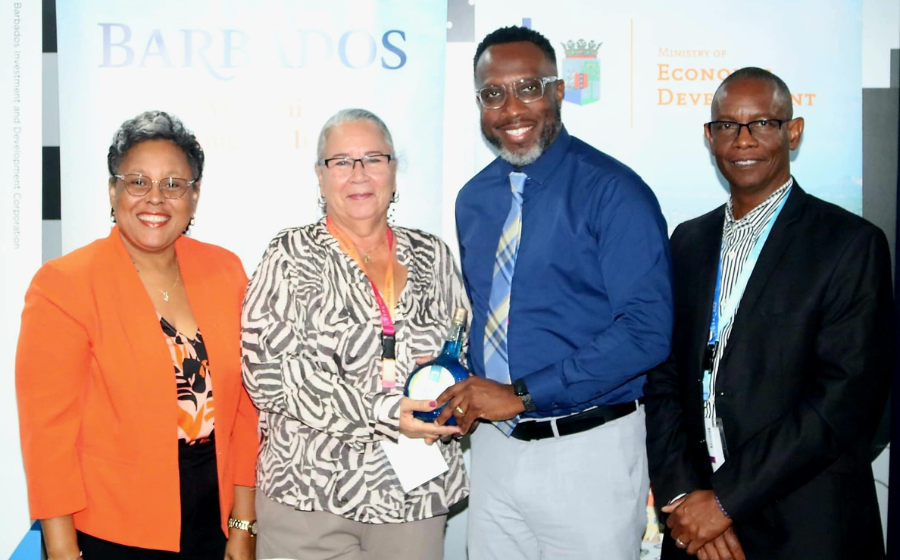
Strengthening private sector ties within the Caribbean is no longer a matter of regional aspiration — it is an economic necessity. This week’s engagement between Barbadian enterprises and a visiting Curaçao delegation under the Curaçao Business Cruise Trade Mission initiative reflects that urgency. The Small Business Association of Barbados (SBA) played a central facilitative role in convening local firms, aligning sector priorities, and creating the structured environment necessary for meaningful business-to-business dialogue.

In an era of global volatility, the reliance on extra-regional supply chains has exposed the Caribbean’s vulnerability. By pivoting towards intra-regional partnerships, Barbados and Curaçao are not merely trading goods; they are building a collective buffer against external shocks. This trade mission represents a shift from passive diplomacy to active commercial scouting, where the SBA acts as a bridge between high-potential local talent and sophisticated regional capital.

Coordinated by the Ministry of Economic Development, ADECK, CINEX, and the Curaçao Tourist Board, in partnership with the Curaçao Private Sector Association (VBC), the initiative was designed around targeted, sector-specific matchmaking. This was not a ceremonial exchange, but a focused effort to connect enterprises operating in industries where both economies are actively seeking diversification and competitiveness. The meticulous nature of this matchmaking process suggests a move away from the "broad-brush" approach to trade, focusing instead on the granular needs of individual firms to ensure that every handshake has the potential to become a contract.

The sectors prioritised — ICT and FinTech, tourism and hospitality, creative industries, blue economy and maritime services, wellness and medical tourism, sustainable energy, professional services and light manufacturing — speak directly to the strategic direction of Caribbean economic transformation. These are industries shaped by digital innovation, sustainability imperatives and global competitiveness. They are also sectors in which scale matters.

For enterprises operating within small island economies, domestic demand inevitably imposes limits. A Barbadian fintech company developing secure digital payment platforms, for example, may quickly reach the ceiling of a single market. Engagement with Curaçao — an economy positioned at the gateway of Latin America and operating within Dutch regulatory frameworks — could provide exposure to new client bases and regulatory ecosystems that accelerate growth beyond domestic constraints. This "gateway" effect is crucial; Curaçao offers Barbadian firms a foothold into the European-standard regulatory environment and, by extension, a more seamless transition into Latin American markets.

The Caribbean has long acknowledged that intra-regional trade remains below its potential. According to the Caribbean Development Bank, intra-regional trade accounts for roughly 15 per cent of total Caribbean trade — a modest figure when compared to integration blocs such as the European Union, where intra-bloc trade exceeds 60 per cent.

The implication is not merely statistical; it is structural. While Caribbean territories are geographically proximate, regulatory divergence, logistical costs and limited commercial networks often render them economically distant. Trade agreements establish frameworks, but frameworks do not automatically generate transactions. Commercial relationships do. To bridge this gap, businesses must navigate the "alphabet soup" of regional regulations. Missions like this one act as a practical roadmap, bypassing bureaucratic inertia by putting decision-makers in the same room.

Research from the World Trade Organisation underscores that micro, small and medium enterprises (MSMEs) depend heavily on trusted networks and intermediaries when entering export markets, as they face proportionally higher risks and information barriers than larger corporations.

This is precisely why facilitation matters. When business support organisations (BSOs) curate sector-specific meetings and align enterprises with shared commercial interests, they reduce uncertainty and lower transaction costs. They help convert regional proximity into tangible opportunity. For a small manufacturer in Bridgetown, the cost of market research in Willemstad might be prohibitive; however, through a curated mission, that intelligence is shared, and the path to market entry is de-risked.

International comparisons reinforce this point. The Nordic countries — each relatively modest in size — have leveraged strong inter-business networks and regulatory coordination to create a combined commercial platform that enhances collective competitiveness. While the Caribbean’s political and economic context differs, the underlying lesson remains: integration amplifies resilience. By adopting a "Nordic-style" collaborative spirit, Barbados and Curaçao can begin to harmonise their professional standards, making it easier for consultants, engineers, and digital nomads to work across jurisdictions.

Within the Caribbean context, the Inter-American Development Bank has indicated that deeper regional integration — including strengthened business linkages and harmonised standards — could significantly reduce trade costs and improve productivity.

However, one day of meetings, regardless of how well organised, does not guarantee enduring commercial results. The true value of initiatives such as the Curaçao Trade Mission will depend on continuity. Follow-up discussions, pilot projects, supplier agreements and formalised partnerships must emerge if the promise of integration is to be realised. There is a "follow-up fatigue" that often haunts these missions; to combat this, both the SBA and its Curaçaoan counterparts must implement a rigorous tracking mechanism to monitor the progress of leads generated during this week.

The responsibility therefore extends beyond the initial engagement. Businesses must pursue identified opportunities with strategic intent. Policymakers must continue addressing logistical and regulatory barriers that inhibit trade, such as high intra-regional air and sea freight costs. Institutions must maintain channels for sustained dialogue rather than episodic interaction. We must move toward a permanent infrastructure for trade, perhaps through virtual showrooms or shared digital marketplaces that keep the momentum alive between physical visits.

The groundwork for stronger private sector ties has been established. The opportunity now is to transform introductions into integration. Regional competitiveness will not be secured through aspiration alone. It will be secured when Caribbean enterprises consistently view neighbouring markets as extensions of their commercial landscape rather than peripheral alternatives. In an increasingly consolidated global economy, small states cannot afford commercial isolation.

Strengthening private sector ties is not a ceremonial objective; it is a strategic imperative. The long-term prosperity of Caribbean enterprise may well depend on how deliberately and persistently that imperative is pursued. By treating the Caribbean Sea as a bridge rather than a barrier, Barbados and Curaçao are setting a blueprint for a more integrated, resilient, and prosperous future.

Looking Back: What Did February 14 Demonstrate for Business

Valentine’s Day is not merely a social observance; it is a recurring economic event. The global data confirms that this is no minor occasion.

In the United States (US), Valentine’s Day spending reached US$27.5 billion in 2025, with major expenditure categories including jewellery (US$6.5 billion), dining out (US$5.4 billion), flowers (US$2.9 billion) and confectionery (US$2.5 billion).

Spending is projected to climb even further, to US$29.1 billion, demonstrating sustained consumer appetite for the occasion.

Across the United Kingdom, approximately 61 per cent of consumers planned to celebrate in 2025, generating an estimated £1.5 billion in total expenditure, with an average spend of £52 per person.

These figures are instructive. They show that even amid inflationary pressures and shifting economic conditions, consumers prioritise meaningful, experience-driven purchases tied to cultural moments. The Caribbean may not publish comparable large-scale Valentine’s Day data, but the behavioural pattern is mirrored regionally.

To understand why these figures remain resilient, one must look at the psychological drivers of the "occasion economy." Consumers often view seasonal spending as "exceptional" rather than "discretionary." While a household might trim its weekly grocery budget to offset rising utility costs, the cultural weight of Valentine's Day—much like Mother's Day — often creates a psychological permission slip to spend.

This shift in mindset is a critical window for small firms. It is the one time of year when the barrier to purchase is at its lowest, provided the value proposition aligns with the emotional intent of the buyer. Businesses that fail to capture this did so not because the capital was unavailable, but because their specific offering did not resonate with the consumer's seasonal priority.

For many local enterprises, February 14 likely delivered one of the strongest trading days since the Christmas period. Restaurants were booked. Small bakeries processed pre-orders for themed pastries and dessert boxes. Gift retailers saw increased foot traffic. Salons and spas accommodated extended appointments. While comprehensive national data is limited, anecdotal patterns across sectors suggest that Valentine’s Day continues to function as a dependable consumption driver.

However, looking back should not simply be an exercise in satisfaction. It should be an exercise in assessment.

  • Did businesses activate early enough? The "browsing phase" for Valentine’s Day often begins in mid-January, yet many local campaigns only launch in the first week of February.
  • Were pre-orders utilised to secure revenue in advance? Pre-orders are more than just sales; they are a risk-mitigation tool that allows for better inventory management and waste reduction.
  • Were collaborations explored to expand market reach? In a fragmented market, the ability to bundle a physical product with a service creates a superior "convenience factor" for the busy professional.
  • Was digital marketing leveraged strategically? Beyond posting a flyer on Instagram, did businesses use targeted data to reach those most likely to convert?

In larger economies, dining and experiential spending consistently account for a significant share of Valentine’s Day expenditure.

That global preference for experiences over purely material goods is highly relevant to Barbados. Service-based MSMEs — wellness studios, creative workshops, tour operators, small entertainment providers — are well positioned to benefit when offerings are curated intentionally.

International economic modelling indicates that Valentine’s Day spending produces ripple effects beyond initial purchases, generating additional indirect economic activity across supply chains.

Although Barbados does not have identical modelling studies, the principle holds. When a restaurant sources locally grown produce, engages a local entertainer and partners with a nearby florist, revenue circulates within the domestic economy. This is the "multiplier effect" in action. Every dollar spent at a local MSME has a higher probability of being re-spent within the community compared to a dollar spent at a major international franchise.

When small businesses collaborate on bundled offerings, they increase average transaction values while sharing promotional costs. Valentine’s Day therefore becomes more than a retail spike. It becomes a demonstration of how coordinated MSME activity can stimulate broader economic participation.

Businesses that experienced strong sales should examine what worked — pricing strategies, digital engagement, inventory management, partnerships — and formalise those approaches for future seasonal activations. They should ask: Who were my new customers? How can I retain them for Mother's Day?

Those that saw modest results should not dismiss the opportunity; they should analyse gaps in planning, promotion or product alignment. Was the price point too high for the current climate? Was the messaging lost in the noise of larger competitors?

Preparation for next year does not begin in February. It begins now. MSMEs seeking to maximise future Valentine’s Day periods might consider:

  1. Early Campaign Launches: Starting the conversation in late January to capture the "early bird" planners.
  2. Structured Pre-order Systems: Using deposits to stabilise cash flow and manage logistics.
  3. Themed Bundles: Combining products and services to increase perceived value.
  4. Targeted Digital Advertising: Moving beyond organic posts to reach specific demographics via paid social media tools.
  5. Strategic Collaboration: Identifying complementary partners at least three months in advance.

These are not extravagant measures. They are deliberate commercial decisions. Importantly, Valentine’s Day is one of several recurring seasonal opportunities — alongside Mother’s Day, Independence celebrations and Christmas — that can be systematised within an annual revenue strategy. Treating these events as predictable economic anchors rather than ad-hoc promotions allows MSMEs to forecast demand and manage inventory prudently.

In a small island economy where margins can be tight and operating costs remain elevated, seasonal commercial moments carry disproportionate importance. The "Cost of Standing Still" is the lost opportunity to convert a one-time seasonal shopper into a lifelong brand advocate.

Consumers have already demonstrated their willingness to spend around February 14. International data confirms it. Regional patterns reinforce it. Local experience illustrates it. The real question is whether that willingness is being captured systematically or if it is being left to chance.

Valentine’s Day is often described as a celebration of love. For Barbadian MSMEs, it should also be recognised as a case study in opportunity — proof that emotion-driven consumption can be channelled into measurable economic benefit when approached strategically.

A Business Affair: Why Connections Still Matter

In business, there is a growing assumption that success is driven primarily by systems, technology and scale. Entrepreneurs are encouraged to automate, digitise and optimise at every turn. Yet despite these advances, one truth remains unchanged: opportunity still flows through people. Deals are still influenced by trust, partnerships still depend on credibility, and growth is often unlocked not by software, but by conversation.

It is within this context that the Small Business Association’s upcoming Valentine’s-themed networking event, A Business Affair, takes on particular relevance. Designed around a structured, table-rotation format inspired by speed dating, the event offers a deliberate alternative to traditional networking spaces where interactions are often unplanned, superficial or confined to familiar circles. Instead, participants will engage in guided, time-bound discussions that prioritise clarity, exchange and mutual value.

For many entrepreneurs, particularly in small and open economies like Barbados, access to information and opportunity remains largely relationship-driven. Who you know often shapes what you know — from procurement opportunities and financing options to partnerships that unlock new markets. International research consistently supports this reality. Studies across developed markets show that networking remains one of the most effective channels for acquiring new customers, particularly for small enterprises where marketing budgets are limited and trust plays a decisive role in purchasing decisions.

The persistence of face-to-face engagement is especially noteworthy in an era dominated by digital communication. Despite the convenience of virtual platforms, global research indicates that in-person meetings remain critical for building strong business relationships. A significant majority of professionals report that trust, rapport and long-term collaboration are far more likely to develop through direct interaction than through purely online exchanges.

Consider the potential impact on a local business—for example, a Barbadian boutique agro-processor specialising in pepper sauces or herbal teas. In a vacuum, this entrepreneur might spend thousands on digital ads to reach local retailers. However, through a structured event like A Business Affair, that same entrepreneur could find themselves seated across from a boutique hotel purchasing manager or a distributor who specialises in regional exports. In a matter of ten minutes, the "algorithm" is bypassed. The distributor isn't just seeing a product on a screen; they are hearing the passion of the founder, tasting the authenticity of the brand's story, and assessing the person behind the product. This "human due diligence" is what often fast-tracks a product from a home kitchen to a hotel gift shop shelf.

The benefits of this approach are not confined to any single stage of business development or industry. Several distinct profiles find immense value in this format:

  • The Service Provider: For accountants, lawyers, and marketing consultants, business is built on a "high-trust" model. A five-minute face-to-face interaction can establish more credibility than a year of social media posts.
  • The Tech Innovator: Local app developers or IT firms often struggle to explain complex solutions to non-technical business owners. Structured networking allows them to translate "tech-speak" into "business value" through direct, iterative feedback.
  • The Retailer Seeking Supply Chain Resilience: By meeting local manufacturers and wholesalers, retailers can diversify their sourcing, reducing reliance on costly and sometimes delayed international imports.

For newer enterprises, early exposure to experienced operators can shorten learning curves and reduce costly missteps. Conversations with peers who have navigated regulatory hurdles, market entry challenges and operational scaling can provide insights that are rarely captured in manuals or training programmes. Just as importantly, visibility among fellow entrepreneurs and service providers can open doors that might otherwise remain inaccessible.

More established businesses, meanwhile, often face a different challenge. After years of operation, growth can plateau not because of a lack of capability, but because networks have become static. Repeated interactions within the same circles can limit innovation and obscure emerging opportunities. Structured networking introduces fresh thinking, uncovers complementary capabilities and can spark collaborations that reinvigorate mature enterprises. It allows a "legacy" business to find synergy with a "disruptive" startup, potentially leading to joint ventures that combine stability with innovation.

Across the Caribbean, there is increasing evidence that when networking is intentional rather than incidental, its economic impact can be substantial. In Jamaica, structured business-matching and speed-networking initiatives linked to key sectors such as tourism have facilitated hundreds of millions of dollars in commercial activity for small and medium firms over time. These outcomes did not emerge from casual introductions, but from carefully designed engagements that connected the right businesses, at the right time, for the right purpose.

Traditional "cocktail-style" networking often suffers from the "echo chamber" effect—the tendency for individuals to gravitate toward people they already know or those who appear most approachable. For the introverted founder or the newcomer to the sector, this can be an intimidating and unproductive experience.

The table-rotation format dismantles these social barriers. By moving participants through a pre-determined circuit, the event removes the "fear of the approach". It creates a level playing field where a micro entrepreneur in the creative sector is just as likely to sit across from a veteran in logistics. This structure forces a departure from the "comfort zone", ensuring that every minute spent at the event is an investment in a new, diverse lead rather than a repeat conversation with a friend.

What these examples demonstrate is that networking is most powerful when it is treated as infrastructure rather than entertainment. Events that are structured, curated and outcome-oriented are far more likely to translate conversation into collaboration. They also help address a persistent challenge faced by small enterprises in island economies: fragmentation. When businesses operate in isolation, opportunities are missed, resources are duplicated and collective influence is weakened.

Beyond individual business outcomes, forums such as A Business Affair serve a broader economic function. They create spaces where shared constraints surface organically through dialogue. Whether the issue is access to finance, procurement processes, skills shortages or regulatory complexity, repeated themes emerging from business-to-business conversations provide valuable insight into the real conditions under which enterprises operate. These insights are essential for informed advocacy and effective policy engagement.

Get in Touch

Secretariat

Suite 101, Building 4
Harbour Industrial Estate
Bridgetown, Barbados

Phone

+1 (246) 228 0162

Email

theoffice@sba.bb

Follow Us

Image
Image
Image
Image