SBA News

Outlook 2026 – Prospects for Business

The most consequential economic conversations are often not the loudest, but the most candid. During a recent members’ information session hosted by the Small Business Association of Barbados, presenter, Professor Justin Robinson of the University of the West Indies opined, “No one is coming to save us.” It was not a statement of despair, but a candid observation in light of the current geopolitical environment. This remark shifted the discussion from prediction to responsibility and compelled a sober examination of whether the region’s traditional development model remained fit for purpose in 2026.

For micro, small and medium enterprises (MSMEs), the message was neither abstract nor academic. It spoke directly to the realities facing businesses operating in a small, open economy, increasingly shaped by external geopolitical shifts, fragile supply chains, and evolving global financial norms. The implication was clear: the future of Barbadian enterprise will be determined less by external rescue and more by internal resolve, structural reform, and strategic self-reliance.

Professor Robinson framed the current period as an “existential moment” not only for Barbados but for the wider Caribbean. The phrase was deliberate. It underscored the idea that the challenges confronting regional economies are not merely cyclical downturns or temporary dislocations; they are structural shifts in the global order that demand new responses rather than old assumptions.

For decades, small island states benefited from a relatively stable international system underpinned by multilateral institutions, predictable trade arrangements, and a diplomatic environment in which even the smallest nations possessed formal equality at the negotiating table. That framework is now under strain. Trade policies are becoming more protectionist, geopolitical alliances are more transactional, and international norms once considered reliable are increasingly subject to unilateral reinterpretation.

These macro-level developments manifest in tangible ways for businesses: higher input costs, uncertainty in currency access, tightening correspondent banking relationships, and volatility in tourism-dependent revenue streams.

One of the more nuanced points emerging from the discussion was the distinction between macro-fiscal stability and lived economic prosperity. Barbados has, by many conventional measures, made notable progress in stabilising its fiscal position in recent years. Yet stability alone does not automatically translate into higher wages, improved productivity, or expanded opportunity for small businesses.

This distinction is critical for MSMEs. A stable macroeconomic environment provides a foundation, but it does not in itself generate demand, reduce bureaucratic friction, or enhance competitiveness. Those outcomes depend on complementary reforms: efficient public services, modernised infrastructure, accessible financing, and policies that actively support enterprise growth rather than merely contain fiscal risk.

The conversation therefore shifted from what governments have achieved to what must come next. The question is no longer simply whether the books are balanced, but whether the economy being built is one that citizens and entrepreneurs actively choose to participate in, rather than endure.

Perhaps the most provocative element of the presentation was the critique of the Caribbean’s long-standing development model. For generations, economic strategies across the region have leaned heavily on tourism, remittances, and outward migration as safety valves for domestic constraints. While these mechanisms provided short-term relief and foreign exchange inflows, they also entrenched dependencies that are increasingly exposed in a volatile global environment.

This model has often meant operating in ecosystems where growth is tethered to external cycles—holiday seasons, foreign recessions, or shifts in airline routes—rather than internally generated productivity and innovation. The pandemic years revealed just how vulnerable such dependence can be, and the post-pandemic era has not entirely restored predictability.

The emerging argument is not that tourism or remittances should be abandoned, but that they can no longer be the primary pillars of economic strategy. MSMEs, particularly in knowledge-based services, digital industries, climate-resilience technologies, and creative sectors, represent avenues through which Barbados can diversify its economic base and reduce susceptibility to external shocks.

A recurring theme throughout the webinar was the need for businesses to move beyond short-term survival tactics toward long-term strategic positioning. Planning, forecasting, and scenario analysis were emphasised as essential disciplines, not optional exercises. The acknowledgment that certain external variables remain uncontrollable was paired with a reminder that internal efficiency, innovation, and adaptability remain firmly within the control of business owners.

This translates into practical imperatives for small firms: investing in digital capabilities, strengthening supply chain resilience, exploring regional markets, and cultivating skills that command global value while retaining local impact. The emphasis was less on waiting for perfect policy conditions and more on leveraging existing capacities while advocating for systemic improvements.

Importantly, the discussion also recognised the role of the collective voice. Individual enterprises can innovate, but structural change often requires coordinated engagement with policymakers. The private sector’s responsibility extends beyond balance sheets to active participation in shaping the regulatory and economic environment in which it operates.

The phrase “no one is coming to save us” resonated precisely because it reframed vulnerability as agency. Rather than signalling abandonment, it signalled liberation from the expectation that external actors—whether foreign governments, multinational institutions, or global markets—will automatically align with local interests.

This perspective invites a shift from reactive to proactive thinking. Self-reliance does not imply isolation; it implies strategic engagement grounded in domestic strength. It suggests building industries that can compete internationally while sustaining local communities, fostering innovation that addresses both domestic challenges and exportable solutions, and viewing constraints as catalysts for creativity rather than permanent limitations.

The timing of this discussion is particularly significant. Barbados finds itself in an election year, a period when national conversations inevitably turn toward economic direction, public policy priorities, and the allocation of limited resources. While elections are inherently political, their outcomes carry profound implications for the business environment, regulatory frameworks, and investment climate.

The intersection of economic strategy and political decision-making cannot be ignored. Policy choices regarding taxation, digital infrastructure, energy transition, access to finance, and regional integration will shape the operating landscape for years to come. The central message of the webinar therefore extends beyond boardrooms and balance sheets; it enters the realm of civic awareness and informed participation.


Beyond the Ballot – Elections are Opportunities for Policy Engagement

The proverbial election bell has been rung in Barbados and campaigning has started in earnest. The business community rarely gets involved in electioneering since business must be done irrespective of who forms the Government. While many an entrepreneur will scarcely mount a political platform, all eyes from the business sector will be on the elections waiting patiently to see who will be given the mandate to govern the country and be responsible for the policy direction of the economy.

As the political machinery begins to hum, the micro, small and medium enterprise (MSME) sector finds itself at a critical juncture. MSMEs are estimated to generate nearly half of private-sector revenue in Barbados and represent the majority of registered businesses on the island. Their contribution extends beyond statistics; MSMEs underpin household income, community stability and economic resilience across urban and rural Barbados alike.

It is against this background that the sector will pay keen attention to the policies being enunciated from the various political platforms and the proposed strategies of the government-in-waiting to grow the sector.

Political cycles introduce heightened uncertainty, shifting policy signals and administrative slowdowns. At the same time, they present a compressed and often underutilised window for structured policy engagement, one in which the MSME sector can influence priorities before positions harden and governing agendas are finalised.

In a practical sense, not all small businesses will experience the “election effect” equally. What is often termed ‘lifestyle businesses’ – micro enterprises established primarily to sustain a household income rather than to scale aggressively – often experience a modest but noticeable uplift during campaign periods. Increased political spending on t-shirts, catering, transportation, sound systems, and community events injects short-term liquidity into local economies.

For the neighbourhood printer in St Michael producing campaign flyers, the caterer servicing weekend constituency meetings, or the taxi operator transporting campaign teams across parishes, the election season can resemble a brief commercial surge. These businesses benefit from immediacy: quick contracts, cash flow and repeat engagements over a condensed period.

However, this stimulus is typically short-lived. Once polling day passes, spending diminishes sharply. These enterprises rarely experience lasting improvements in productivity, financing access or market expansion as a direct result of campaign activity.

Conversely, high-growth or investment-intensive MSMEs often experience elections as a period of hesitation rather than opportunity. Research into national business cycles consistently shows that firms defer capital expenditure, technology investment and major procurement decisions in election years while awaiting clarity on fiscal policy, taxation, regulation and public-sector spending priorities. This uncertainty itself carries a cost. Delays in policy clarity can postpone hiring decisions, defer training investments and reduce appetite for innovation. In sectors such as agro-processing, tourism services and digital exports, timing is often critical; missed opportunities during an election year may not be easily recovered.

This asymmetry means that political cycles can disproportionately affect business, not because of overt policy changes, but because of delayed signals and administrative inertia. Licensing approvals, incentive applications and public procurement decisions often slow during transition periods, reinforcing the perception that elections represent economic pause rather than momentum.

Internationally, political cycles have demonstrated that elections can elevate small business from the margins of economic discussion to the centre of national strategy. The United States provides a notable example during the post-global financial crisis period. During several presidential campaigns, small business policy was not treated as a subsidiary issue but framed as a core driver of economic recovery and social stability.

In one campaign, legislative measures included 18 targeted tax cuts for small firms and the enactment of the Small Business Jobs Act, which expanded lending capacity and improved credit access. Importantly, small businesses were repositioned in political discourse, not as recipients of relief, but as engines of innovation, job creation and competitiveness.

This shift produced tangible outcomes, including commitments exceeding US$20 billion in increased lending to small firms from major financial institutions. The lesson is not one of scale, but of strategy: when a sector articulates its needs clearly during the “recognition lag” of a campaign, when attention is high, but policy remains negotiable, it can influence the legislative agenda rather than react to it.

The central question, therefore, is not whether elections disrupt business activity, they invariably do, but whether they can be strategically leveraged. In small, open economies such as those in the Caribbean, multilateral institutions have consistently noted that MSME participation in policymaking is constrained by limited financial, technical and advocacy capacity relative to larger enterprises.

Outside election periods, policymaking influence often correlates with capital concentration. During campaigns, however, political attention becomes scarce and highly contested. This temporarily shifts leverage toward organised constituencies capable of presenting coherent, evidence-based demands. Silence during this period carries opportunity cost.

The current election cycle presents a rare moment to move beyond general appeals and demand clarity on structural issues, including:

  • Access to Finance: Expanding beyond traditional collateral-based lending toward venture capital, private equity, mezzanine and debenture financing models suited to small markets.
  • Digital Transformation: Ensuring that digital government initiatives materially reduce compliance costs and processing times rather than replicating analogue inefficiencies online.
  • Regional Integration: Leveraging the CARICOM Single Market and Economy so that “small” does not also mean “stationary”, particularly for export-capable firms.

While the heightened tempo of an election period may provide a seasonal boost to the local caterer, printer or transport operator, the true value of political cycles lies in their ability to reset national economic dialogue. Elections are not merely contests of leadership; they are moments when economic priorities are negotiated and future constraints are shaped.

For MSMEs in Barbados, the objective must be to ensure that small business is not invoked as campaign symbolism but embedded as a permanent pillar of national economic strategy. This requires coordinated advocacy, data-driven proposals and sustained engagement beyond polling day. If seized with intent, the current election cycle can help shape a more predictable, competitive and enabling environment, one in which small businesses are not merely resilient, but genuinely positioned to grow.

Justice Delayed is often Justice Denied

The legal maxim ‘justice delayed is justice denied’ was popularised by former British prime minister William Gladstone and remains a key barometer to the effectiveness of a country’s judicial system. While macroeconomic stability, debt management and fiscal discipline often dominate national discourse, the efficiency of the judicial system remains a quieter, but no less decisive determinant of economic performance.

For decades, the “safety of assets” and the “enforcement of contracts” have been recurring constraints for local enterprises. Few cases illustrate this more starkly than the long-running defamation litigation involving McDonald Farms Ltd and the Mirchandani family, a matter that spanned more than thirty years and became embedded in the national consciousness through calypso, commentary and controversy.

Colloquially known as the “chicken case,” the dispute originated from allegations made in 1989 concerning poultry processing standards. Lawsuits were filed shortly thereafter against multiple media entities, yet the matter progressed at a pace that outlasted business cycles, political administrations and the careers of several judges. By 2005, when elements of the dispute reached the Caribbean Court of Justice as its first appeal from Barbados, the litigation had already been active for fifteen years without a trial on the assessment of damages. Such timelines are not merely legal curiosities; they represent a fundamental failure of the business environment. Capital tied up in unresolved disputes is capital removed from productive use.

The extraordinary duration of the McDonald Farms litigation reflects structural weaknesses identified by international observers. For many years, World Bank assessments of the Barbadian business climate highlighted persistent challenges in enforcing contracts. Data from the World Bank’s Doing Business profile for Barbados showed that resolving a commercial dispute required, on average, approximately 1,340 days, nearly four years, significantly longer than in many competing jurisdictions. Such delays function as a hidden tax on enterprise, discouraging both domestic expansion and foreign direct investment.

The contract enforcement indicator is composed of three elements: time, cost and the quality of judicial processes. While litigation costs in Barbados, estimated at just under 20 per cent of the claim value, are not the highest in the region, the time required to obtain resolution remains deeply problematic. For micro, small and medium enterprises (MSMEs), a four-year wait for judgement can be fatal. Cash flow constraints, uncertainty over asset recovery and the inability to plan strategically often force businesses to close long before the court reaches a decision.

An unresponsive judicial system imposes costs far beyond the immediate parties to a dispute. In the McDonald Farms case, the prolonged uncertainty coincided with the erosion of a brand, the loss of employment and the eventual disappearance of a productive enterprise. For a small island economy, the collapse of even a single medium-sized business reverberates across supply chains, household incomes and tax revenues. Judicial delay therefore becomes an economic issue, not merely a legal one.

More broadly, judicial inefficiency undermines trust across the private sector. Businesses that lack confidence in contract enforcement are less willing to extend trade credit, enter joint ventures or engage new suppliers. The result is a more risk-averse, cash-based economy that disadvantages smaller firms and stifles innovation. The World Bank has consistently linked efficient courts with higher investment rates, stronger formal employment and greater productivity. Where enforcement is weak, informality thrives and growth potential diminishes.

Across the Caribbean, several jurisdictions have recognised that judicial reform is a prerequisite for competitiveness. Jamaica’s establishment of a dedicated Commercial Court is frequently cited as a positive example. By assigning complex business disputes to specialised judges and streamlining procedures, Jamaica significantly reduced case disposal times and improved investor confidence. This demonstrates that targeted institutional reform, when backed by political will, can yield tangible economic benefits.

The Caribbean Development Bank has repeatedly emphasised that strong justice systems are integral to sustainable development and private-sector growth, particularly in small states where institutional weaknesses are magnified.

Guyana has invested in electronic filing systems and case management reforms to cope with increased commercial activity linked to its energy and construction sectors. In Trinidad and Tobago, reforms aimed at judicial autonomy, performance monitoring and digital transformation have been supported by regional development partners.

The Inter-American Development Bank has noted that institutional efficiency, including timely dispute resolution, is essential for maintaining the rule of law and supporting democratic stability. Comparatively, Barbados risks falling behind if longstanding procedural bottlenecks remain unresolved.

International evidence reinforces these regional lessons. Studies by multilateral institutions indicate that judicial efficiency is closely linked to total factor productivity. In many high-income economies, commercial disputes are resolved in under one year through integrated case management systems, mandatory mediation and strict timelines for written judgements. For Latin America and the Caribbean, the IDB estimates that stronger competition and productivity, supported by credible institutions, could raise regional GDP by as much as 11 per cent.

Equally important is the availability of differentiated court structures. In advanced jurisdictions, small claims courts absorb high volumes of low-value disputes, allowing higher courts to focus on complex commercial matters. In Barbados, the absence of a sufficiently robust and high-capacity mechanism for smaller claims places undue pressure on the High Court, slowing resolution across the entire system and delaying the circulation of capital.

Judicial reform in Barbados must extend beyond increasing judicial appointments. It requires a fundamental shift in operational culture, including mandatory digital filing, active case management and firm limits on procedural delay. Regional initiatives such as the UNDP-supported PACE Justice Programme underscores the importance of modernisation, training and institutional accountability in reducing backlog and improving access to justice.

The establishment of a dedicated Commercial Court, supported by a modern registry and performance-based resource allocation, would send a powerful signal to local entrepreneurs and international investors alike. Justice must not only be done; it must be delivered within a timeframe that reflects the realities of modern commerce. A system that allows disputes to linger for decades imposes an invisible ceiling on economic development.


Address the Skills Gap in the Construction Sector through National Vocational Qualification

As Barbados enters the first quarter of 2026, the local construction landscape presents a startling paradox. While the Central Bank reports a robust expansion in the non-traded sector, driven by a building boom now estimated at over $2 billion in hotel, residential, and public infrastructure projects, the industry is sounding a frantic alarm. Major contractors and small-scale developers alike are reporting a critical deficit in the very hands needed to turn these blueprints into reality. This is not a shortage of architects, project managers, or engineers; the deficit lies in the foundational trades — the masons, plumbers, carpenters, and electricians who form the backbone of the built environment.

The current crisis is a direct consequence of a longstanding "degree bias" within the Barbadian psyche, a social hierarchy that prioritises traditional white-collar professions over vocational excellence. For decades, our educational system has efficiently produced an abundance of lawyers, accountants, and doctors, yet it has neglected to cultivate the technical artisan class that a modern economy requires for its physical development. As present, the construction sector is feeling the full weight of this imbalance.

The Ministry of Educational Transformation (MEdT) has recently embarked on an ambitious journey to modernise the school system, yet industry leaders argue that these reforms are not moving fast enough to address the immediate "skills gap." While the rhetoric of the 2025 - 2030 Decent Work Country Programme emphasises upskilling, the reality on the ground remains one of profound mismatch. The Inter-American Development Bank has identified this as a "skills mismatch" where the supply of labour does not mirror the demand of the productive sector. In Barbados, we are witnessing the "death of the artisan," where older, highly skilled tradespeople are retiring without a sufficient pipeline of younger, certified workers to replace them.

At the heart of the solution lies the National/Caribbean Vocational Qualification (N/CVQ) frameworks. These competency-based certifications are designed to prove that a worker can actually perform a task to an international standard, rather than just pass a written test. However, the construction sector maintains that the Ministry is not doing enough to promote or integrate these qualifications into the national curriculum. NVQs are the "gold standard" for labour mobility and quality assurance, yet many young Barbadians remain unaware of how to access them or the value they hold in the eyes of major international contractors operating on the island.

The promotion of N/CVQs must be embedded in the career guidance departments of every secondary school. Furthermore, the certification of existing "on-the-job" workers, those who have the skills but lack the paper, need a massive, state-sponsored acceleration. If a mason with twenty years of experience can be formally certified through a Prior Learning Assessment and Recognition system, he becomes more employable and his skills more bankable. Without this aggressive push for certification, the local workforce remains invisible to large-scale investors who require documented proof of competence before hiring, often forcing those investors to look overseas for labour.

For small construction firms, the skills shortage is an existential threat. Unlike major developers who may have the capital to import labour and provide the necessary housing and transportation for foreign crews, small Barbadian contractors are tethered to the local labour market. When local tradespeople are scarce, the wages for the few available workers skyrocket, eating into the slim margins of SME projects. This leads to a situation where small firms are unable to bid on larger contracts or are forced to take on "unskilled" labour that results in poor quality work, costly rework, and potential legal disputes.

Furthermore, the reliance on imported labour creates a "leakage" in the national economy. When a construction project is built by foreign crews, a significant portion of the wages is remitted back to their home countries rather than being spent in local shops and supermarkets. A robust, local, NVQ-certified workforce ensures that the $1.4 billion construction boom translates into a sustainable increase in domestic demand. In 2026, the goal of educational policy should be to ensure that the "Barbadian Dream" is built by Barbadian hands, keeping the wealth generated by our infrastructure within our borders and our communities.

On the global stage, Germany provides the definitive template for vocational excellence through its "Dual Education System." This model combines classroom theory at a public vocational school with practical, paid apprenticeship training within a private company. The beauty of this system is that the private sector bears a significant portion of the training cost because they view it as the most effective form of recruitment. In Germany, over 50% of students choose the vocational track, and the result is an economy with world-leading technical standards and remarkably low youth unemployment. The "Dual" system ensures that students graduate not just with a certificate, but with years of real-world experience.

Adopting elements of the German model in Barbados would require a seismic shift in how the MEdT engages with industry bodies. A system is needed where a young person can spend three days a week on a site under the mentorship of a Master Mason and two days in the classroom learning the mathematics and theory of the trade. This "earning while learning" approach would make vocational training more attractive to young people and ensure that they are being trained in the latest machinery and techniques currently being used in the 2026 building boom.

The current stakes for educational reform are exceptionally high. If we fail to address the skills shortage, Barbados will become increasingly dependent on imported labour, which brings with it secondary challenges such as housing pressure and social friction. Moreover, the "Cost of Construction" will continue to rise, making it difficult for the state to deliver on its public housing promises and for private citizens to maintain their properties. A building boom without a skilled local workforce is like an engine without oil, it may run for a while, but eventually, it will seize up under the friction of its own inefficiencies.

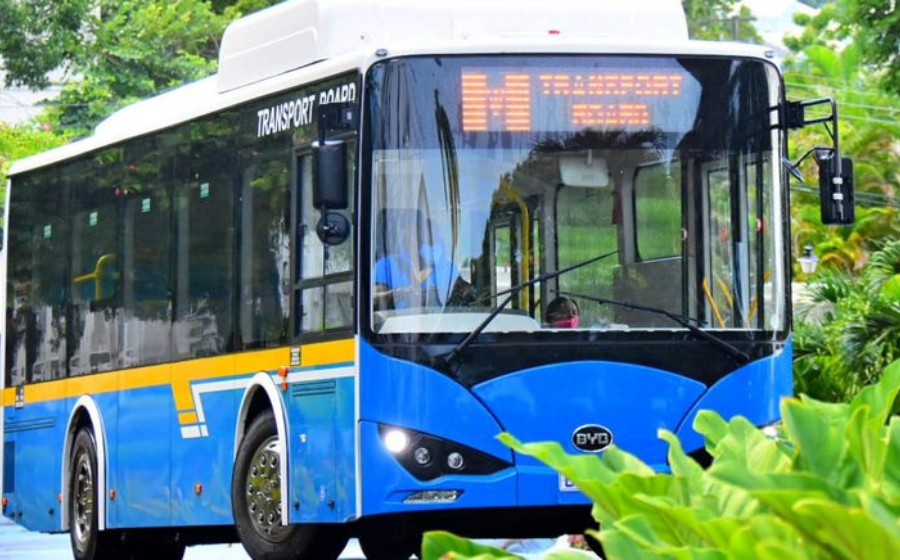
Divestment of Transport Board is bad for Business

A new year has started, and all eyes will be on the public transport system following announcements of a divestment strategy for the state-owned Transport Board. While this column appreciates that in a small open economy such as Barbados, the Government cannot and should not be involved in the provision of all services, there are some areas that must remain sacrosanct. Education, healthcare and public transport are three of those areas that should be ‘free’ or heavily subsidised for citizens as a key development model.

The simple fact is that the ability of citizens to move efficiently between home and work, remains a primary determinant of economic growth. For the small business sector, which accounts for the majority of private-sector employment, public transport policy is not a peripheral social issue but a core economic variable. The success of local firms depends heavily on whether the state can modernise the transport network without compromising the accessibility that has long underpinned Barbadian social stability.

Reliable and affordable transport functions as an invisible subsidy to the entire commercial ecosystem. When a commuter can depend on a predictable schedule, national productivity experiences a measurable uplift. Conversely, a fragmented or unreliable transport system acts as a "hidden tax" on both the employer and the employee. For the Barbadian business owner, this tax manifests as lost man-hours, increased staff turnover, and the logistical friction of managing a workforce that is perpetually delayed by factors beyond its control.

For decades, the Barbadian developmental model has been predicated on facilitating social mobility through state-supported infrastructure. Education and healthcare are the pillars of this model, but transport is the conduit that connects human capital to the marketplace. Without a functional public transport network, the benefits of education and training are capped by geographical constraints. The ability of a worker in a rural parish to access a high-value job in the urban corridor is entirely dependent on the efficiency of the state-owned or state-regulated transport system, making it a critical tool for poverty reduction and wealth distribution.

Beyond simple movement, high-quality public transport is a significant driver of economic formalisation. Research from the Institute of Labour Economics demonstrates that when transport barriers are lowered, workers are more likely to transition from informal, neighbourhood-based work into formal employment hubs. This transition is vital for the Barbadian economy as it expands the tax base and increases contributions to the National Insurance Scheme. By investing in transport, the state is effectively investing in the formalisation of the labour market, which provides greater security for workers and a more stable environment for registered businesses.

To understand the immediate relevance of this issue, one must consider the daily operations of a small manufacturing firm located in the Pine Industrial Estate. Such a business may employ twenty individuals residing in parishes as distant as St. Lucy or St. Philip. If the public transport system fails to provide reliable early-morning or late-night service, the business owner faces a dilemma: absorb the cost of private transport for staff or accept a decline in operational consistency. In a competitive global environment where Barbadian firms are striving to increase exports, these localised logistical inefficiencies can become insurmountable barriers to growth.

The challenges facing Barbados are mirrored across the Caribbean, where various models of transport governance offer cautionary tales. In Jamaica, the reliance on a vast network of private "route taxis" and minibuses has provided high frequency but has often struggled with issues of road safety and lack of integrated scheduling. While the entrepreneurial nature of this model is commendable, it lacks the cohesion required for a modern, planned economy.

In Trinidad and Tobago, the divide between the state-run Public Service Transport Corporation (PTSC) and the private "maxi-taxi" network exemplifies the tension of a non-integrated system. While maxi-taxis provide operational agility, the PTSC’s chronic maintenance challenges, often meeting only 70% of its service demand, leave a reliability gap that disproportionately affects the elderly and those requiring standardised accessibility.

St. Vincent and the Grenadines offer an even starker contrast. As a territory without a state-owned national bus company, the public is entirely dependent on a fragmented network of private minibuses. This lack of centralised, scheduled transit creates a "last mile" crisis for hospitality workers during late-night shift changes. As the country moves to train 2,000 new tourism workers by late 2026, the reliance on this informal system remains a critical vulnerability for the safety and logistical stability of the service sector workforce.

The Inter-American Development Bank identifies public transport as a primary driver of sustainable urban development. In various Latin American cities, the integration of bus rapid transit systems has led to a direct increase in local economic activity. By reducing the time it takes for consumers to reach commercial centres, transport improvements effectively expand the market for local retailers and service providers. In Barbados, improving the connectivity between rural parishes and commercial hubs like Speightstown or Holetown would similarly unlock new revenue streams for small businesses located in those areas.

Furthermore, international research into transport accessibility shows a strong correlation between mobility and employment rates. A study on metro and bus corridor expansions in Europe found that for every 10% increase in transport accessibility, there was a corresponding 2% increase in local employment. This is because better transport reduces the "search costs" for workers and the "hiring costs" for firms. For a small island state, these gains are compounded; when the entire island is well-connected, it functions as a single, efficient labour market, allowing for better matching between skills and jobs.

Transport policy is not a standalone issue; it is the thread that weaves together labour, trade, environment, and social equity. The decisions made this year regarding the governance and funding of the transport sector will determine the ceiling of our economic potential for years to come. A fragmented, expensive, or inaccessible system will stifle the growth of local firms and limit the opportunities available to our citizens.

Reflections on the Year 2025

During the message delivered by Bishop Ezra Parris on the occasion of this year’s Independence thanksgiving service, several profound truths were espoused about the state of the local economy and society. The message will not be remembered for its homiletical content alone but for the focus on issues affecting the Barbadian society. The Bishop identified fatigue with inefficiency, rising violence, public frustration, weak customer service and deteriorating systems.

The message offered more than a spiritual reflection; it provided a useful lens through which to examine how national institutions function and how economic actors engage with one another. Many of the challenges confronting Barbadians persist because the systems meant to enable progress are not delivering at the pace or quality the country requires. For the MSME sector, more than 90 per cent of the business community, this gap between aspiration and action has been deeply felt.

Throughout 2025, this column focused on some of the constraints that hinder small business growth and the reforms urgently needed to strengthen the MSME sector. As we close the year, it is useful to revisit some of these key advocacy areas through the Bishop’s thematic framing of love, faith and hope. The question must be asked, Is Barbados doing enough to address the structural issues that limit opportunity, productivity and competitiveness?

1. The burden of bureaucratic inefficiency

One of the dominant themes this year has been the cost of administrative delays and regulatory bottlenecks on the business community. MSMEs consistently reported challenges accessing services, securing appointments, navigating approvals, or receiving timely payments for completed Government work. The Bishop spoke of people “getting tired” of systems that leave citizens feeling as though they are begging. That experience is common within the MSME community.

The theme of love, defined as taking right action toward others, becomes particularly relevant. Public-sector modernisation is not only a matter of improving systems; it is an act of respect. When MSMEs are met with timely communication, equitable treatment, and service that recognises their value, it reflects a national ethic grounded in fairness and care. A modernised public sector therefore becomes an institutional expression of love, not sentimentality, but justice, dignity and right action.

2. Access to finance and the structural barriers to capital

Another advocacy area this year has been the chronic lack of appropriate financing options for small businesses. Despite well-intentioned initiatives, such as the Junior Stock Exchange, businesses still face high collateral requirements, limited start-up support, cautious lending practices and slow application turnaround.

The message of faith, in the civic sense, is confidence in national systems. MSMEs will only invest, innovate and grow if financial frameworks are modern, coherent and responsive. Barbados needs a national financing architecture designed for small enterprise reality, not large firm assumptions.

The promise of renewal lies in developing a financing ecosystem that combines concessional loans, equity instruments, credit guarantees and developmental funding. True transformation requires actionable commitment to reshaping how capital reaches those who need it most.

3. A business climate shaped by high costs and weak productivity

Many MSMEs highlighted the strain caused by rising input costs, from utilities and shipping, to raw materials, combined with stagnant consumer purchasing power. The year also exposed the national challenge of low productivity, a longstanding issue that the sector cannot solve alone.

Productivity is not simply about technical output; it is shaped by respect between employers and employees, clarity of expectations, fair treatment and shared purpose. Workplaces grounded in mutual accountability tend to perform better. A productivity culture built on fairness, empathy and responsibility aligns directly with the notion of love as constructive action.

If Barbados is truly committed to transformation, productivity reform must go beyond measurement and training. It must cultivate organisational cultures where people are valued, supported and expected to contribute meaningfully.

4. Digital transformation and the need for modern systems

Throughout the year, we underscored the critical importance of digital readiness: e-commerce adoption, cybersecurity preparation and the development of digital public infrastructure. The country cannot pursue innovation while relying on manual administrative processes and fragmented systems.

Transformation begins with the willingness to change how we work. It also requires a national ethos where public services are delivered with consistency, accuracy and respect, again, an institutional form of love through service that empowers rather than hinders.

Digital transformation is not optional. It is a prerequisite for national competitiveness.

5. Renewable energy access and the national transition

Several articles this year analysed the slow pace and uneven access to renewable-energy opportunities. MSMEs continue to face approval delays, financing barriers and high installation costs.

A country committed to renewal cannot pursue clean-energy goals without ensuring small businesses are included and supported. Equitable access to renewable energy solutions would reduce operational costs and enhance competitiveness across the sector.

6. The importance of data, evidence and consultation

We repeatedly emphasised the need for better statistics, meaningful consultation and evidence-based policymaking. Barbados cannot advance effectively without data that captures the real condition of its business community.

The Bishop cautioned against pursuing courses of action without clarity. Evidence-driven policy is essential if we are to avoid misaligned interventions and ensure national efforts meet genuine needs.

Much still to be done

Other areas of commentary included water shortages and hurricane preparedness, which highlighted the vulnerability of MSMEs to climate-related disruptions. Additionally, the high rate of taxation on businesses – from the levy on online transactions, to the sewage tax adversely affecting those in the agri-business sector, to the high cost of fuel due to its tax structure – these coalesce to make doing business extremely expensive and uncompetitive in some instances.

Admittedly, some progress has been made in 2025, but it pales in comparison to what is required. The pace of improvement must match the urgency of the moment.

It is evident that much work has to be done in the new year; rest assured Mind your Business will be there to highlight the issues and chronicle the progress being made.

Wishing our readers a happy and prosperous 2026!

Get in Touch

Secretariat

Suite 101, Building 4
Harbour Industrial Estate
Bridgetown, Barbados

Phone

+1 (246) 228 0162

Email

theoffice@sba.bb

Follow Us

Image
Image
Image
Image