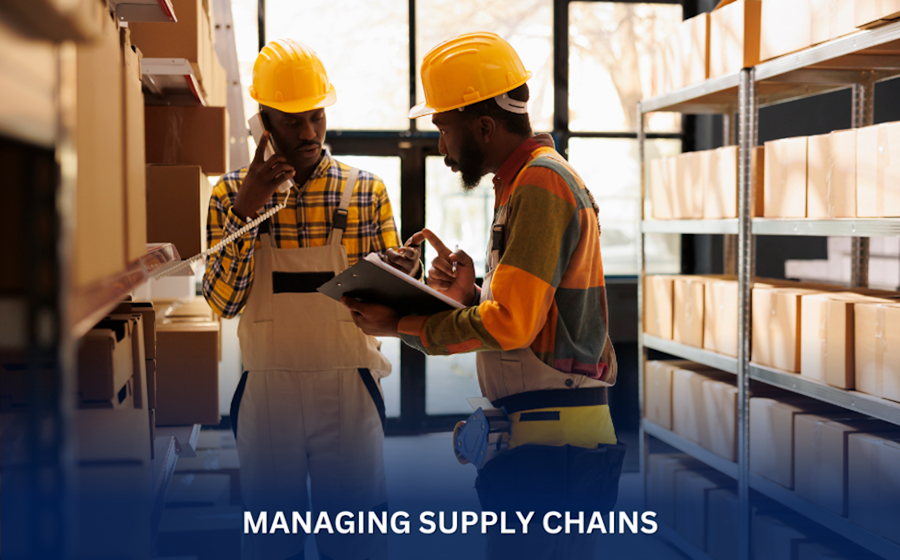
It cannot be denied that Barbados is facing a supply chain issue relative to its poultry industry. This has had a deleterious impact on several businesses in catering, restaurants, food kiosks, etc. It has been disconcerting that stakeholders in the agribusiness sector have been denying there was a shortage of supply, when all major supermarkets and grocery outlets bore the evidence of the shortage.
Any student of trade and commerce would have realised in recent months that significant challenges exist with supply chains, domestically and globally. Often the latter impacts the former due to key inputs in production processes in many of the manufacturing and agribusiness procedures.
In light of the persistent disruptions due to exogenous and other factors, a risk mitigation strategy is clearly needed. In a country where nearly 90% of food is imported, supply chains represent an existential threat to Barbados, a tourism dependent economy.
The importance of supply chains was accentuated at the first ever Global Supply Chain conference held in Barbados earlier this year, organised by United Nations Conference on Trade and Development (UNCTAD). The supply chain is supposed to have certain benefits such as reduced costs, risk management and supporting the local economy, to name a few. However, recent examples locally and within the global market suggest some vulnerabilities in the system:
- Geopolitical Risks/ Tensions – Suez and Panama Canal Disruptions and Greek tanker oil spill
These canal disruptions were a consequence of the Red Sea, which caused sea traffic to be rerouted around South Africa which meant longer shipping time, more costs because of the distance and not receiving goods on time causing loss of business. UNCTAD projected that if the increase in container freight rates experienced between October 2023 and June 2024 – driven by the Red Sea crisis and Panama Canal disruptions – continued to the end of 2025, global consumer prices could rise by 0.6% by late 2025. Small economies would be the hardest hit, with a possible increase of 0.9%, with processed food prices increasing by 1.3%.
- Supplier Dependency – Chicken Shortage
The ongoing disruption of chicken supply, locally, is another example indicating poor risk management practices, lack of support for the local economy and reduced costs. Comments by government and private sector stakeholders appear to be conflicting, while consumers feel the brunt of the disruption and businesses of all sizes, suffer as a result.
- Natural Disasters – Product Shortage
Hurricane Beryl’s impact on the Caribbean in late June 2024 left severe damage to the infrastructure, homes, vegetation and marinas of several countries in the region. This further compounded produce shortages for some goods on the island and the resultant huge increases in the cost of some imported commodities.
Those who have been researching supply chains for some time proffered there are inherent vulnerabilities to supply chains that must be monitored and mitigated in a systematic and measured way.
Supply chain vulnerabilities are due to exposure to serious disturbances which arise from risks within and outside of the supply chain. Examples include:
- Natural Disasters
- Cyber threats
- Terrorists threats
- Pandemic and health issues
- Logistical Disruptions – Transportation interruptions and delays
- Geopolitical risks
- Supplier Dependency
- Technological Risks
- Regulatory compliance and legal risks
Eliot Metzger, et al, in their article on Voices of Small and Medium Enterprise in Global Supply Chains proffered that large companies require the participation of small and medium enterprises with supply chains as small businesses bear much of the burden in helping large companies implement and meet sustainability goals across the value chain. As a result, there are unique vulnerabilities to small firms that must be understood and addressed. Based on the article, supply chain vulnerabilities affect SMEs in specific ways.
- Suppliers/Inventory Issues
Small businesses normally have one main supplier, which is referred to as supplier dependency. When ships are stuck at ports, the flow of goods has been disrupted. This results in the supplier’s inability to deliver the raw materials/goods in a timely manner affecting the small business’ ability to meet their demands and order deadlines, causing a loss of revenue.
- Increased costs
With terrorists’ attacks, natural disasters, and wars, it has become increasingly difficult and expensive to import certain goods. According to data compiled by Xeneta, a cargo analytics company in Norway, the cost of moving a 40-foot shipping container from China increased to US$7,000 from US$1,200 within a few months. For SMEs, it would be more difficult to bear these costs than it would be for larger firms.
- Inability to outspend Competition
The issues above mean that there is a race for resources for businesses of all sizes. As SMEs are intrinsically small, they cannot outspend the competition and obtain the resources they need.
Some options to mitigate risks in supply chains include:
- Proactive Planning
Firms need to understand their markets and consumer needs, inclusive of emerging trends and aggressively adjust supply chain strategies.
- Strong Supplier Relationships
Strong relationships with suppliers are key to ensure consistent supply and maintain competitive pricing.
- Diversifying Supply Sources
Small businesses should consider using alternative suppliers to mitigate risks.
- Strengthen relationships with other small businesses
SMEs should collaborate with each other
- Conduct risks assessments
It is important that SMEs procure the technology that would help them identify risks. This is the first step to drafting a contingency plan.
- Logistics
SMEs should employ methodologies to better track information on their goods.